

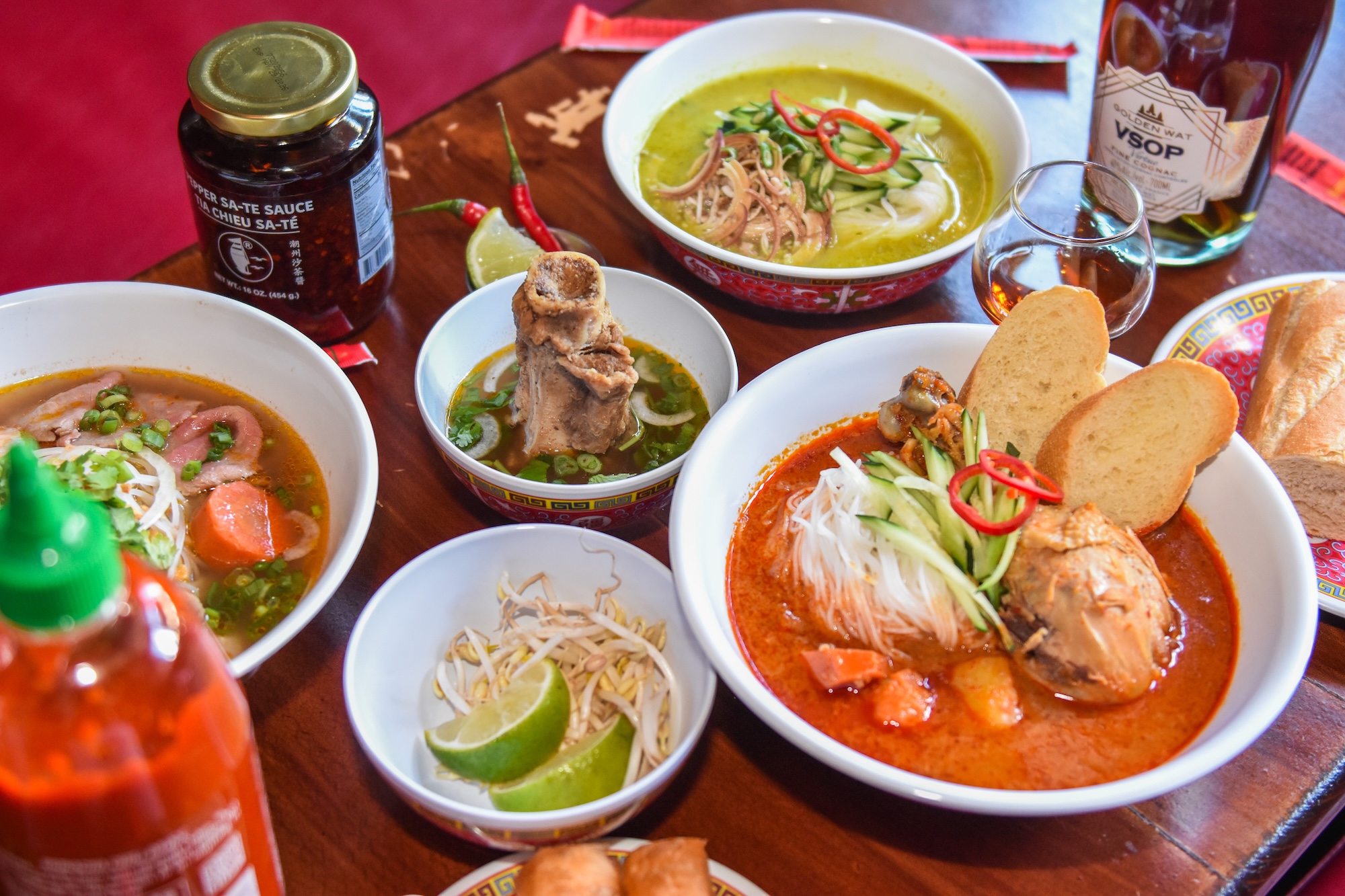
For those in the know about Cambodian food, there is something particularly wonderful about the prospect of spending a weekend morning with a bowl of nom banchok. (Or as Crystal Cambodian Thai regulars know it: nom p’jok.)
And thanks to Veda Pok, that prospect has become a regular possibility.
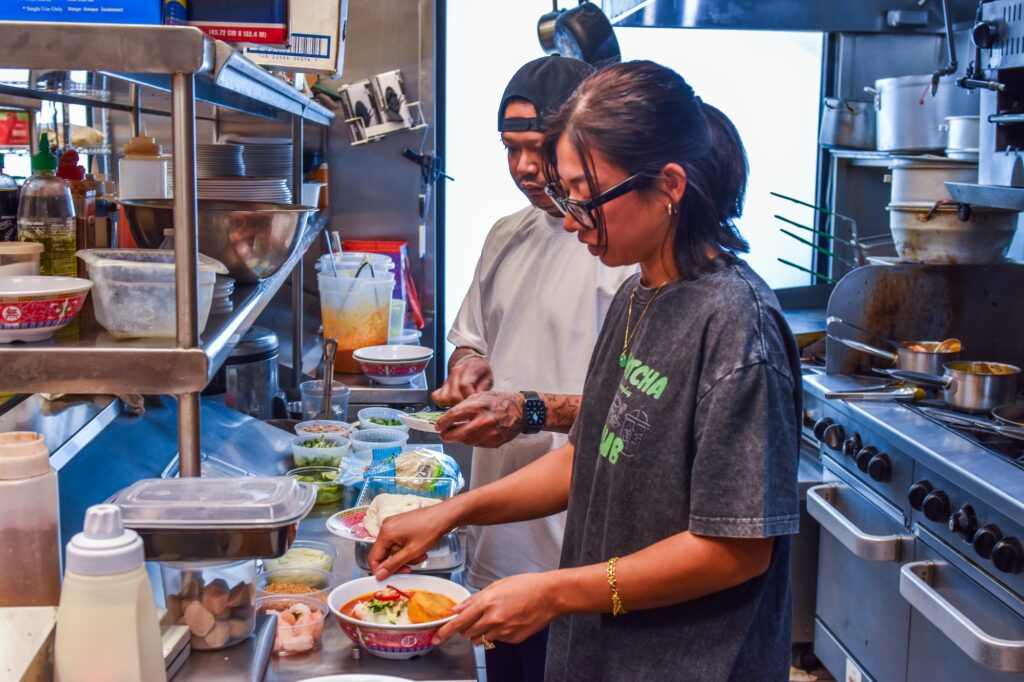
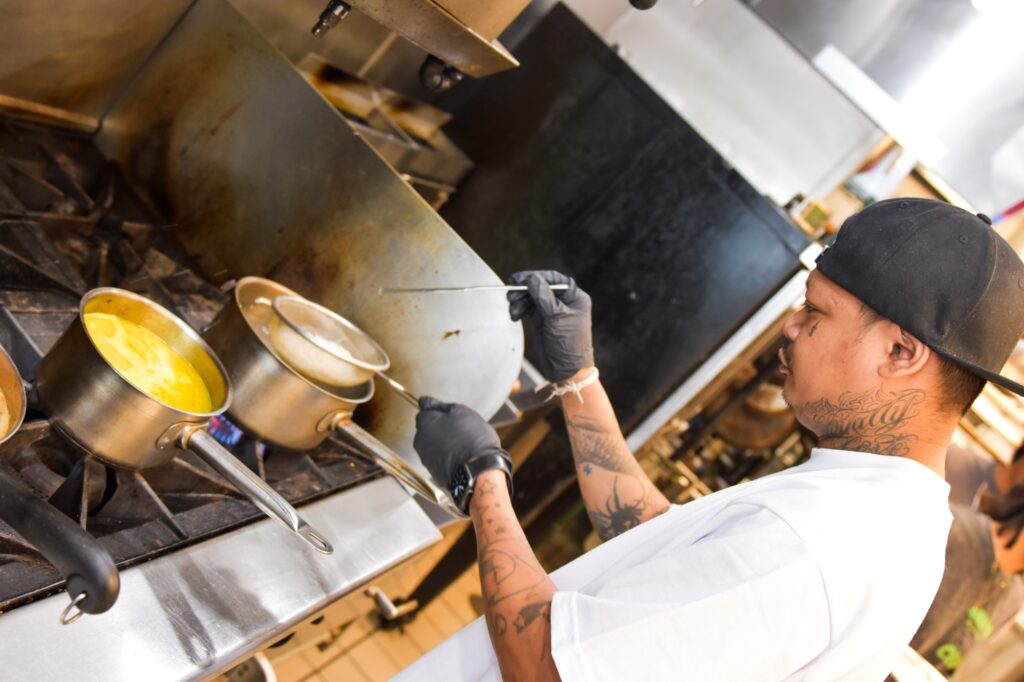
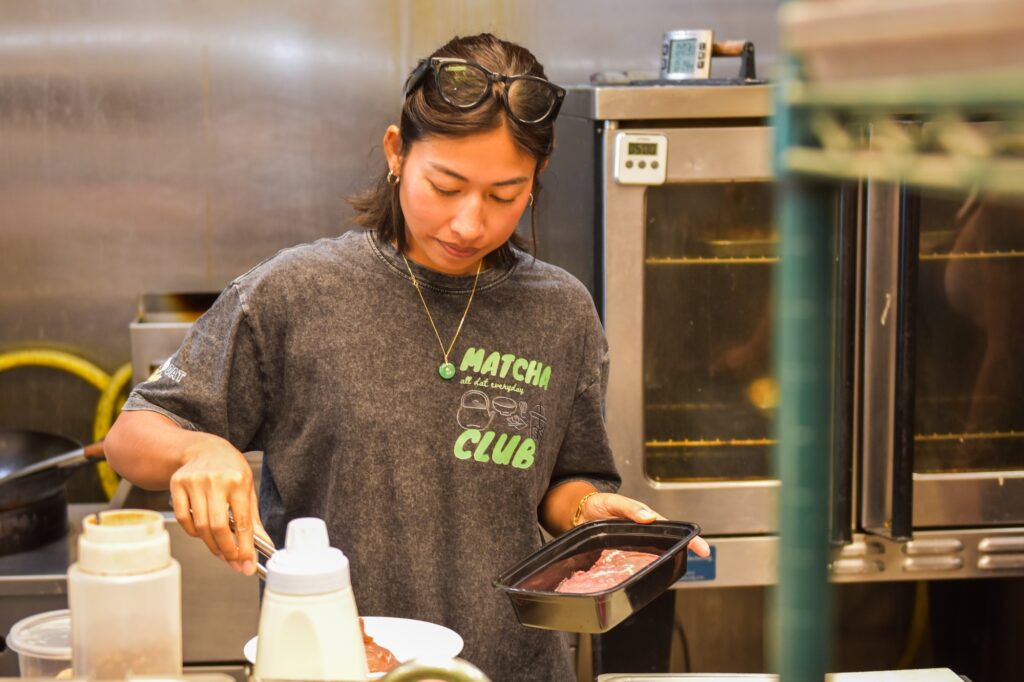
The Cambodian cook was raised in Long Beach before moving to Orange County to expand her cooking opportunities through the 626 market circuit via her “All Dat” brand (which operates a dumpling, noodle, chicken, sauce, and cafe concept). And she is bringing a Cambodian noodle residency to Midnight Oil attached to her All Dat Noodles brand, alongside her sister, Vonika. When? They will be serving Friday, Saturday, and Sunday from 10AM to 2PM at Midnight Oil.
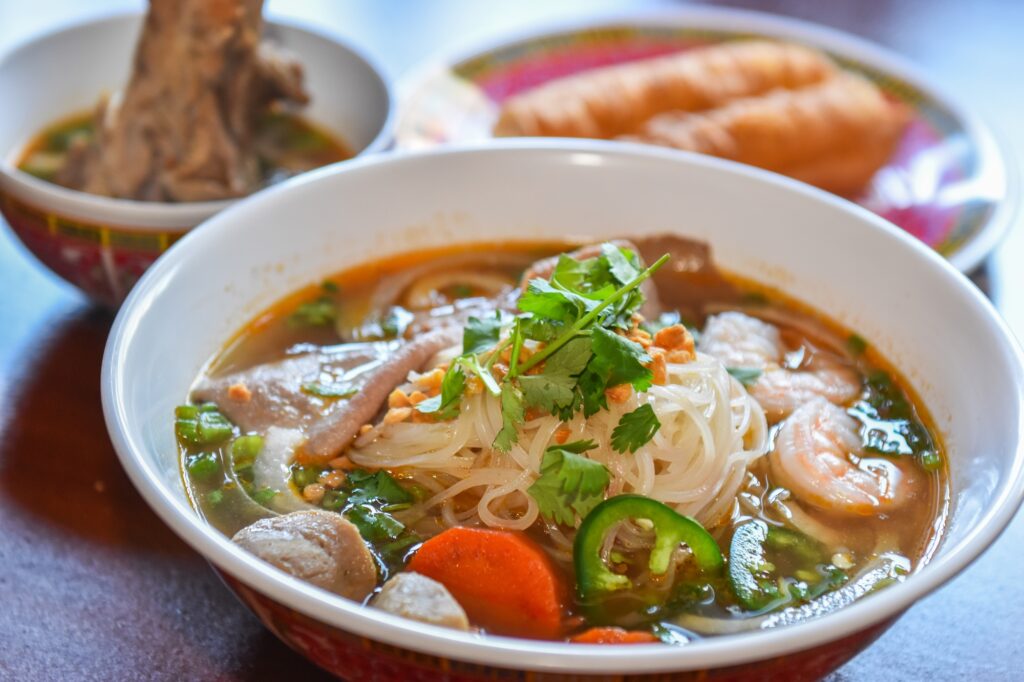
The draw? A brief exploration of Cambodian noodles that moves between her family’s chicken version of nom banchok, the brothy comfort of kathiew, and a rich red chicken curry served with noodles (which also has a vegan version). And at the center of it is a family story that deserves to be understood on its own terms.
Veda Pok’s nom banchok begins with her grandfather’s village in Cambodia…
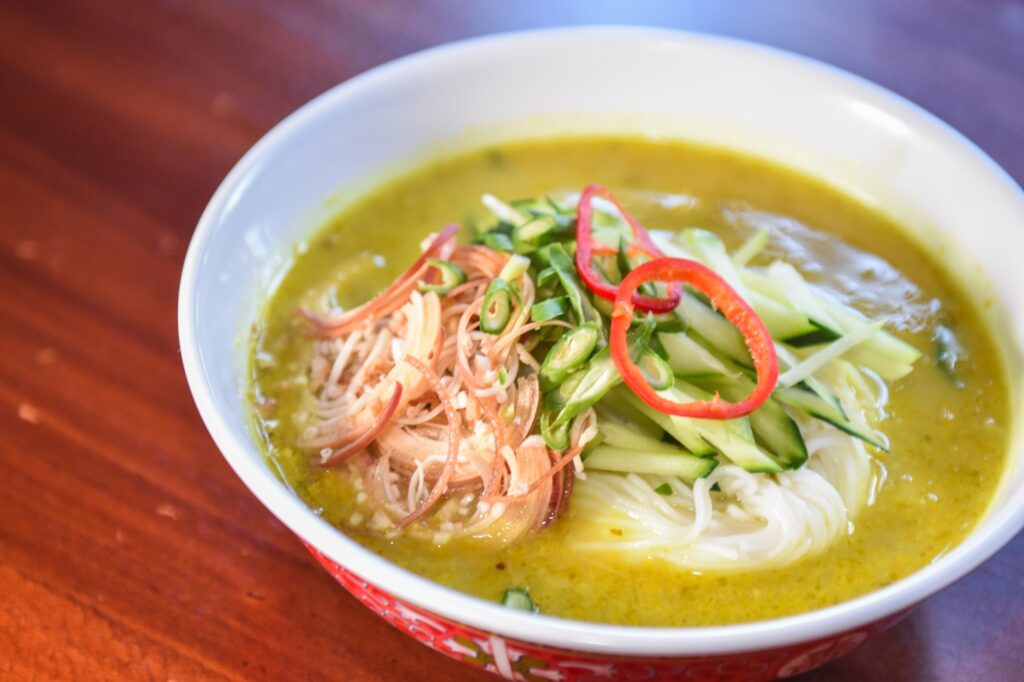
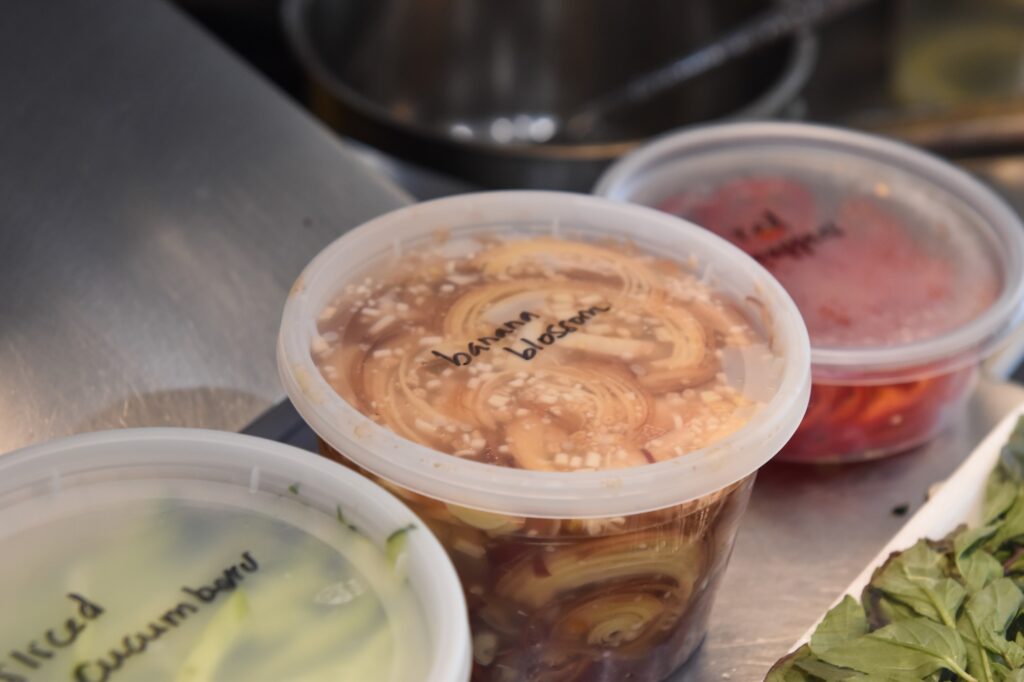
Nom banchok isn’t a single, fixed recipe. For Veda, the version she is bringing to Midnight Oil is tied to the village where her family, particularly her grandfather, grew up: There, it was made with chicken.
“When we went to visit, I didn’t realize my grandfather’s influence in the village,” Veda said. “They arrived with a basket with 100, 200 bundles of noodles prepped for individual bowls… I realize it wasn’t just my family making nom banchok. We were hosting the entire village to welcome our visit.”
The distinction in nom banchok preparation matters. Those familiar with versions made with muddled Mekong catfish—a beautifully clean fish whose flesh is yellow thanks to the fact that it eats river weed—might arrive with a particular bowl in mind. Veda is offering another expression of the dish, one rooted in her own family’s experience.
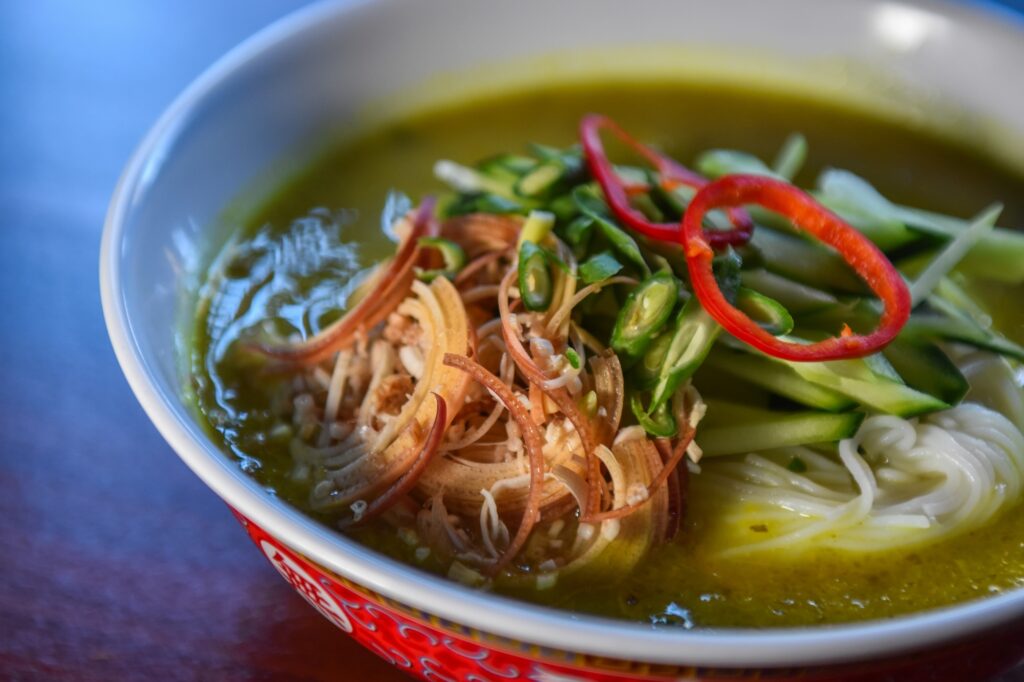
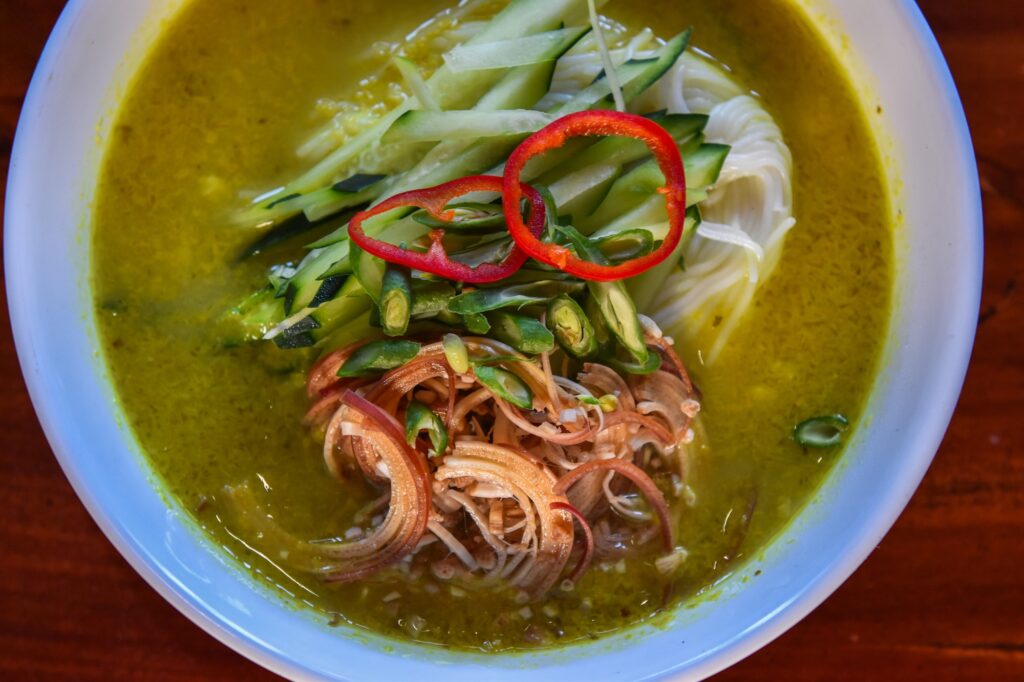
Exploring the wonders of nom banchok…
Someone unfamiliar with the dish might immediately have more comfort with the fact that the version has chicken rather than fish. But I have my own discontents with Americans’ need to safe-zone foreign foods. This persistent idea that a Cambodian dish needs to be explained through how easily an unfamiliar American diner might accept it is, at best, tired. A family’s food already has value before someone encountering it for the first time decides it is approachable. But the opportunity this residency creates? That I am thrilled about.
For those who never make it to Long Beach’s Cambodian home kitchen, Crystal Thai Cambodian, or who haven’t had the good fortune of a Cambodian friend introducing them to a bowl, this gives them another place to begin. Another reason to try nom banchok. Another opportunity to understand that Cambodian food contains an enormous amount of variation, including the differences carried from one village and one family kitchen to another.
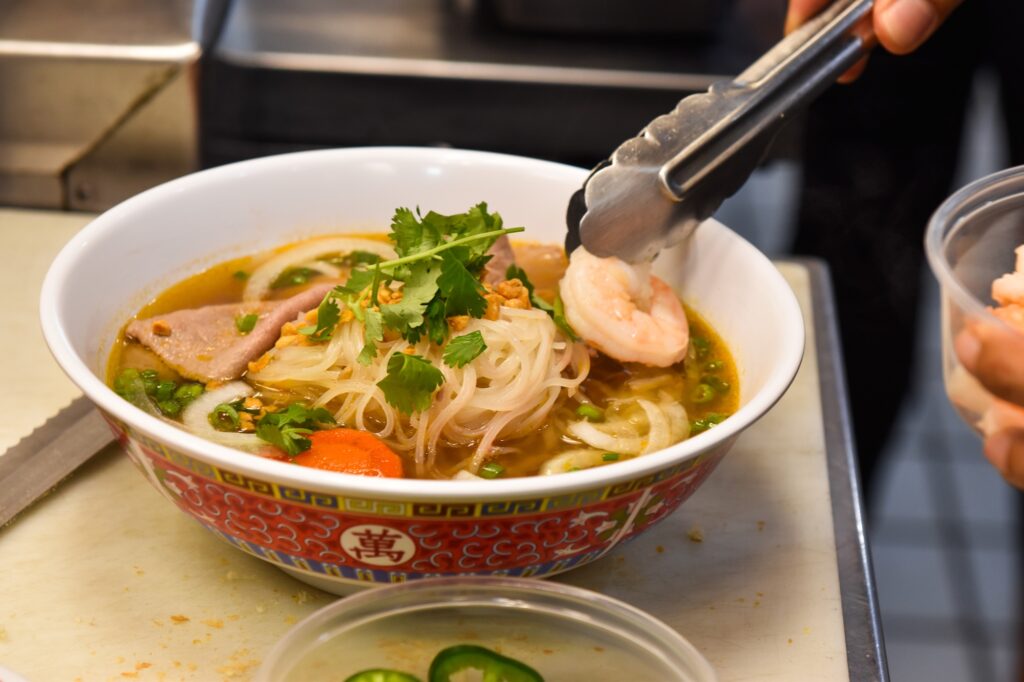
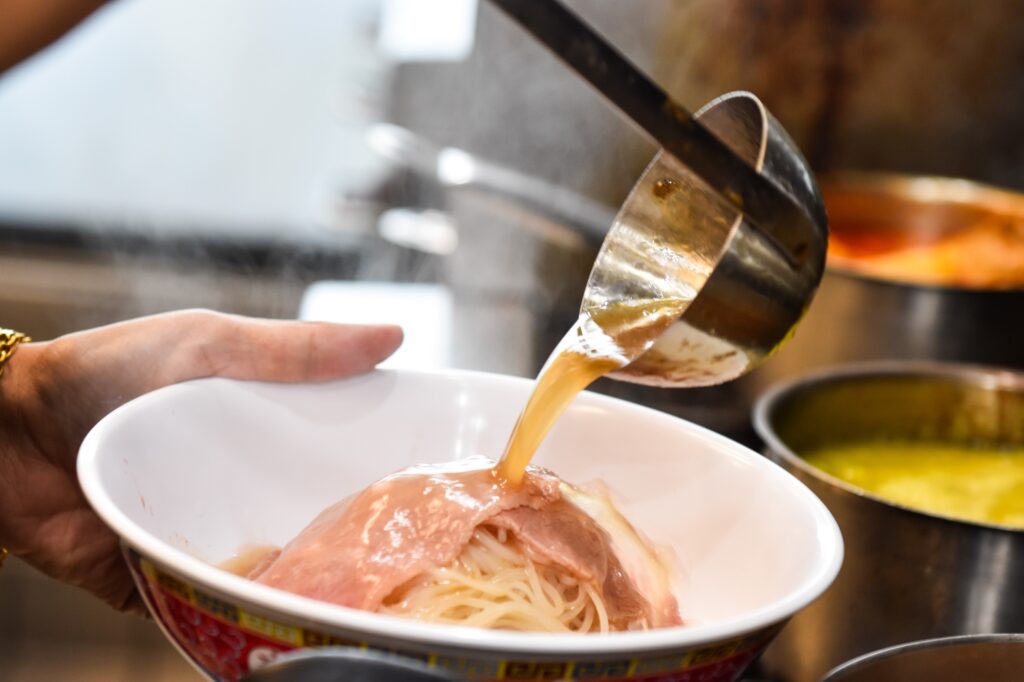
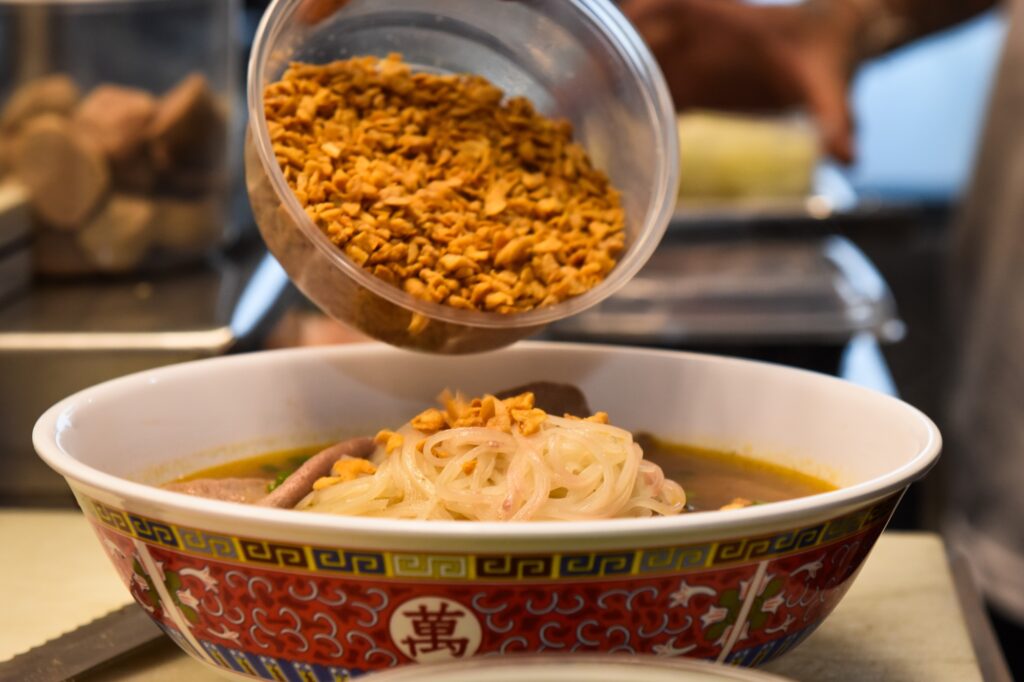
There’s kathiew for those craving a brothy bowl of Cambodian noodles in Long Beach—and a different curry altogether.
For those whose noodle cravings lean toward pho, Veda and Vonika are also making kathiew, often spelled kuy teav and sometimes called Phnom Penh noodles. (Long Beach diners might recognize that reference from bowls at Noodle Shack, whose broth is much heavier than that of All Dat Noodles’.) It’s a brothy, warming Cambodian noodle bowl—one where, like its cousin phở, you can dress to your heart’s content with sa-te, sriracha, and hoisin…—and one of the best versions I’ve encountered outside a home kitchen.
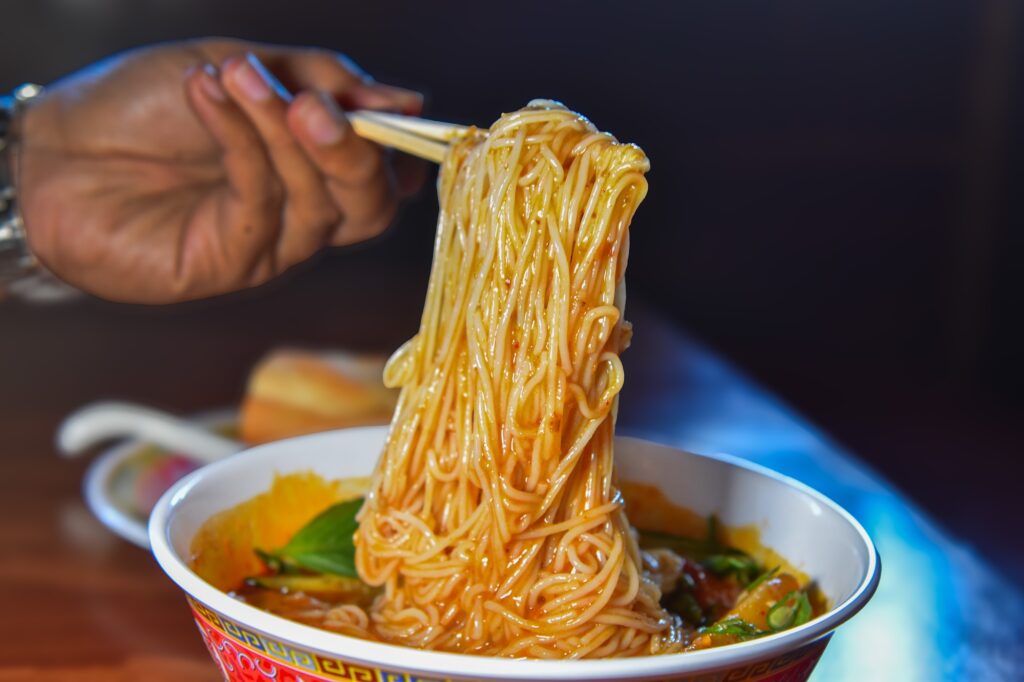
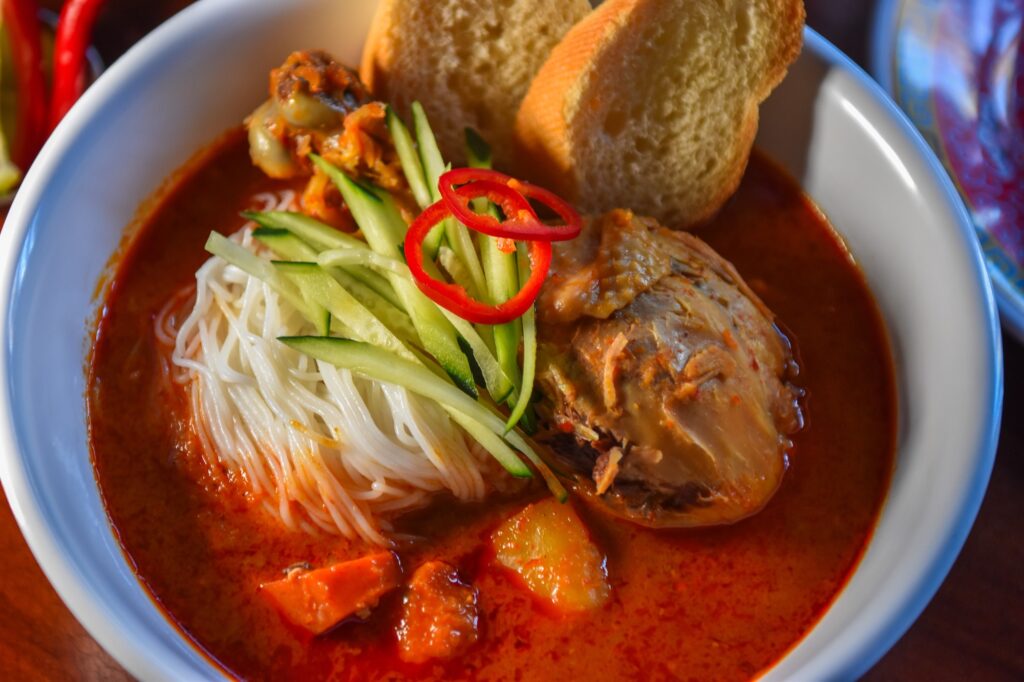
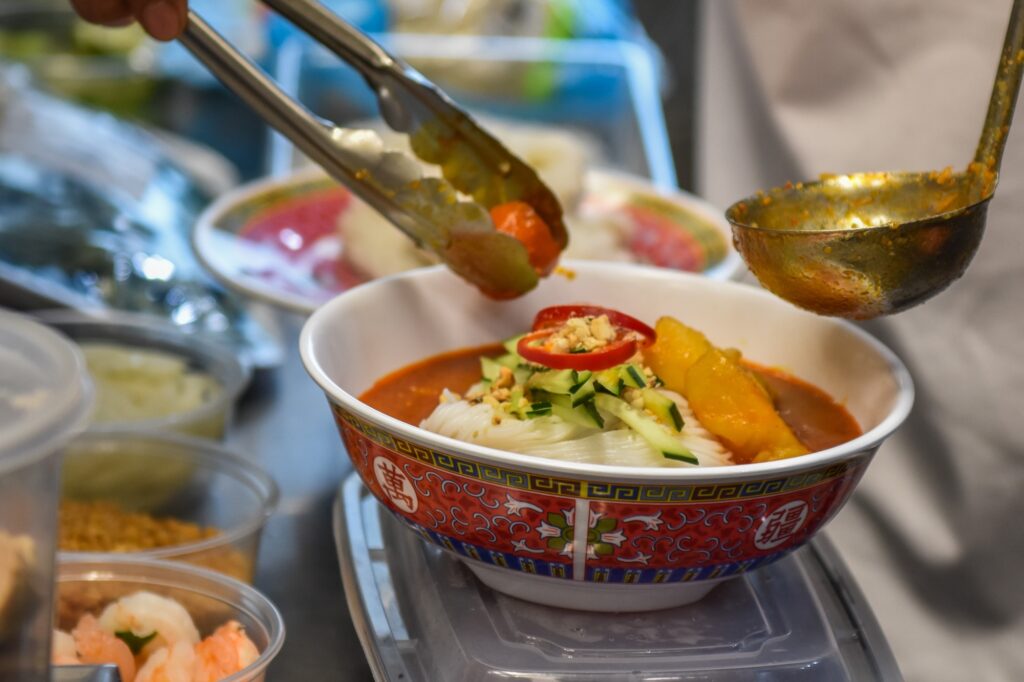
Then there is the nom banchok curry, featuring the fiery red chicken curry often referred to as samlor kari sach moan. This thermal bowl has a wonderful, subtle heat that sits with you throughout the experience—layered with sweet, spicy, salty, and acidic flavors. (The squeeze of lime is clutch; I chomped on a Thai chile while intaking the noodles.) A meat-falls-off-the-bone chicken drum. Hunks of potatoes and carrots. And, of course, noodles—a markedly different experience from the family-style nom banchok Veda is also serving.
That difference is part of the pleasure of this menu. You can come craving a brothy noodle bowl, seek out the richness of red curry, or spend time with the chicken nom banchok that connects Veda’s cooking to her grandfather’s village.
A Long Beach homecoming, one weekend morning at a time
Veda’s path took her from growing up in Long Beach to pursuing more cooking opportunities in Orange County. This residency brings that work back to the city, with her sister beside her and her family’s food at the center.
And it gives Downtown something worth making time for: Cambodian noodles on a Friday morning. On a Saturday before the rest of the day gets away from you. On a Sunday when a bowl of something deeply comforting is exactly what you want.
Come for the curry or the kathiew. Or come because you have never tried nom banchok. Come because you have, and you want to experience the version Veda’s family grew up with.
There are three mornings each week to do so.
All Dat Noodles’ Cambodian noodle residency takes place at Midnight Oil in DTLB, located at 255 Long Beach Blvd., on Fridays, Saturdays, and Sundays, from 10AM to 2PM.