

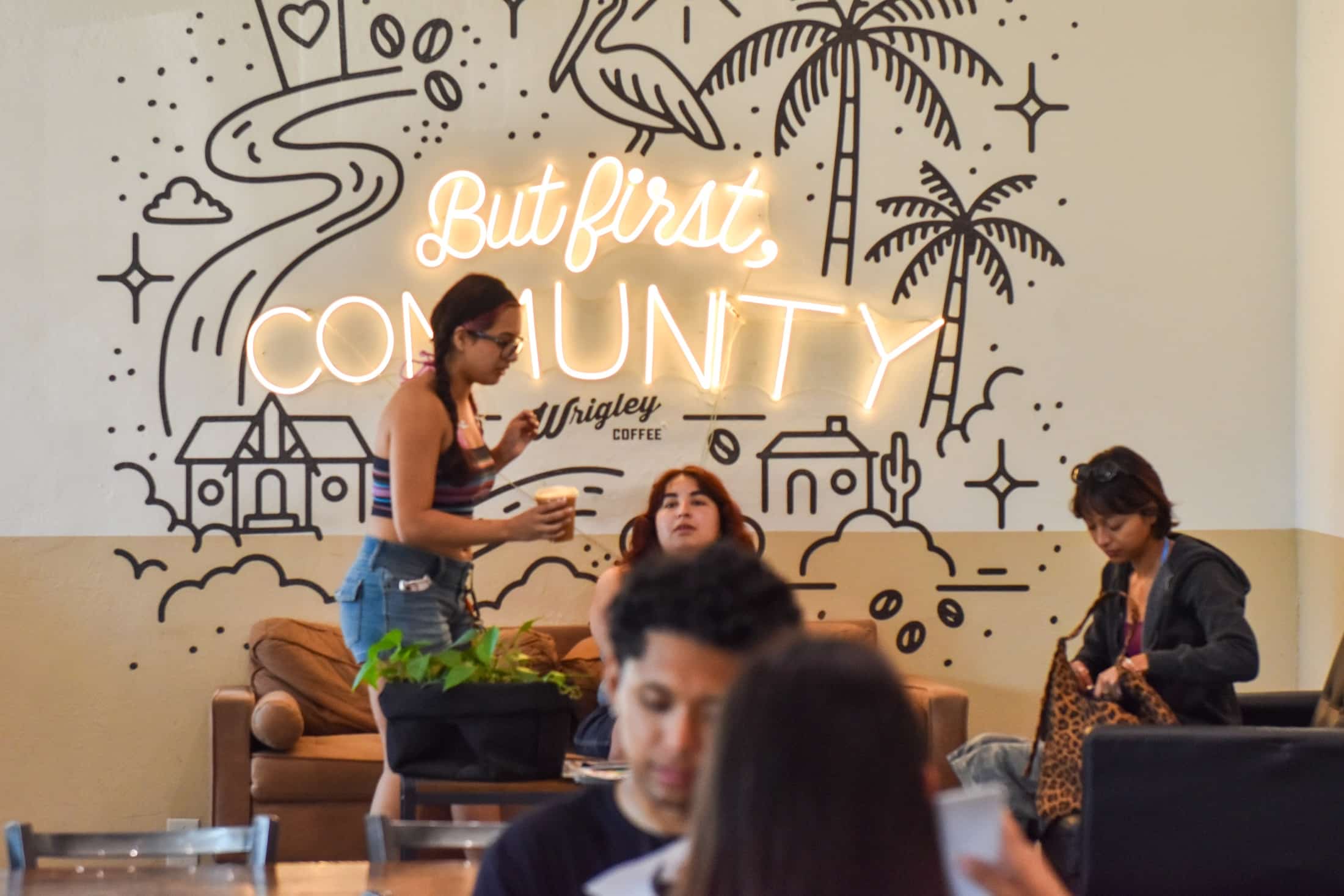
It is particularly sad that we live in a world where nearly every word is either hypercharged or abused. And perhaps no other word fits the latter than “community,” which Wrigley Coffee is actually about. Even more, it rightfully and proudly proclaims it with a bright neon sign that says, “But first, community.”
And it’s been that way since the beginning.
When Wrigley Coffee first opened inside the former Fox Coffee House on Willow Street in early 2022, its purpose stretched well beyond pulling espresso shots. The café was envisioned as a social enterprise—one where every latte helped support a larger mission of workforce development. One bolstered with trauma-informed employment. And, of course, community building. Four years later, that mission has evolved, but its heart remains the same: creating a neighborhood coffee shop that just happens to change lives along the way.
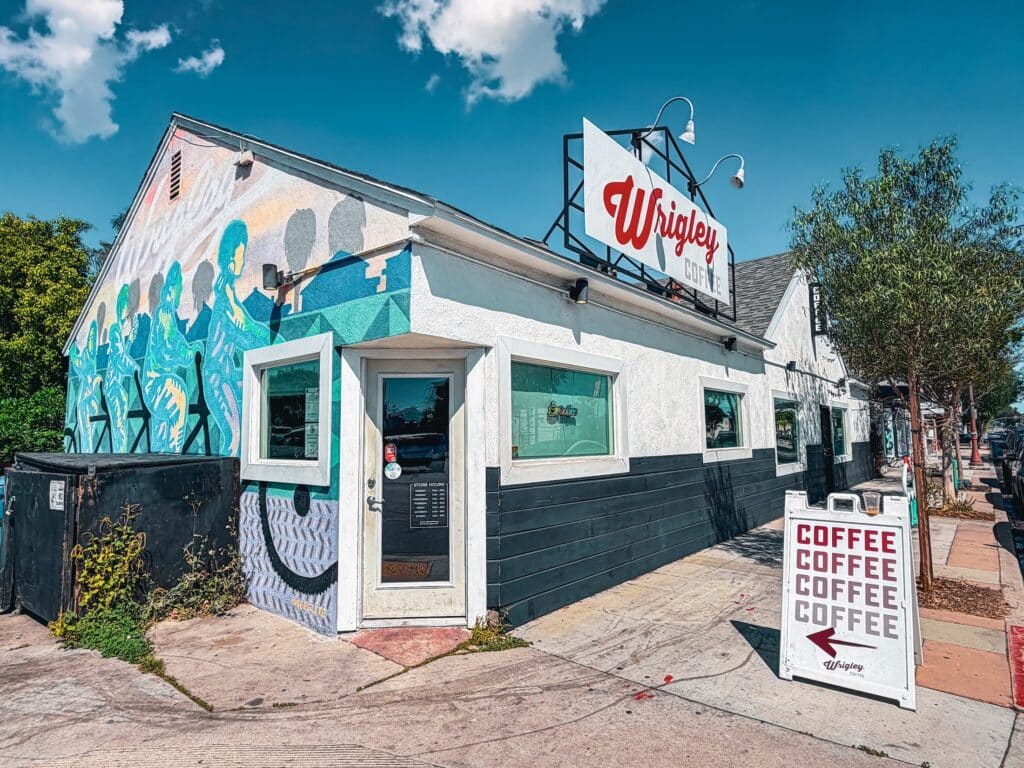
Wrigley Coffee’s beginnings have helped shape its evolution into a workforce incubator.
Today, General Manager Robert Casey says that vision has continued to mature.
“Wrigley Coffee has morphed its original message a few times,” Robert said. “But I think ultimately it’s providing a workforce development space for people. And using trauma-informed care as well as grief counseling, which is a newer service. When it comes down to it, we’re ever-expanding.”
While the original emphasis centered on adults emerging from housing insecurity, today’s workforce development program increasingly focuses on introducing young people to meaningful employment. High school students and interns rotate through the café, learning everything from steaming milk and dialing in espresso to customer service and communication—skills that readily translate into careers throughout hospitality.
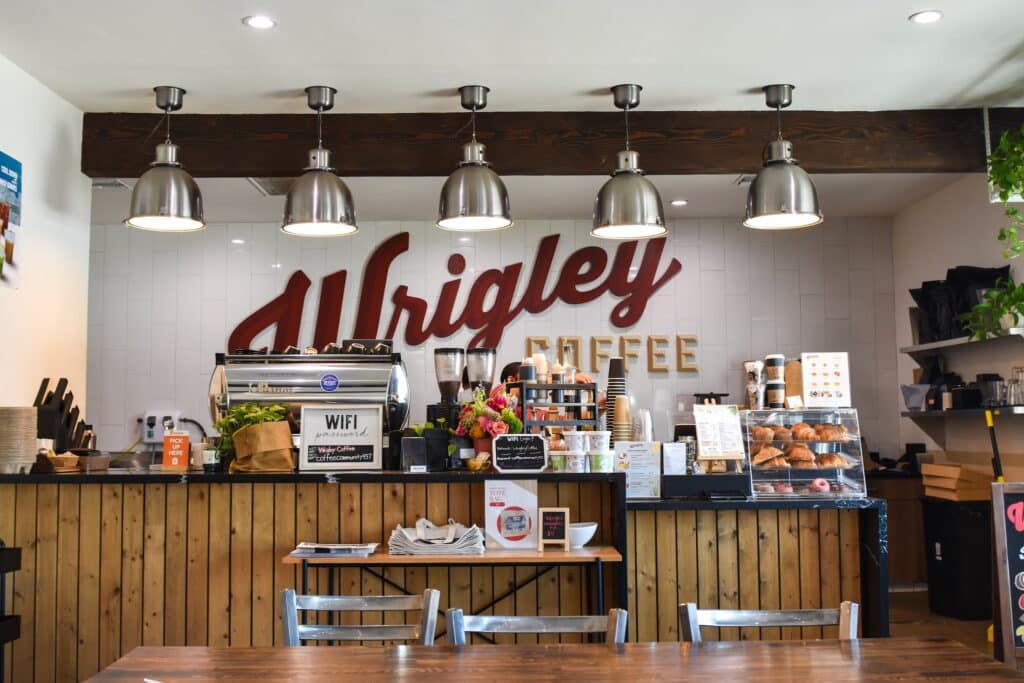
“We have groups of kids come in in high school learning a new skill,” Casey said. “They can leave and say, ‘Hey, I know how to steam milk. I know how to pull a shot of espresso. I know how to read a customer.'”
Especially with our youngest in the workforce—who are stymied by anxiety and often detached socially—this is a genuinely tangible skill. Wrigley Coffee’s emphasis on this reflects something I believe many overlook: coffee shops remain one of society’s great social classrooms. Before anyone can legally step into a bar, there is the mighty coffeeshop. Teenage baristas first learn hospitality behind an espresso machine. Here, they learn to balance precision with personalized requests, service, and conversation. On the customer flipside, coffee drinkers learn how to socialize over a little more than a drink and a table.
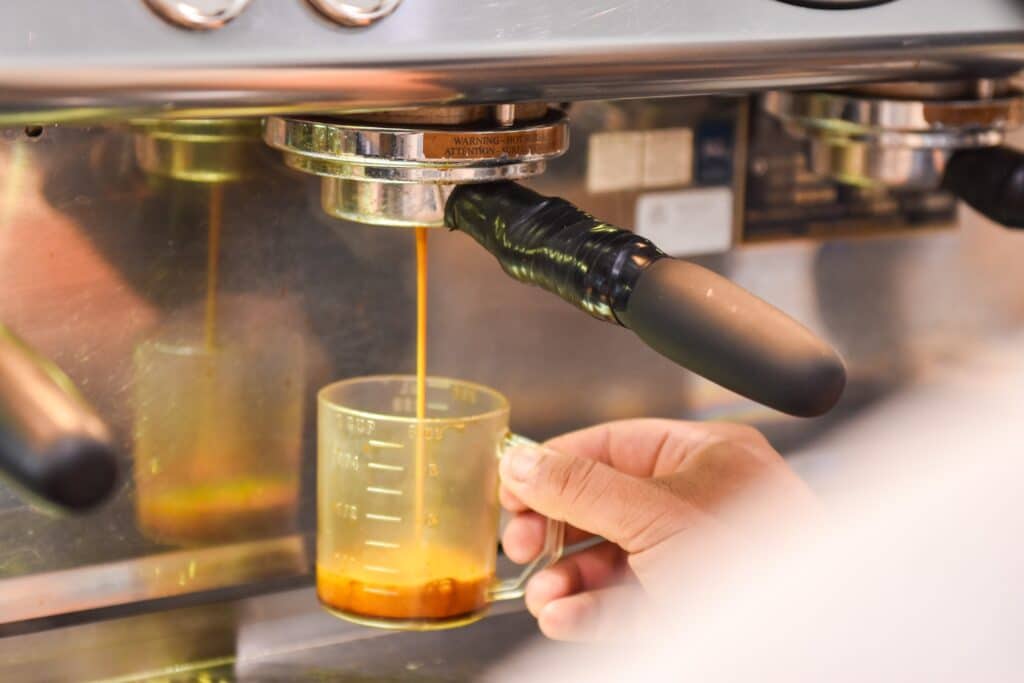
Despite its (really inspiring) nonprofit mission, Wrigley Coffee succeeds first as a coffee shop.
“It’s genuinely easy to say that people really love the coffee,” Robert said. “Honestly, most people don’t know we offer social services. I think we prefer it that way. We don’t want to look like ‘Hey, we’re a service center.’ We want to be an actually good coffee shop.”
That pursuit of quality has meant continually refining the café’s program in a city whose coffee game is on point. After originally sourcing beans elsewhere, Wrigley transitioned to Common Room Roasters, helping elevate consistency while word-of-mouth, social media and catering have steadily grown the business. Casey says the shop has reached an important milestone.
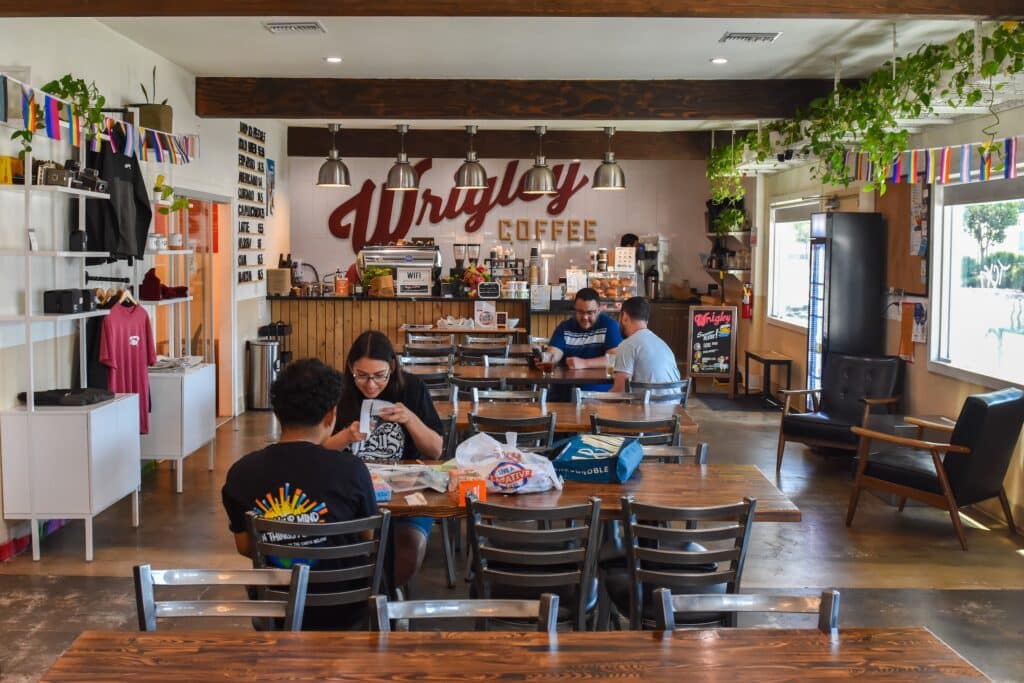
“When we first started, to be honest, we weren’t making any money,” he said. “Thankfully we’re a nonprofit, so we could subsidize it. Our goal was just to break even… but now we’re in a good place where we’re starting to make profit.”
Those profits don’t leave the community. Instead, they’re reinvested directly into Forward Endeavors, allowing the organization to expand workforce training, counseling and future programming.

Attaching itself to Homebody Industries, even Wrigley Coffee’s food offerings have heart and a mission behind them.
The food program reflects that same philosophy. Rather than producing pastries in-house, Wrigley Coffee partners with Homeboy Bakery, the culinary arm of Homeboy Industries, the internationally recognized Los Angeles nonprofit founded by Father Greg Boyle. Homeboy Industries provides employment. Education. Tattoo removal. Mental health services.
And, true to Wrigley’s philosophy, workforce training for formerly gang-involved and previously incarcerated individuals, with its bakery serving as another pathway toward stable employment and second chances. By featuring Homeboy’s pastries alongside its coffee, Wrigley extends its mission beyond its own walls, supporting another organization built around dignity through work.
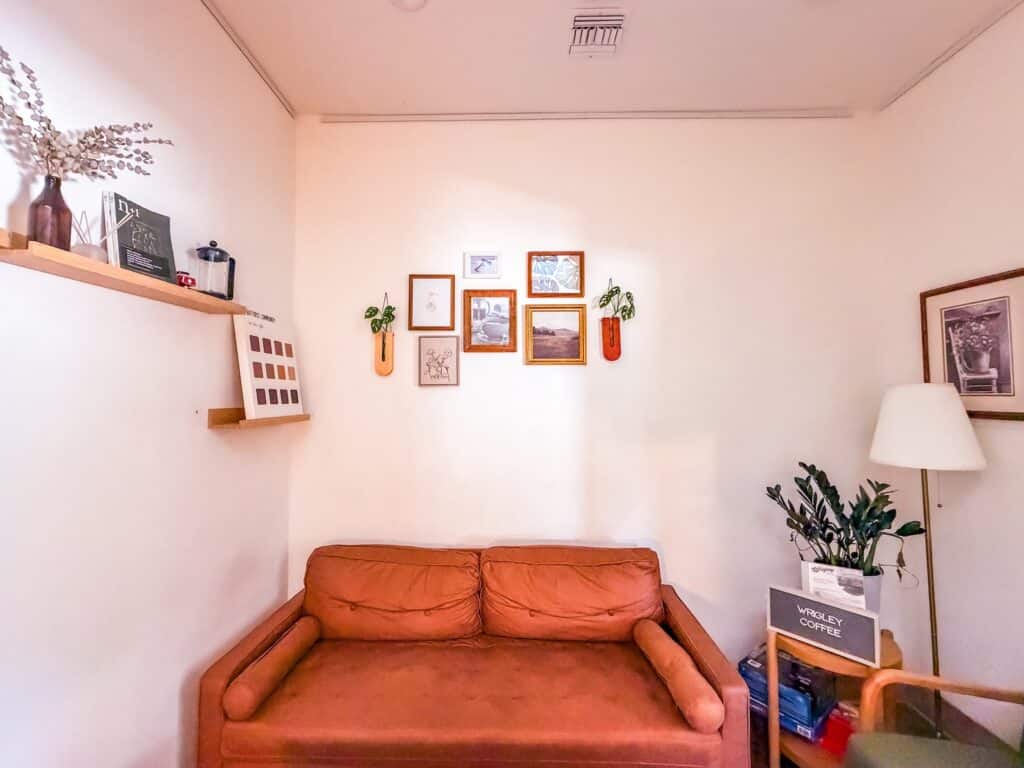
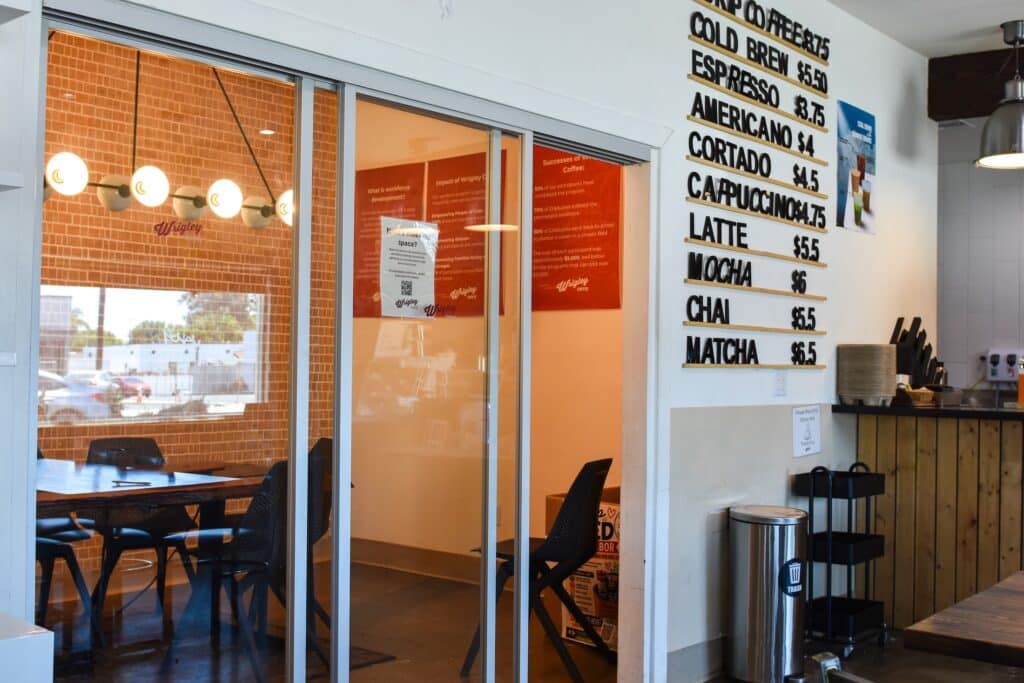
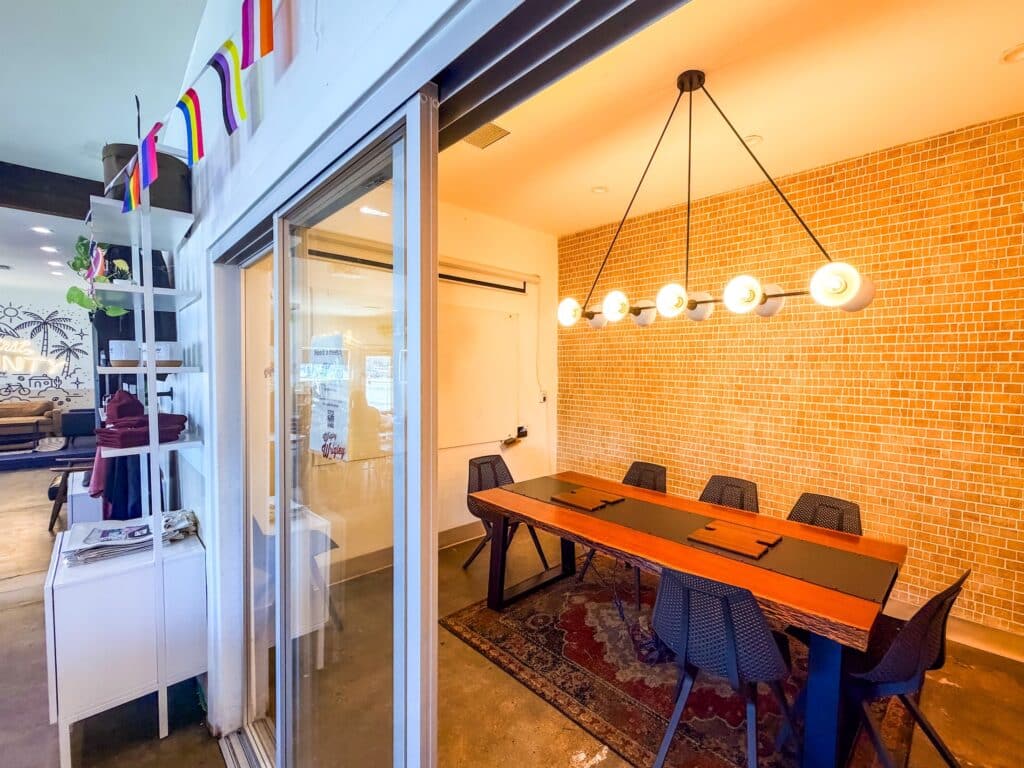
It’s also a space that is great for your next meeting, temporary office, or community hang-out.
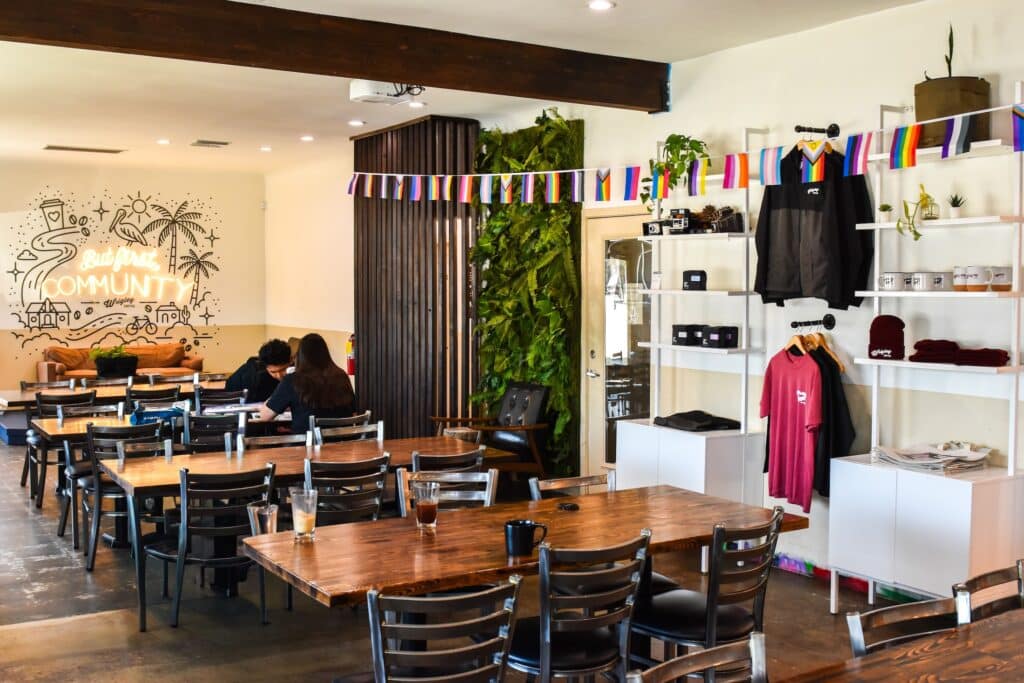
Community, however, remains the café’s defining ingredient. Its large footprint includes meeting rooms that nonprofits, businesses and neighborhood organizations can reserve, often at discounted rates. Entire organizations regularly hold workshops, trainings and strategy sessions there, while local residents rent the café for private events after hours.
“We’re constantly having events with different groups, different nonprofits,” Casey said. “We even give nonprofits discounted rates to rent the space after hours.”
The Wrigley BID: How Wrigley Coffee is joining other businesses in the push for a business district that will better connect the community.
Ironically, one of Wrigley Coffee’s greatest strengths has also been one of its biggest challenges. Tucked into the Wrigley neighborhood rather than one of Long Beach’s more heavily trafficked commercial corridors, the café remains a discovery for many residents.
“We still get so many people every day that are like, ‘I didn’t know you existed. I’ve lived in this neighborhood for years,'” Robert said. “Then they come back regularly.”
That sense of community extends beyond the café’s four walls. Casey has become one of the advocates for the proposed Wrigley Business Improvement District (BID), an initiative spearheaded by the Wrigley Business Collaborative that aims to unite business owners along the Pacific Avenue and Willow Street corridors under a shared vision for the neighborhood.
For Casey, the BID isn’t simply about marketing businesses. It’s about creating the connective tissue that neighborhoods like Wrigley have long lacked. According to the proposal, the district would pool resources to attract more customers through coordinated promotions and events, while investing in cleaner, safer, and more welcoming streets through enhanced lighting, landscaping, planters, seasonal decorations, and beautification efforts. It would also give business owners a stronger collective voice at City Hall, helping them navigate permitting, advocate for infrastructure improvements, and encourage investment in the neighborhood’s historic commercial corridors.
A BID, supporters believe, would help ensure those discoveries happen far more often—not just for Wrigley Coffee, but for every independent business that calls the neighborhood home.
Wrigley Coffee is located at 437 W. Willow St.



love this so much!
What a joke, that they can’t even clean the weeds by their entry door. Business should be responsible for keeping the outside clean and pleasant. As a journalist you need to pass this to all businesses in Long Beach, LA, California, USA and the world.