
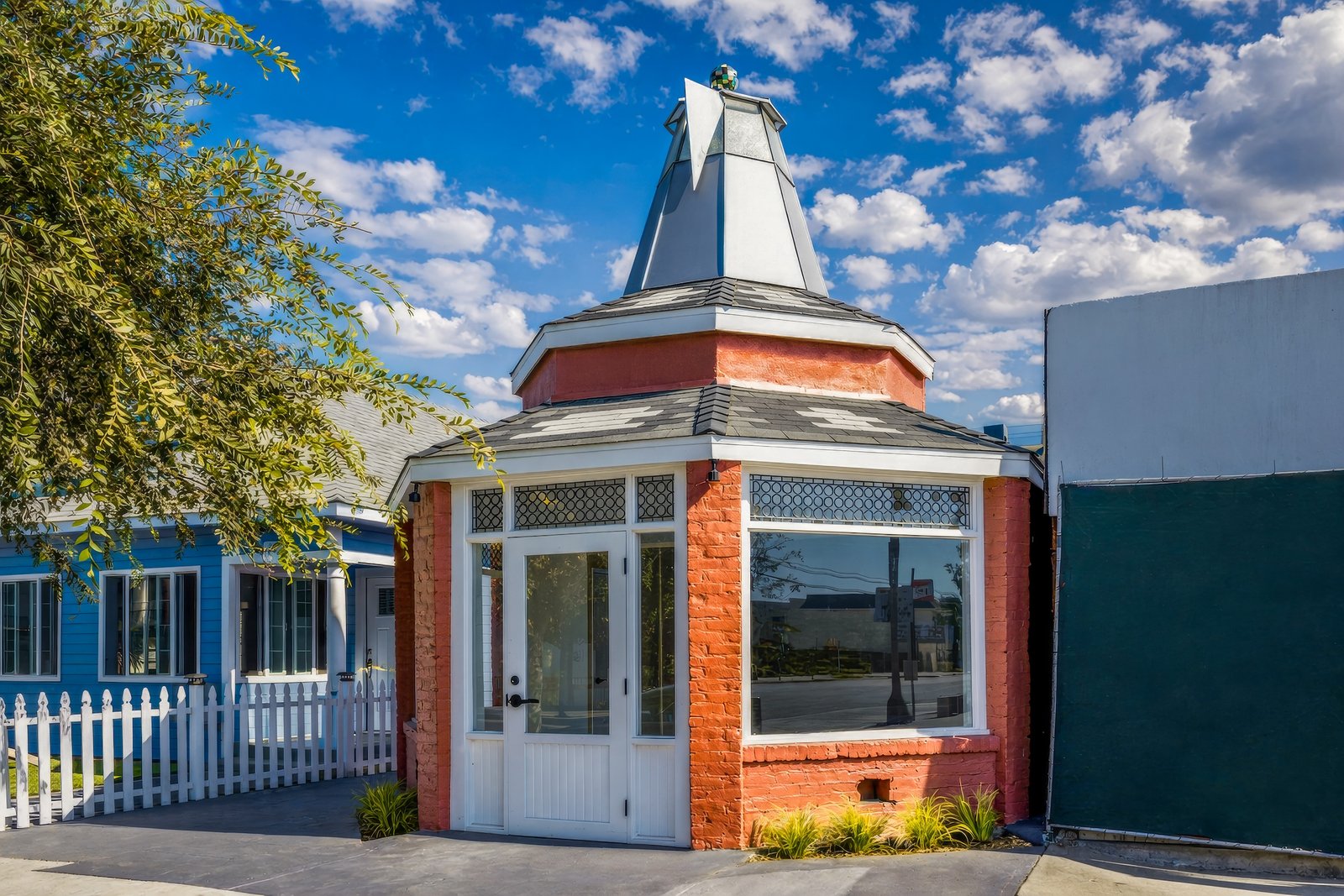
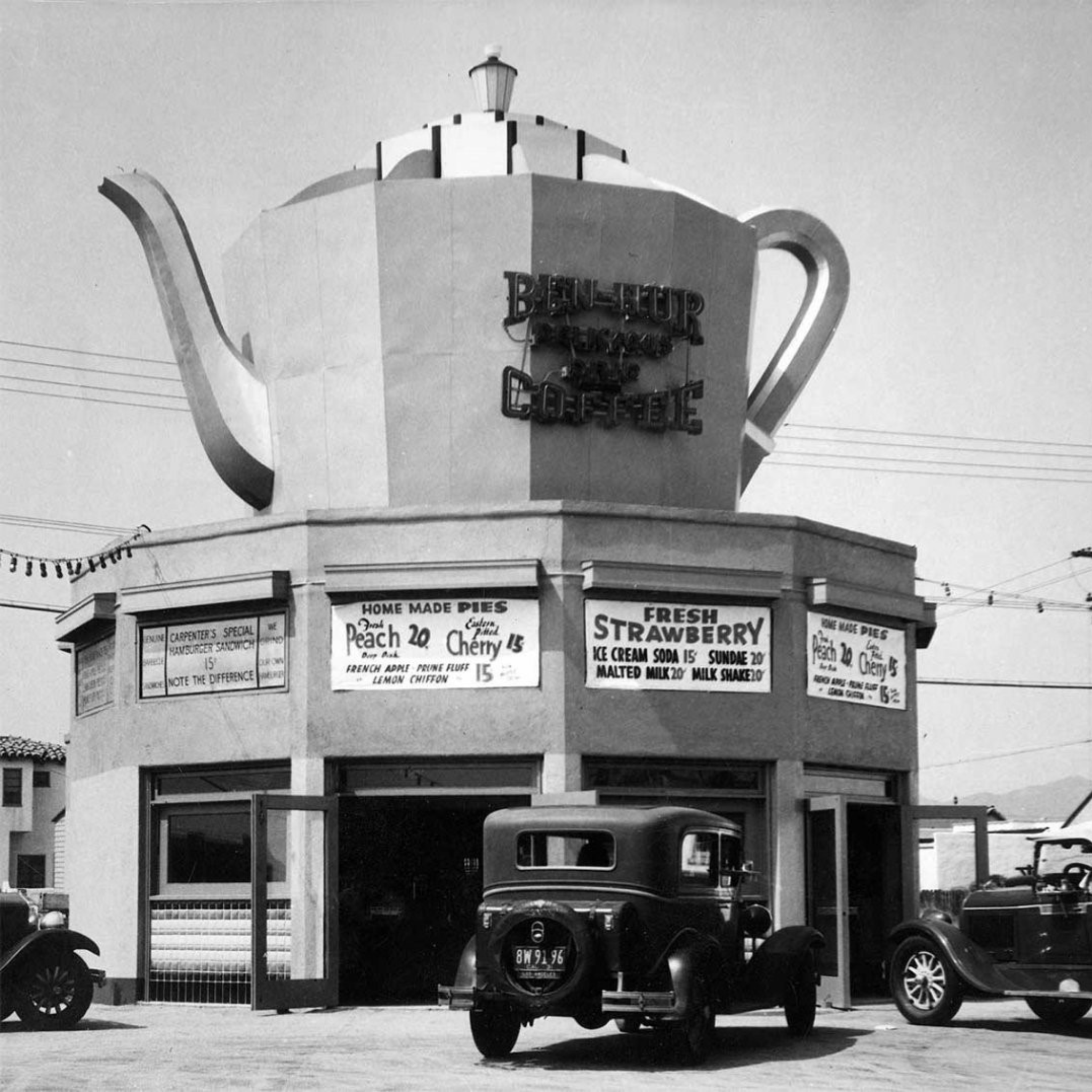
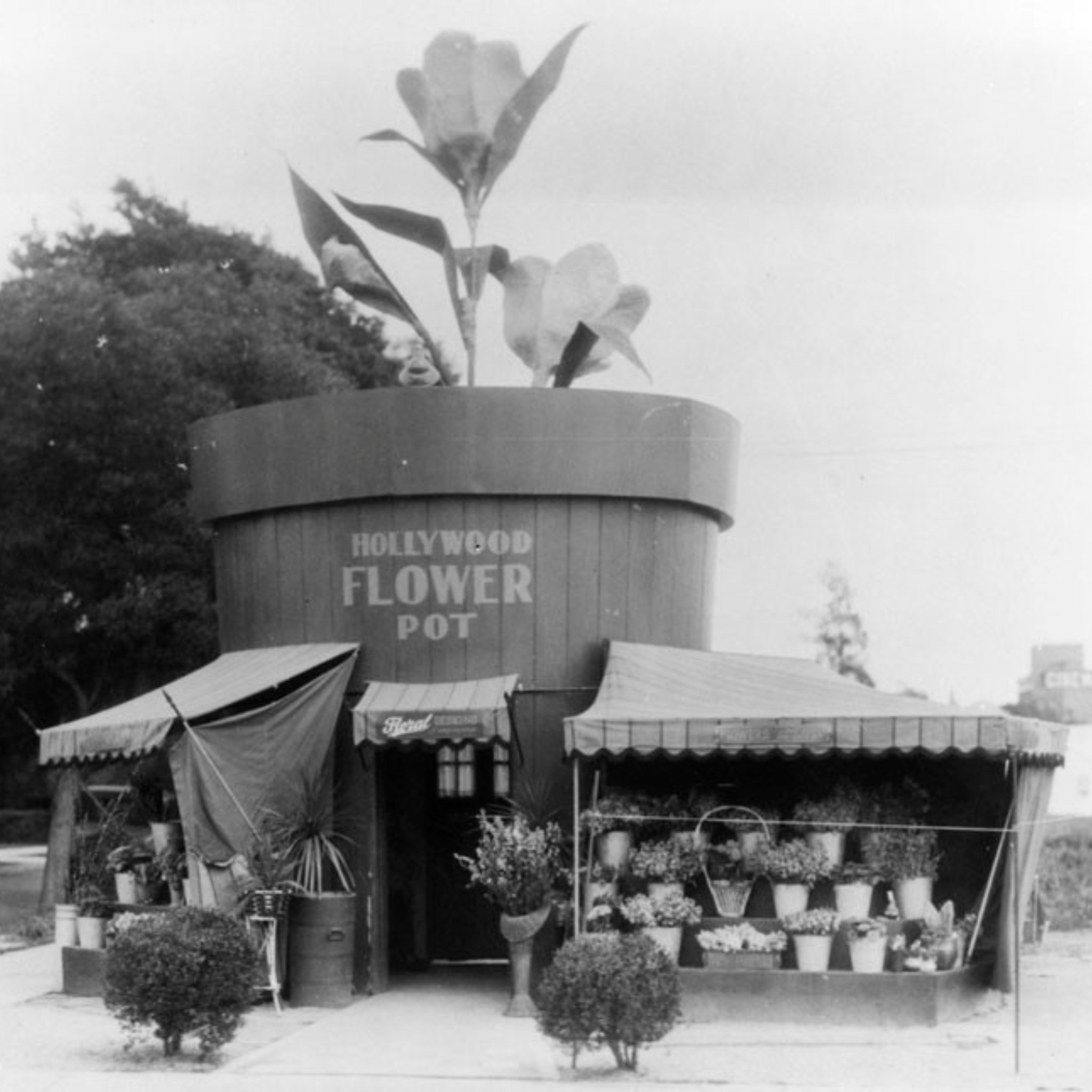
It is one of Long Beach’s finest examples of mimetic architecture—or what was then called “fantasy architecture”—echoing long-gone SoCal spaces like the Wilshire Coffee Pot Restaurant and the Hollywood Flower Pot.
Sitting on 4th Street, deemed a historic landmark in 1991, the Coffee Pot Cafe building is shaped like, well, a massive coffee pot. It has long intrigued bystanders, natives, and visitors alike, sitting on one of the city’s most culturally rich stretches of bars, shops, and restaurants. And couple Craig Broombaugh and Long Beach native Danielle Towns want to bring it back to caffeinated life.
“We are just scrounging up our pennies to start the build-out,” Danielle said. “We have to completely divert the plumbing. Open up the ceiling in the entranceway. And move the bathroom wall for ADA compliance about four to six inches—the details… But we want to assure this is one-thousand-percent homegrown.”
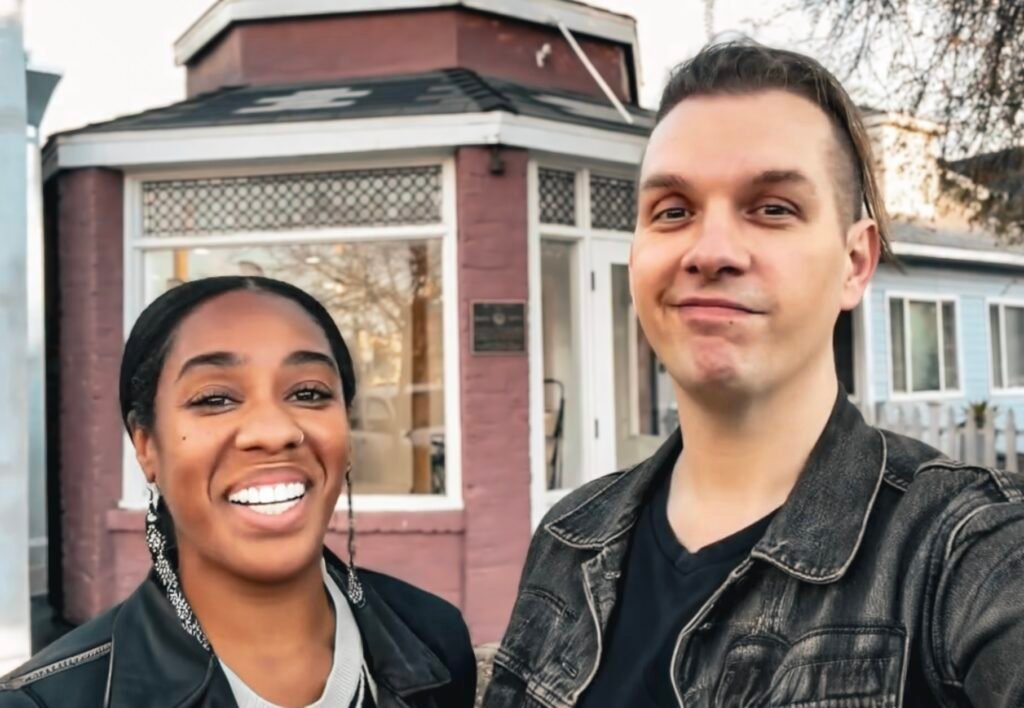
Launching a GoFundMe to help things move along, the hope is simple: make the return of the programmatic-style building unlike anything its seen for decades. Coffee. Live music. As many art components as the space can withstand. Wine for the night owls who need more relaxation than awakening…
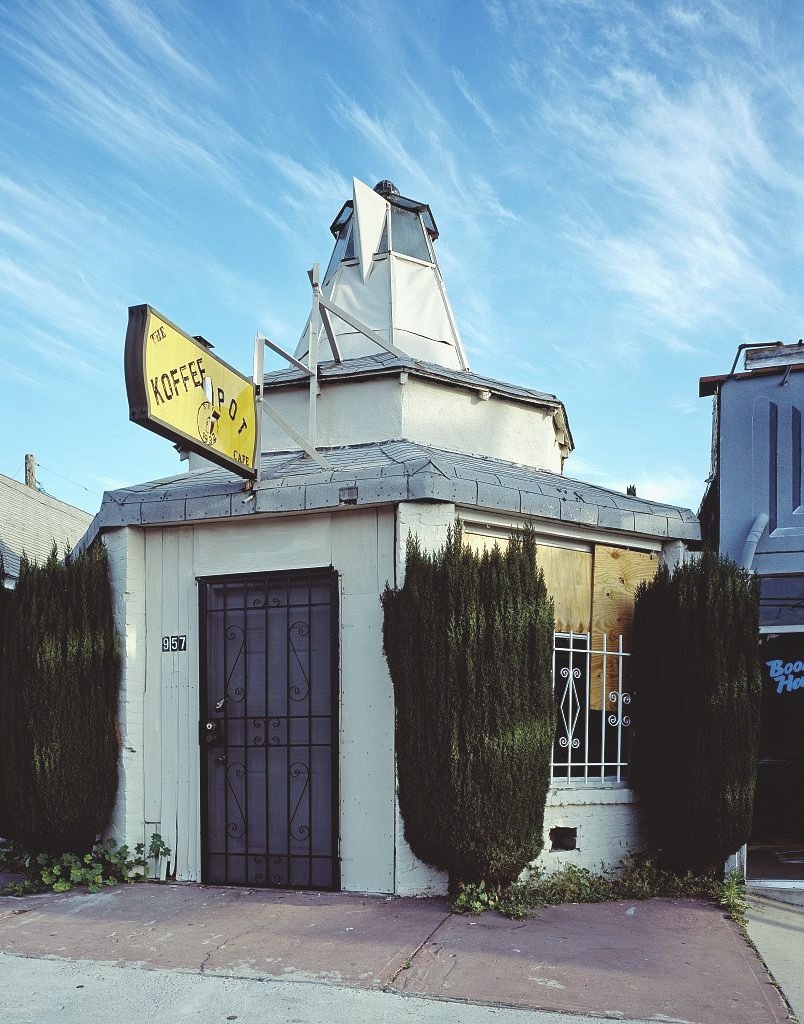
“As soon as Danielle drove past the ‘For Lease’ sign on this historic building, she felt like it chose us to revive it,” Craig said. “It’s such a large statement for such a small space: It’s been standing for longer than the Queen Mary has been docked in the city. And yet, hasn’t been a café for nearly four decades. We want to change that.”
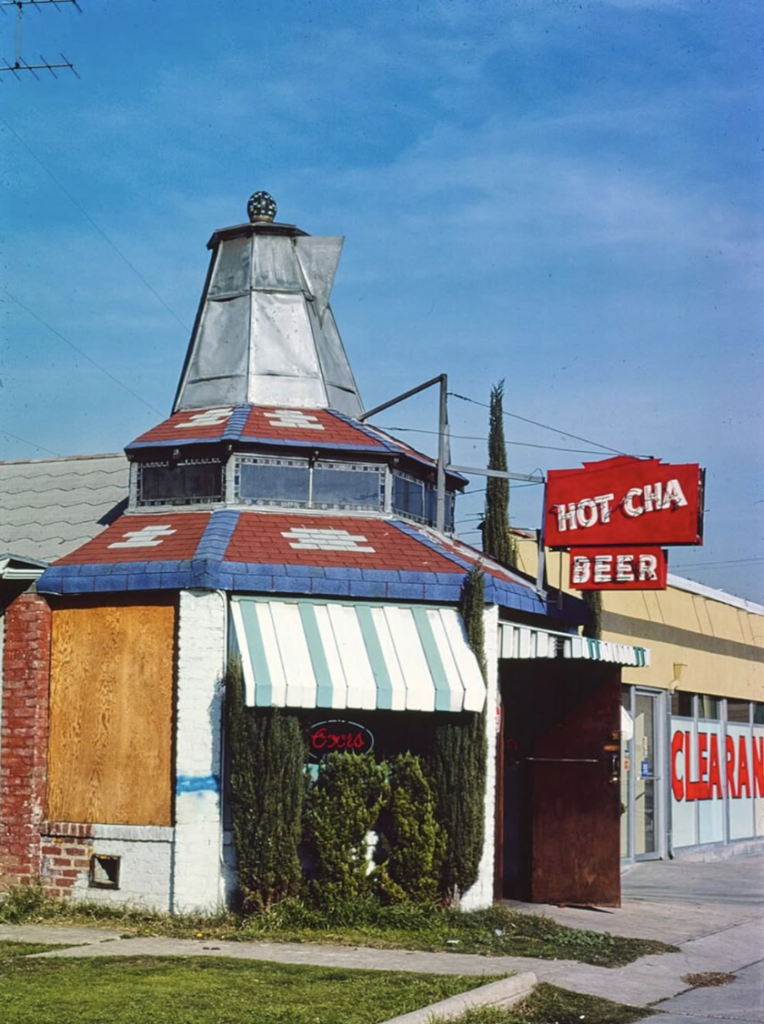
The (hopeful) return of the Coffee Pot Cafe
Danielle might be the owner of New Moon Holistic Hair Care on Pine Avenue in DTLB, but she’s had plenty of experience behind a service countertop slinging out cups of joe. And then she met Craig, who had moved from Detroit over 20 years ago—as a starving musician, no less—and with Danielle’s taking him in, has long considered Long Beach his home. Each living different experiences across four different neighborhoods have given the entrepreneurs a sense of what most people who come to love when they take on Long Beach as home: A fiercely loyal attitude about our city, its history, and its future.
“Exhaustive shifts in food. Bartending. Hospitality. Customer service—I’ve done it all before I opened my hair shop,” Danielle said, laughing. “But everyone in the industry knows: You always come back for some reason or another. My first date with Craig was at a coffee shop and we’ve always romanticized about having our own that kind of represents everything love: Coffee. Wine. Art. Music.”
The determined spirit of the pair is infectious. And their wanting to return the space to the way old-school coffee shops felt—warm, inviting, hang-out-ish in vibe that felt more like a living room than a shop—make it all the more heartwarming.
“We want a community hub that celebrates everything local,” Craig said. “We’ve already got a handshake deal with Black Ring Roasters, and once off the ground and running, we plan on extending into early evening hours to showcase local breweries. Local art exhibits. Open mic and poetry nights. Summer movies on a patio projector… It will be so much more than a coffee shop; it will return as a landmark of Long Beach culture.”
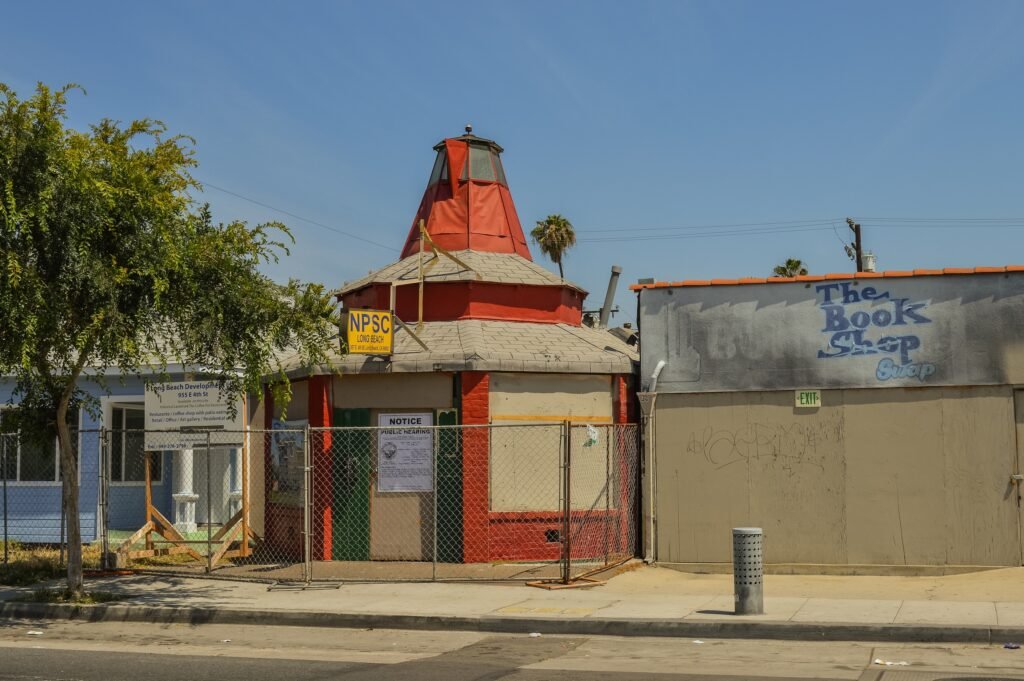
There’s one person we can thank for the Coffee Pot Cafe even existing? Katie Rispoli.
For 83 years, that little 700-square-foot structure—shaped like a literal coffee pot—sat just blocks from the ocean in Long Beach, turning heads and quietly anchoring itself into the city’s visual memory. But like many historic buildings, time wasn’t kind. The structure fell into rough shape, its metal exposed, its details fading, and its future uncertain.
Enter Katie Rispoli around 2015, who founded a now-defunct nonprofit called We Are The Next, which specialized in historic preservation. Her tenure in SoCal, before heading up to Oregon, was impressive: She saved the original Taco Bell. She moved a 100-year-old-plus train depot across Long Beach. And instead of letting the Coffee Pot Cafe become another “remember when” story, her team went all in: measuring, documenting, and recreating the coffee pot down to the nearest millimeter alongside Salvage Division.
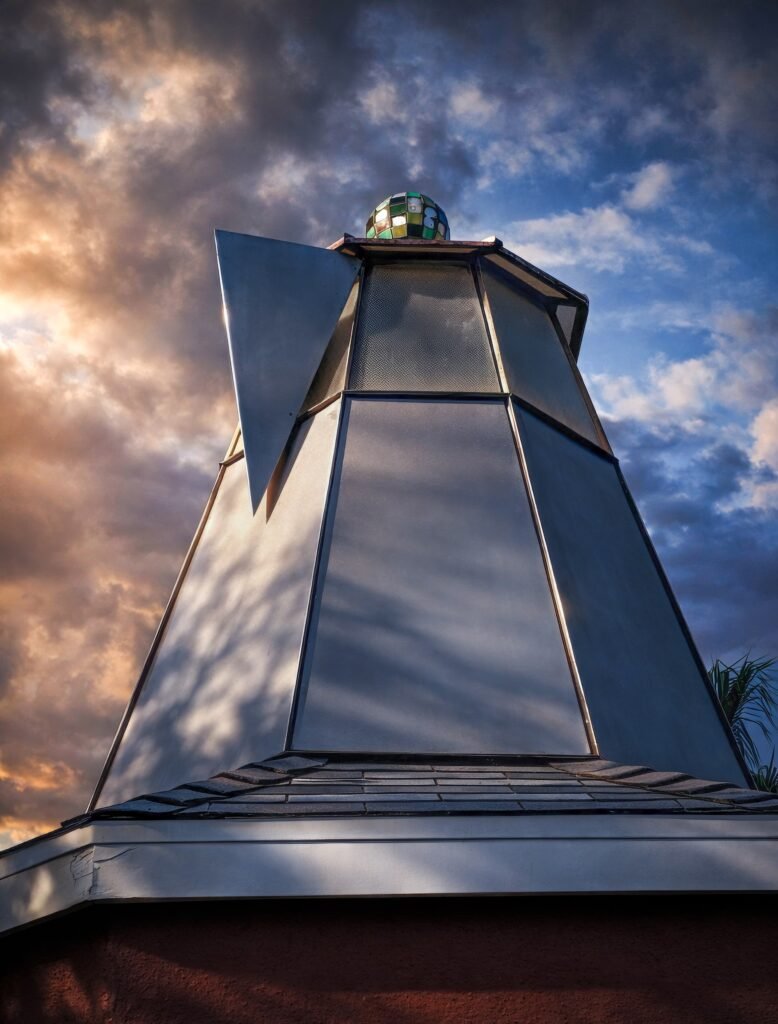
And it wasn’t just about patching up walls—it was about bringing back the building’s eccentric personality. Katie’s team brought in Beveldine Stained Glass in Stanton to recreate the leaded glass windows above the entrance, along with the custom ball on the rooftop—small details, sure, but details that made the Coffee Pot feel like, well, the Coffee Pot.
“It was an insane project in a tiny space that took awhile,” she said back in 2016, “but it came out very well and I’m really proud of seeing the reactions in the community and hearing how excited everyone is about it.”



Wait, was that or is that a book shop next to it? I hope it is <3
great story. i’d go!