

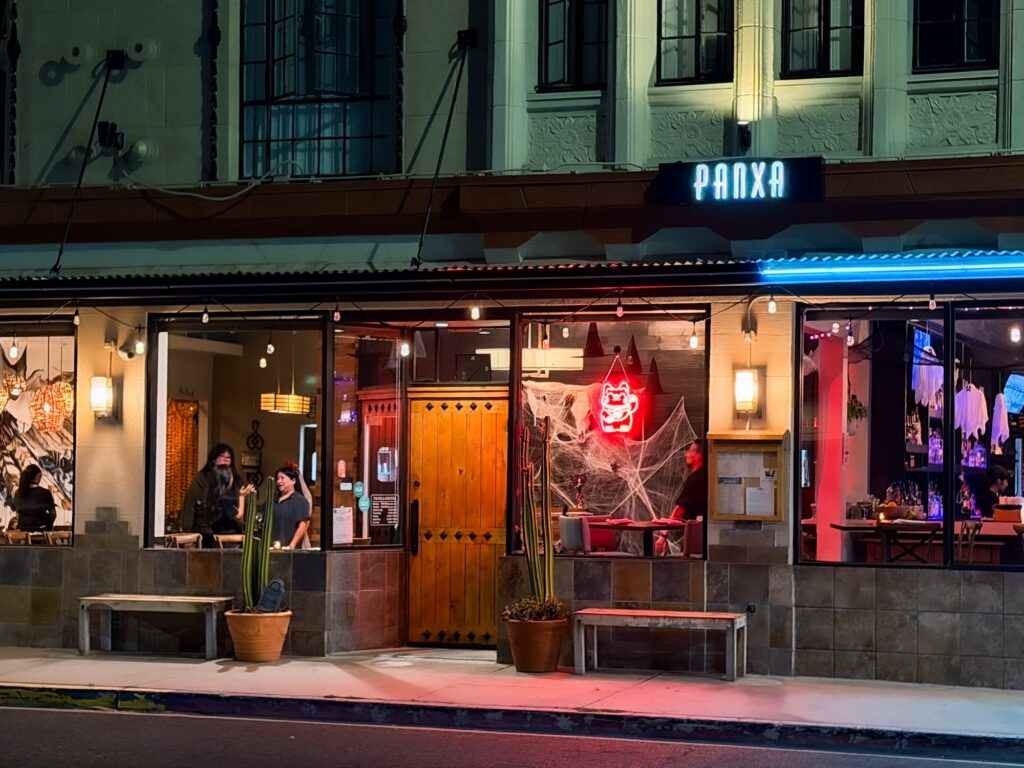
There is something incredibly exceptional when, having a chef’s food for the first time, you wouldn’t be able to pin said food on any other chef but the very one who served it. The food shows no trends or obvious mirrors of the culinary zeitgeist. Its lines, layers, and complexities are ultimately a signature. And this is precisely what Chef Vasili Tavernakis—partnering with his wife, Allison—has achieved at his Lucky Cat pop-up inside Panxa in Belmont Heights.
His background? Classically French. His experience? Coastal cities. His passion? Japanese food and the boundaries where it can collide with other cultures and ingredients not often found in traditional Japanese fare.
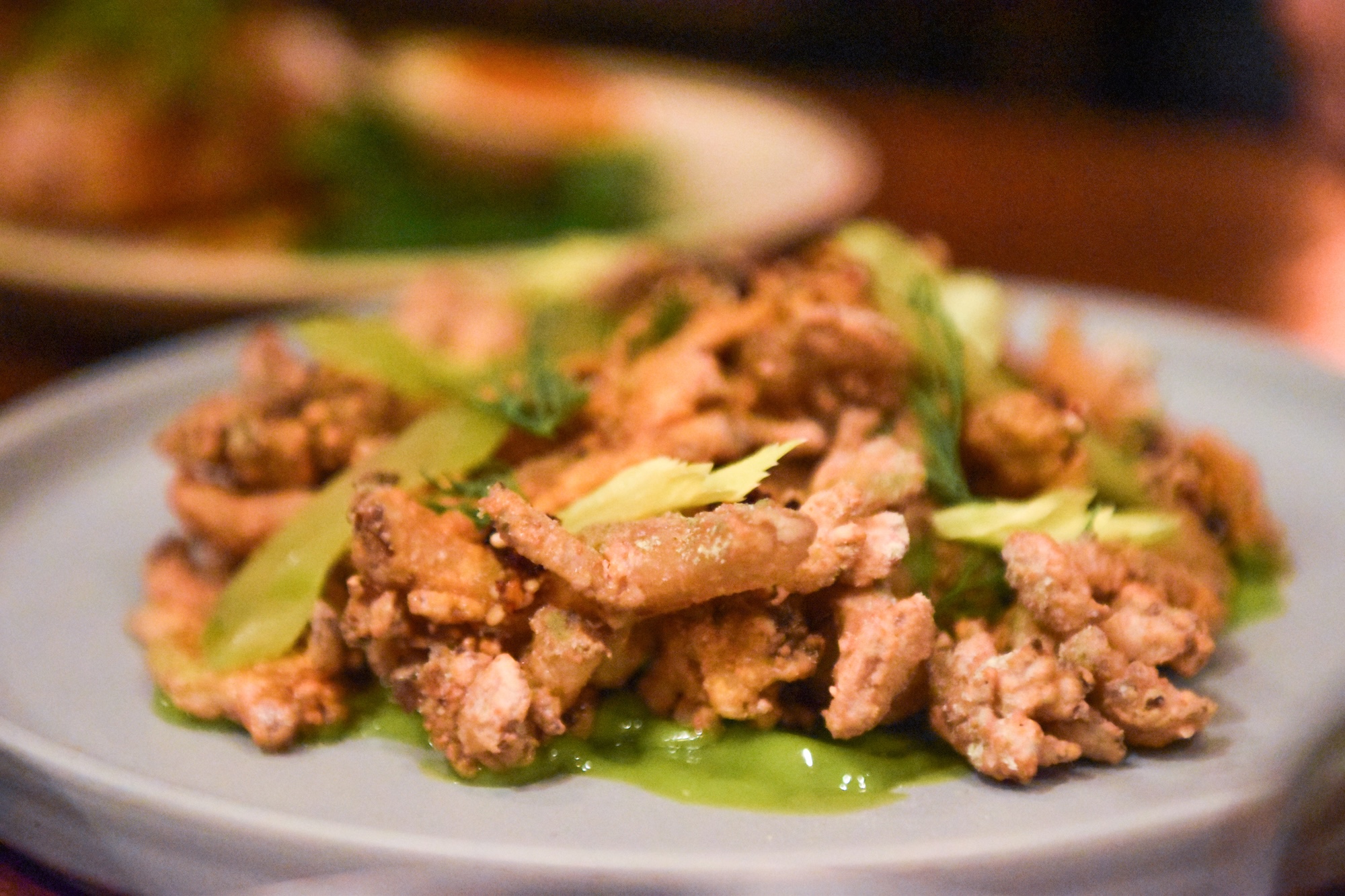
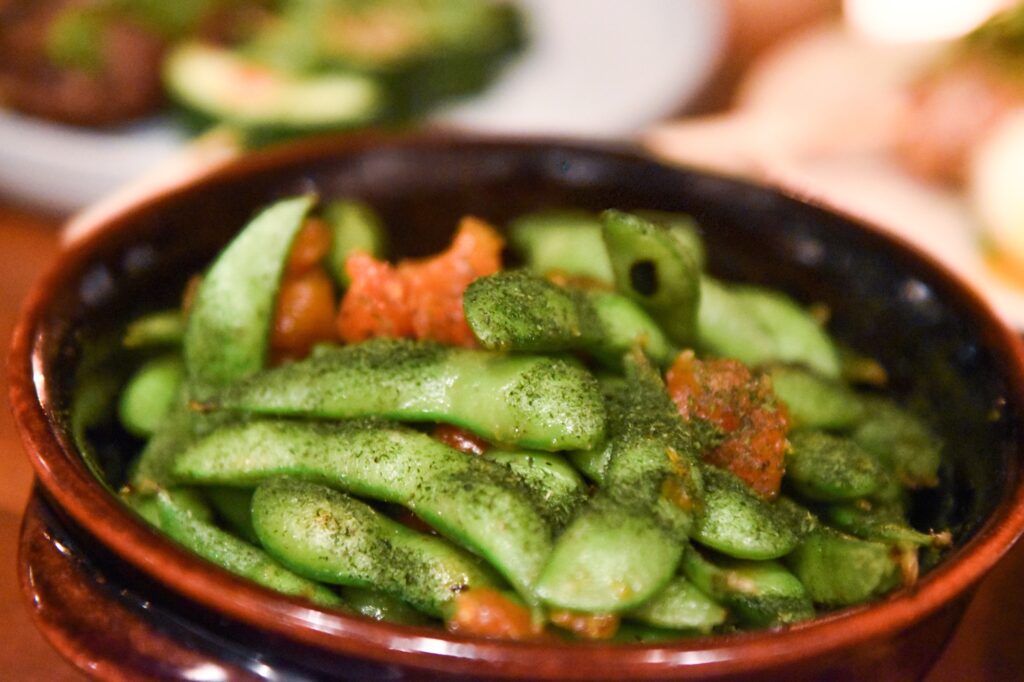
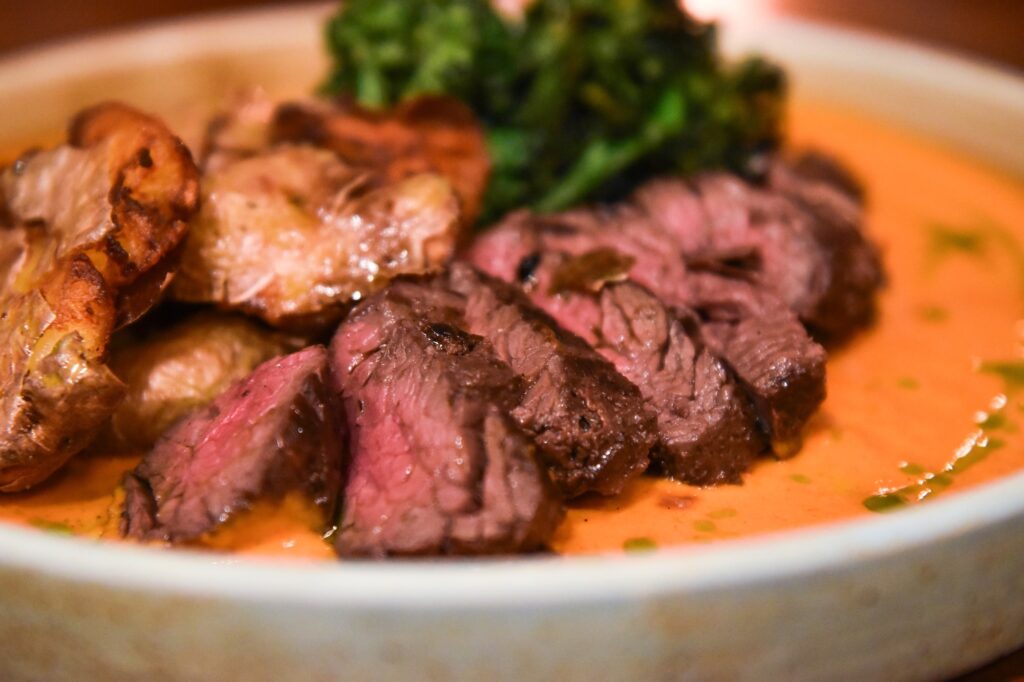
Karaage-style fried maitakes drizzled with salsa macha, layered with celery leaves, and sitting atop a charred green onion aioli. A steak marinated in koji and laid into a pool of bright, wonderfully acidic rouille that is blasted with koji and red chiles. An array of perfect yakitori—the kind that meets the standard of Chef Yoya Takahashi at Homareya—where each cut offers its own distinct flavor adventure.
It is thoroughly Japanese—no question—but with bits of French, Mexican, Southern American, and Californian influence. Newness and nostalgia, somehow occupying the same bite. That is the space Lucky Cat wants to inhabit—and they do so beautifully. Through Three Pigs, their catering and community-minded food project, Allison and Vasili have been building toward Lucky Cat’s dinner service for years.
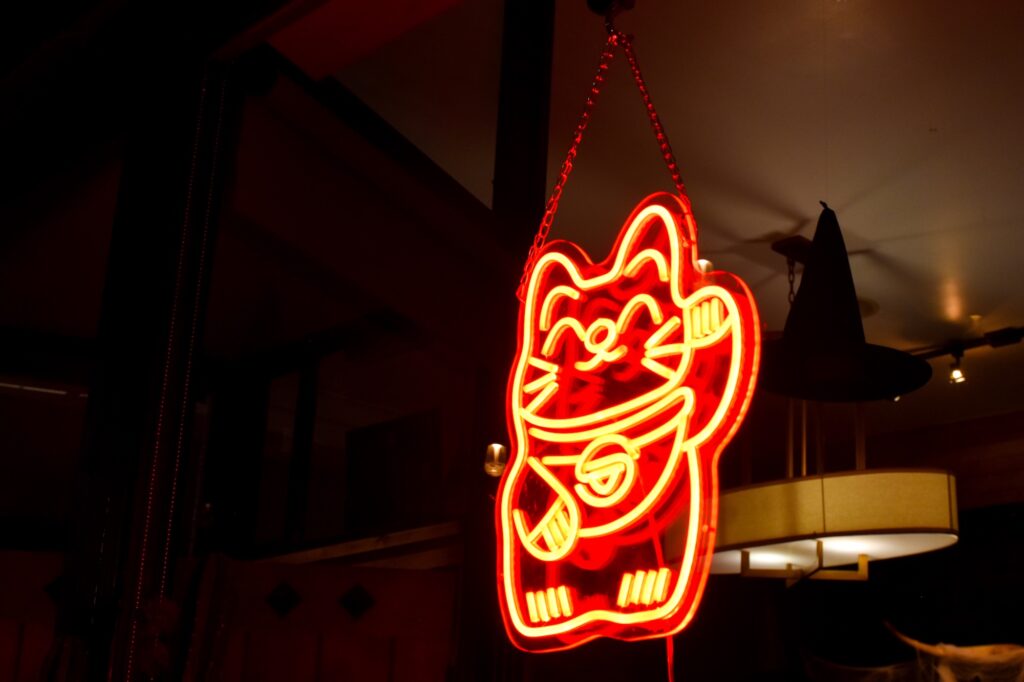
Before Lucky Cat, there were two hospitality careers meeting each other.
Vasili brings roughly two decades of experience in the restaurant industry, including work at Fishing with Dynamite, The Arthur J, and Manhattan Beach Post as their chef de cuisine under the Simms Restaurant Group. And Allison’s history runs through the dining room: hosting, serving, management, events, catering, and eventually restaurant marketing and social media.
The two met at Hey 19 in Torrance, where she was helping train staff and manage events. Beforehand, she helped Chef Thomas Ortega—whose former Long Beach space, Playa Amor, is still much missed—with Ortega 120. And their late-night closures, as many in the industry know, left them with few options. Except, that is, izakaya spaces.
“I get to finish cooking, and I get to go watch someone cook and make something that they’re so practiced and masterful at,” Chef Vasili said. “I fell in love with it: the idea that late-night quick bites don’t have to be cheap, cheaply tasting, or cheaply made.”
Surely, it looks like little more than live fire. But as Chef Vasili quickly discovered, there is an endless rabbit hole of technique involved: Butchery. Preparation. Skewering. Figuring out the complexities of charcoal, fire, and heat when it comes to preparing proteins…
The love of yakitori birthed Three Pigs, their umbrella organization that gave way to Lucky Cat in Long Beach.
“Through watching these cooks at izakayas and then traveling to Japan, my love of yakitori just skyrocketed,” Chef Vasili said. “I can’t say I ever had one person who taught me, other than just books, watching, and talking to the guys behind the grills in these restaurants… It was all just observed and hands-on experience. Honestly—several, several 1000 skewers later—every time I’m on the grill, I learn something.”
After Vasili left his last permanent kitchen position, the pair began catering and making grazing tables. Three Pigs followed, with an early pop-up at 6th and Detroit during a neighborhood summer event. The ambition was already there: Bring more of the Japanese food they loved to the city where they lived. For Allison, who is Japanese, that ambition was personal.
“While ramen and sushi are delicious, there’s so much more to Japanese cuisine,” she said. “With Chef Yoya at Homareya, Greg Beck at Sake Secret, we feel are becoming part of this community that is introducing Japanese food to Long Beach in a new way.”
Three Pigs became a way to bring some of those flavors home while building relationships through neighborhood events and collaborations with other small businesses. Lucky Cat was conceived alongside it, a separate entity for a more intimate restaurant experience compared to Three Pigs’ pop-up and catering world; one that would give Chef Vasili room to develop fuller dishes and explore the ideas he had been holding onto.
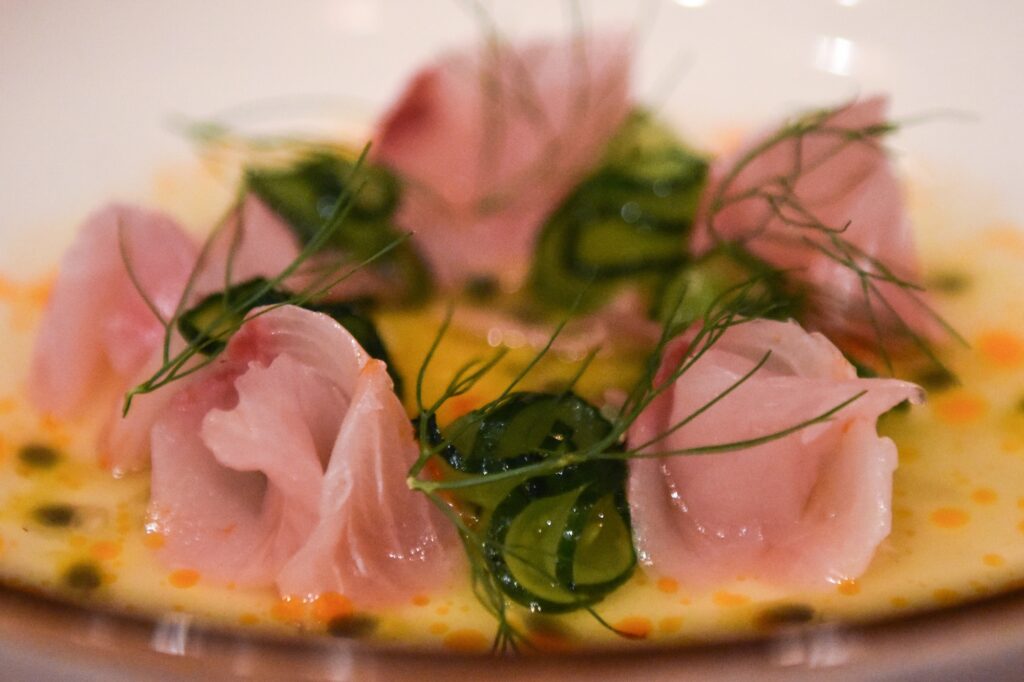
Lucky Cat’s food takes the minimalist nature of Japanese cuisine and melds with Chef Vasili’s love of maximalism.
The Panxa residency finally gave those ideas a dining room. His cooking is wildly contradictory: the subtlety and minimalism of traditional Japanese food meet maximalist cooking. Layers upon layers of flavor, but a cucumber remains a cucumber. A mushroom remains the reason you ordered the mushroom dish. That balance is deliberate.
You’ll find Chef Vasili talking about how cuisines and techniques need mutual respect—and when that respect is met, you can find connections between ingredients rather than adding influences just because he can. Seasonality matters. So does the particular heat of binchotan charcoal. So does a flavor memory that suggests where a dish might go next.
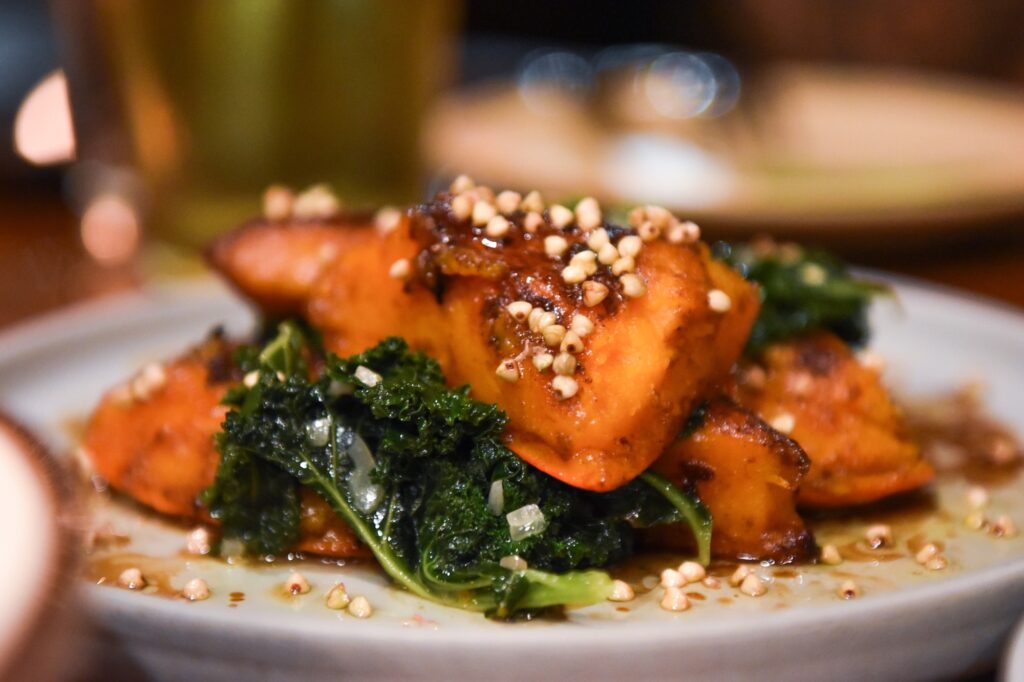
Consider his thinking around squash: the familiar pairing of brown butter and sage becomes a starting point, sure. But he rethinks it, aiming for the understated caramel notes of hojicha, miso’s mixture of subtle sweetness and salt, and buckwheat—the essential ingredient for soba noodles—fried for a wonderful bit of texture to a vegetable that is rendered incredibly soft.
“It’s the happiest I’ve ever been working with food,” Chef Vasili said.
Lucky Cat’s food in Long Beach carries both of their histories.
Allison brings another source of knowledge: her childhood experiences as the daughter of Japanese parents. Her Japanese family’s food. And her grandmother’s recipes. Their travels to Japan join those memories, as do the kitchens Chef Vasili has worked in and the meals they have shared.
“It’s like all of this has created some type of hybrid brainchild,” Allison said. “This creation is amalgamated with all of these memories and moments that we’ve had together and separately.. And it somehow works.”
That is what makes the menu feel so distinctly SoCal to me. Japanese ingredients and techniques form its center, yes. But Mexican, French, and Californian influences move through it naturally and without subtlety. It reads like the lives of the people making it—and it makes for the most exciting food to come out of Long Beach this year.
What to eat at Lucky Cat
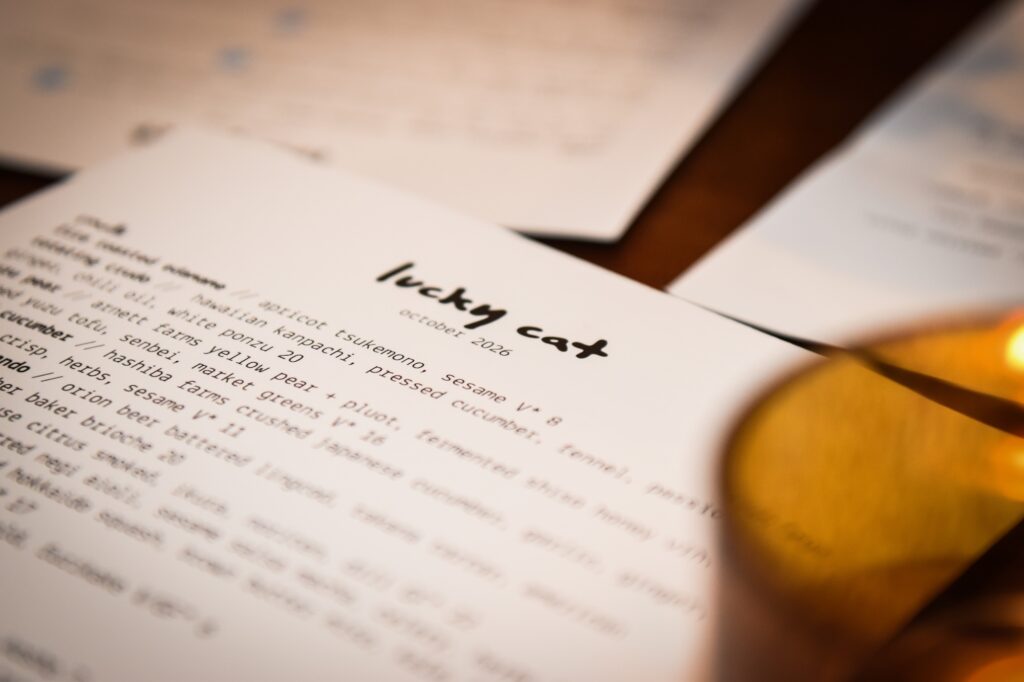
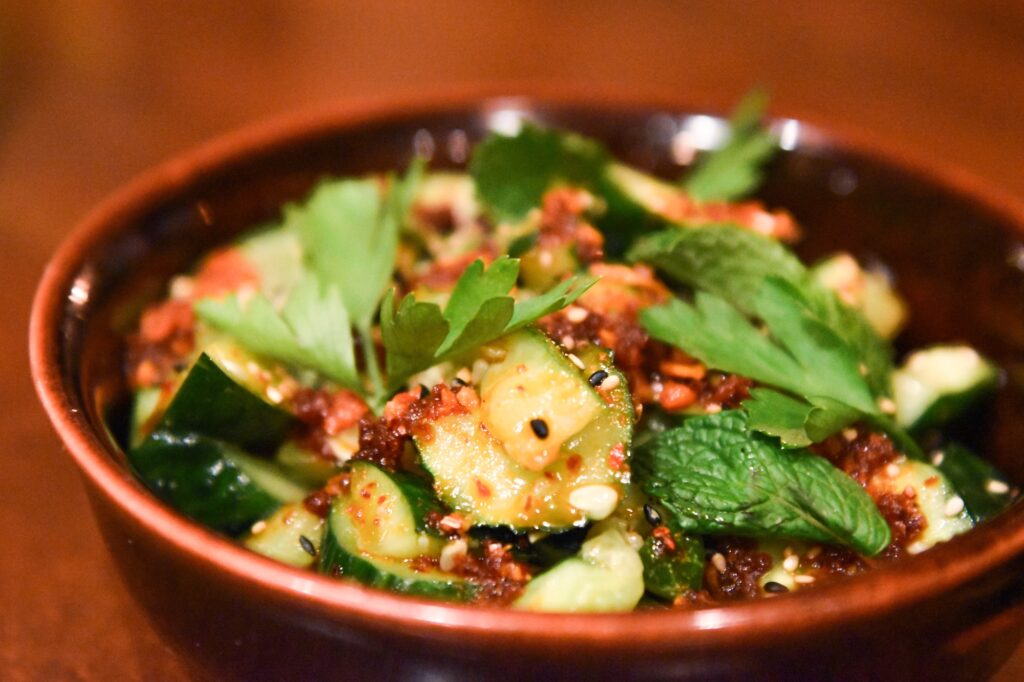
Start with the crushed cucumber, a textural wonder. Hashiba Farms Japanese cucumbers—where a very specific plot is kept for Lucky Cat alone—meet garlic, ginger, yuzu chili crisp, herbs, and sesame. It is a useful introduction to Chef Vasili’s thinking: freshness and crunch surrounded by a dressing with plenty to say.
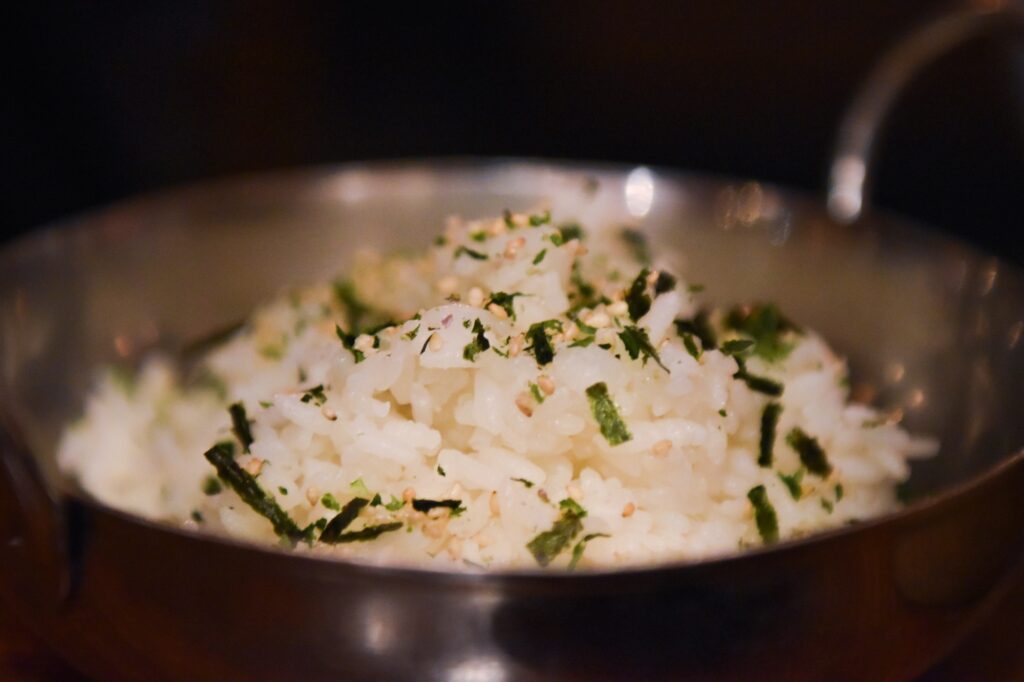
Order rice alongside it; simple, I know, but a wonderful bowl nonetheless. Using quality Tamaki Gold grains and finishing it off with furikake, it is an umami dream that is unquestionably Chef Vasili’s simplest dish but one with a punch.
The maitake karaage pushes Chef Vasili’s layered approach further, where Japanese scallion and Mexican salsa macha belong in the same conversation. The mushrooms come with a charred negi aioli—Japanese green onion and packed with the punch of earth and zest—a nicely heated salsa macha, and celery.
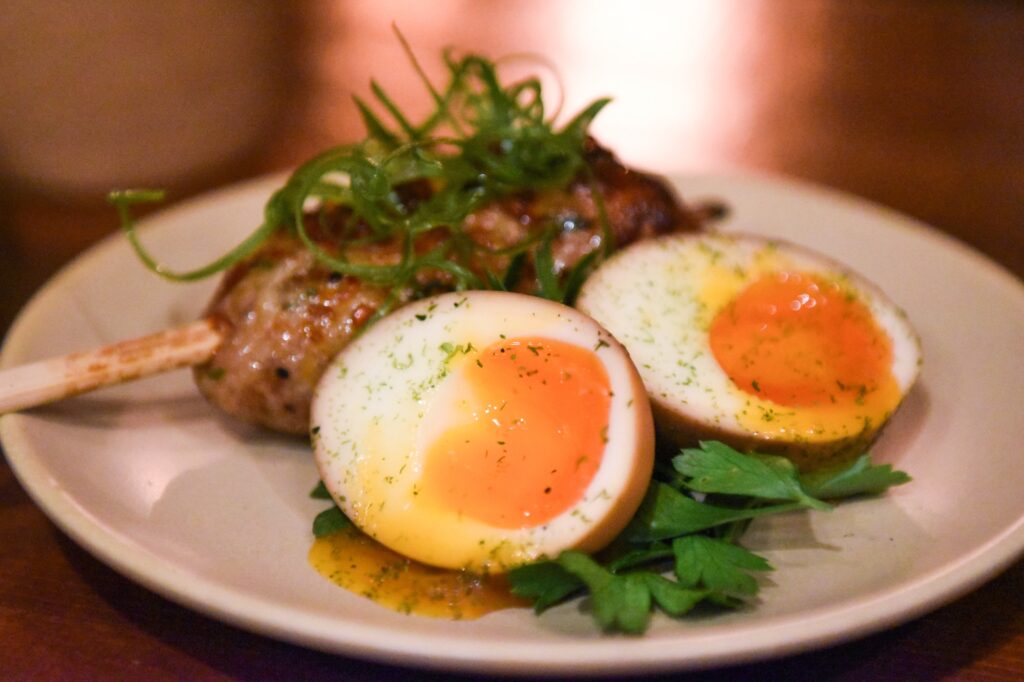
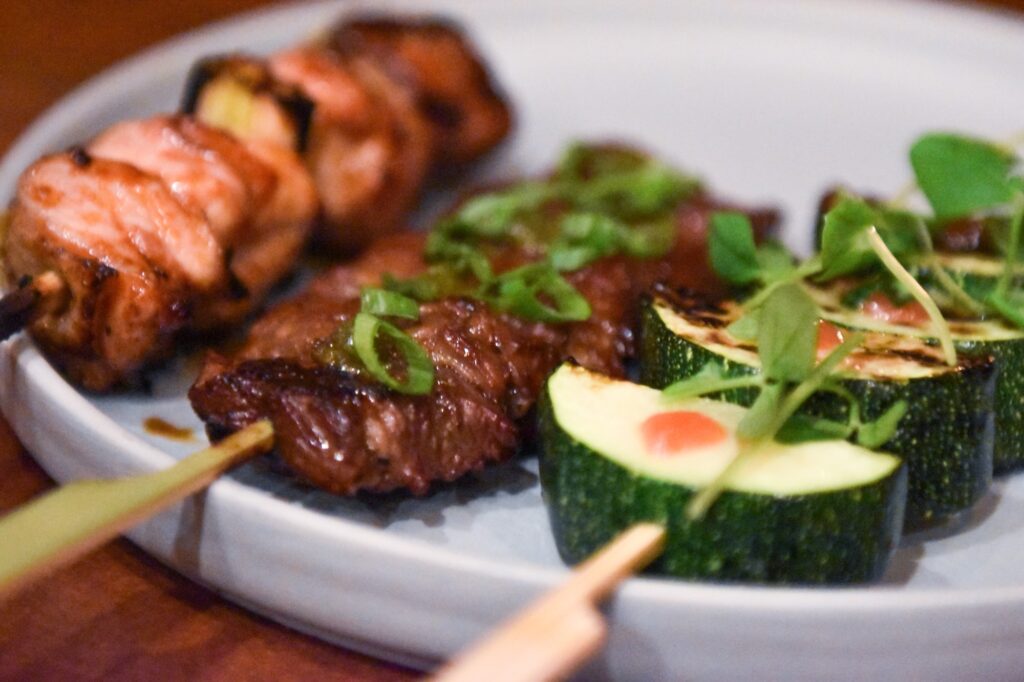
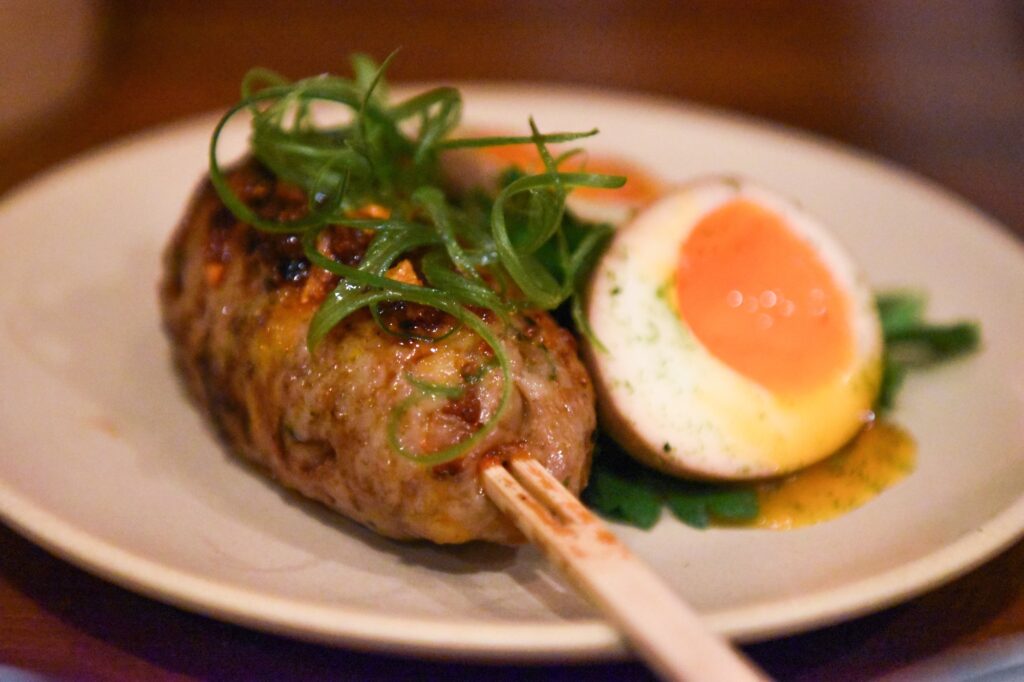
The $25 yakitori flight is the most direct route into the grill, with one of each of the four listed skewers. There is negima, a chicken thigh and negi with tare and yuzu kosho. Beef beautifully brushed with wasabi and scallion. Zucchini with umeboshi and sesame oil. And the star: tsukune, a chicken meatball where Chef Vasili dries out deboned chicken thighs and melds them with ginger, fish sauce, onion, mirin, and an additional assortment of culinary tricks. Savory as all hell, it is a gem of a skewer, served with perfectly crafted, yolky ramen eggs.
And for the weighty dishes, Lucky Cat bounces between whimsical and outright serious.
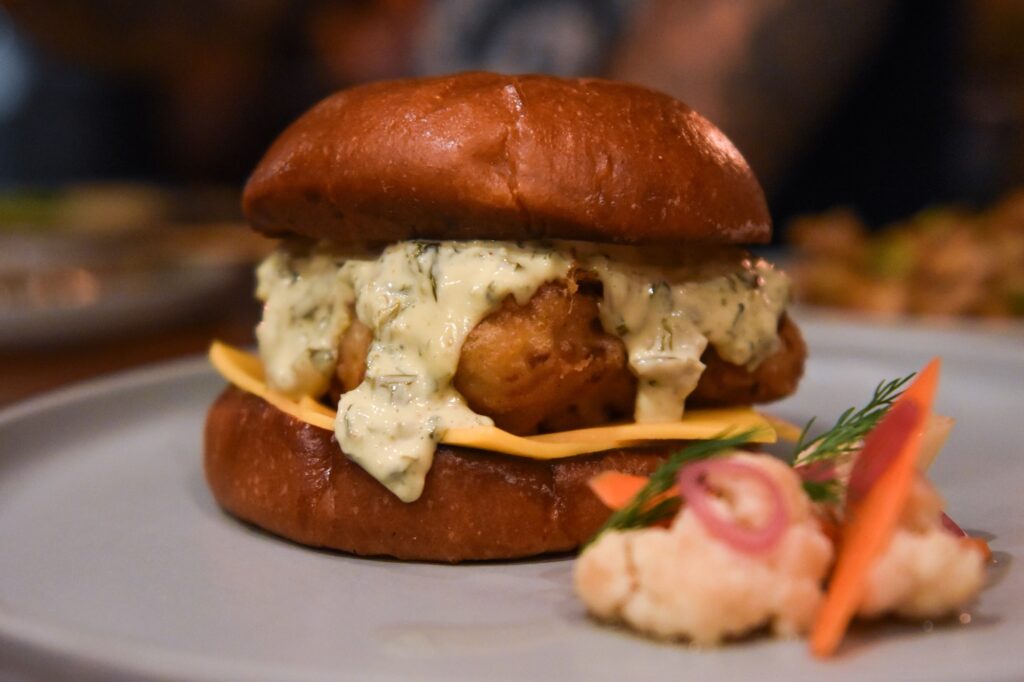
Chef Vasili, despite his apparent gravity, has a genuinely witty, if not outright whimsical, side. His Lucky-Catch-Sando, an ode to the Filet-O-Fish at McDonald’s, is a sandwich worth a second look. Thick, wonderfully acidic tartar sauce—held by peppery, pickled takana greens—is stacked upon a piece of gorgeously beer-battered lingcod. Add a slice of American cheese and a brioche from Hey Brother Baker, and you have yourself the perfect play on the fast-food classic. (And yes, one that is superior to the one at Daybird.)
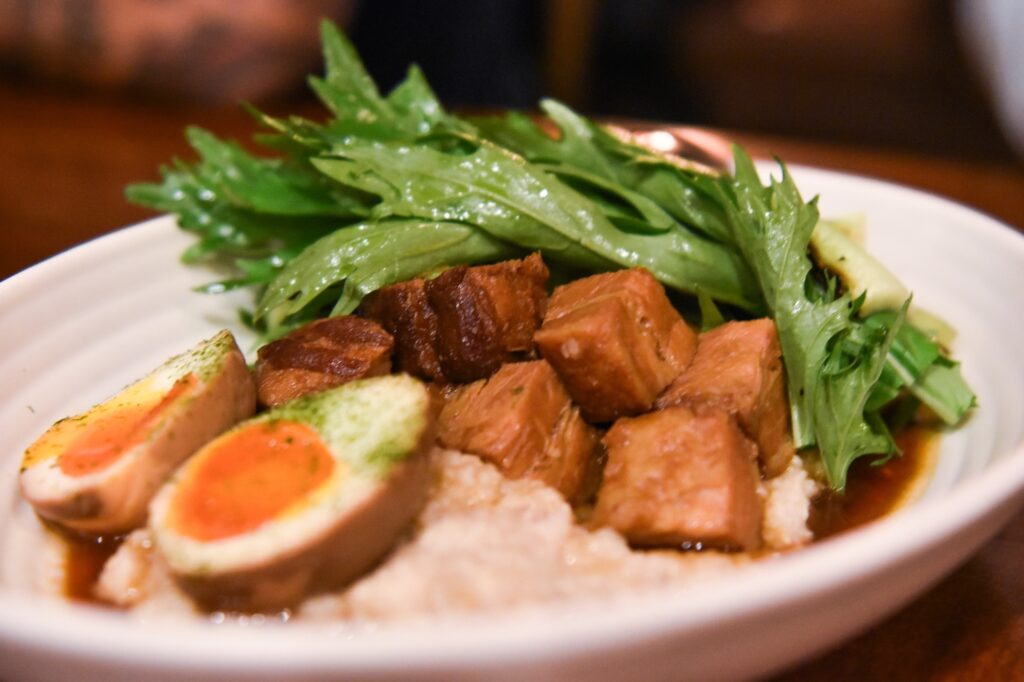
Then there is the kakuni pork belly, the dish that sent me back to a winter dinner at home. It arrives with cheesy dashi grits, baby bok choy, dressed mizuna leaves, a jammy La Bahn Ranch ramen egg, and jus. Pork belly and grits already promise comfort. Bringing dashi into that foundation gives the plate another vocabulary without losing that promise. It was the clearest expression of what struck me throughout dinner: something unfamiliar could still feel deeply familiar.
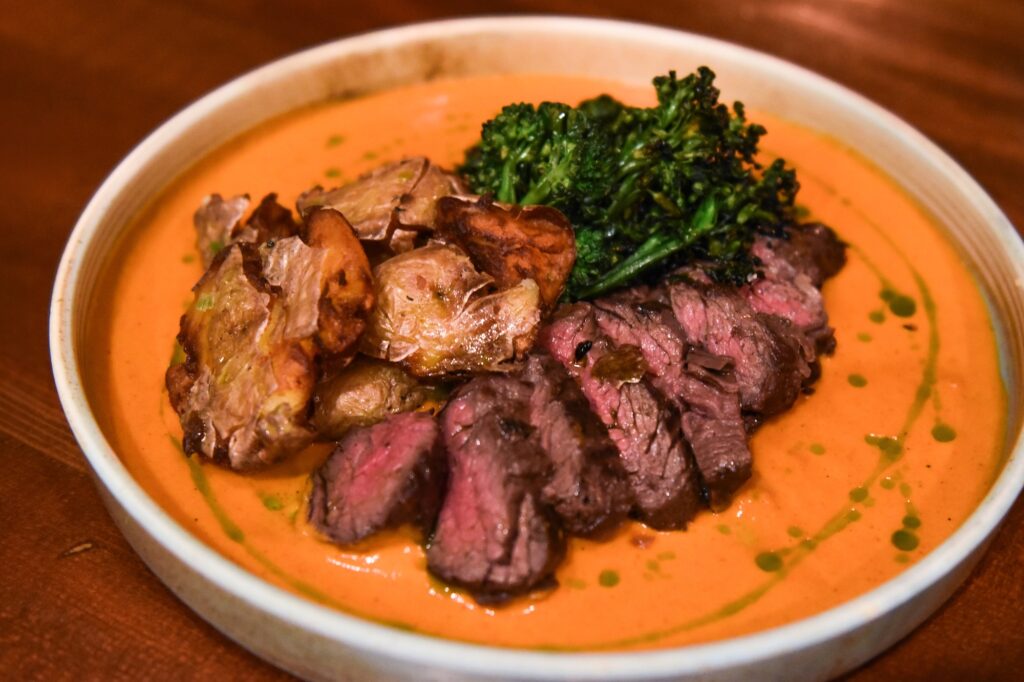
Then an outright star: his koji-marinated hangar steak, where Chef Vasili’s love of French technique meets his adoration of multicultural expression. Charred broccolini and crispy potatoes dusted with wasabi. His French-meets-Japanese rouille—a shimmering, rusty-red sauce packed with umami and heat from koji and an array of chiles—deserves its own can, with dip lovers praying to the food gods that he adds French fries to the menu so they can ask for it as a dip.
Across these plates, the menu has a signature. It belongs to this kitchen, and to these two people.
Lucky Cat became a reality not just through culinary tenacity, but relationships and city’s growing love of lifting up the underdog.
Lucky Cat’s arrival also speaks to something I have been watching across Long Beach: Established businesses are making room for emerging ones to show what they can do.
In my coverage of Got Your Back’s residency at Selva, the value of that arrangement was clear. Chef Brennan Villarreal and Sasha Schoen could bring their food and hospitality into a professional restaurant setting, with room to execute a fuller vision. In my piece on the city’s growing culture of special dinners, I argued that Long Beach should make much more of this model.
Lucky Cat shows how those opportunities can multiply.
According to Chef Vasili and Allison, Panxa’s ownership asked the Got Your Back team whether they knew someone who might want a similar opportunity. Chef Brennan and Sasha recommended Three Pigs. Relationships built through working together became an introduction, and that introduction became Lucky Cat.
Long Beach is giving restaurants room to bloom.
The pattern extends elsewhere. Loquat Oysters’ residency inside RetRoll Sushi at the Art Theatre… Our Spot Coffee & Goods built its audience through a series of residencies before announcing a permanent shop… Each offers a different example of how a business can develop in public before taking on a space of its own.
Other writers have noticed the city’s creative energy, too. In his LAist essay on Long Beach’s food scene, Gab Chabrán described an independent culinary culture willing to follow its own direction.
Residencies give that independence somewhere practical to work. A kitchen. Equipment. Tables. Repeat services that allow a team to refine a menu, understand its audience, and test how its ideas function as a restaurant before committing to its own lease and buildout.
With that, the Tavernakises are beginning to look at spaces and consider what a permanent home could be as they extend their residency through December. For now, Lucky Cat gives them room to hone the experience while continuing to build the community around it.
“Basically everyone that we’ve ever popped up with around Long Beach has had a role in Lucky Cat,” Chef Vasili said. “Ceramic artists. Farmers. Fellow food businesses. And everyone who has offered support along the way. Three Pigs remains the foundation underneath it all: a network of relationships that has helped Lucky Cat, a restaurant, take shape.”
Lucky Cat operates inside Panxa Cocina on Mondays and Tuesdays, 5PM to 9PM, with its residency extended through the end of December. Reservations are encouraged; walk-ins are welcome.