
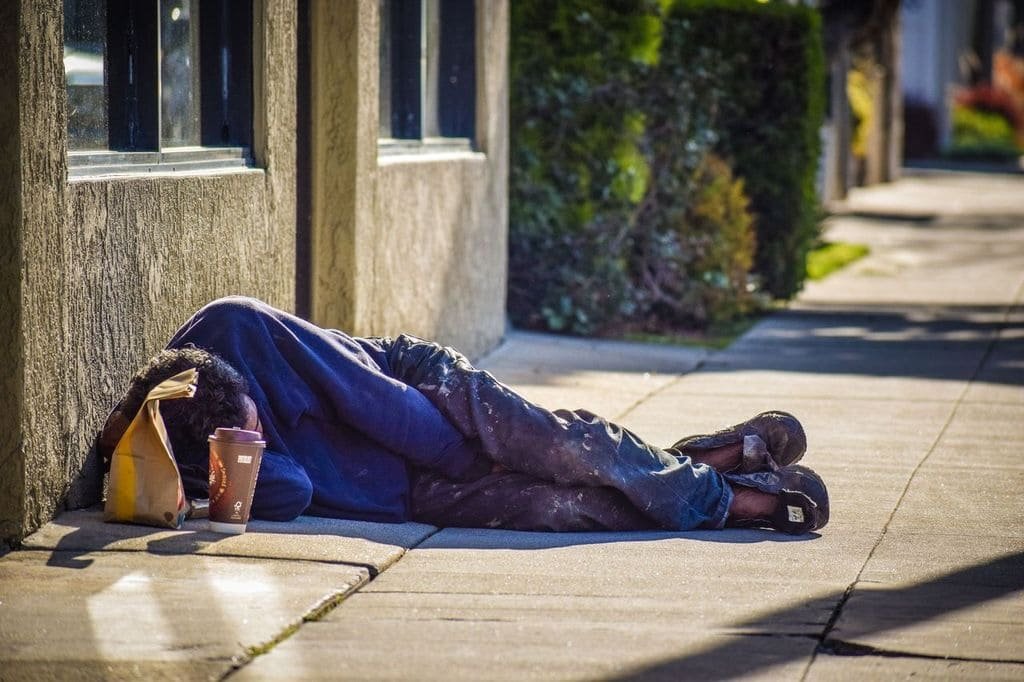
“I’ve been assaulted multiple times,” one speaker said, holding up his hand with a scar across it as proof. “I’ve had a gun pulled on me. My business has been broken into. I’ve witnessed public nudity, open drug use, violent outbursts, and threatening behavior almost every single day… I am exhausted. But I refuse—absolutely refuse—to give up the dream I’ve built here.”
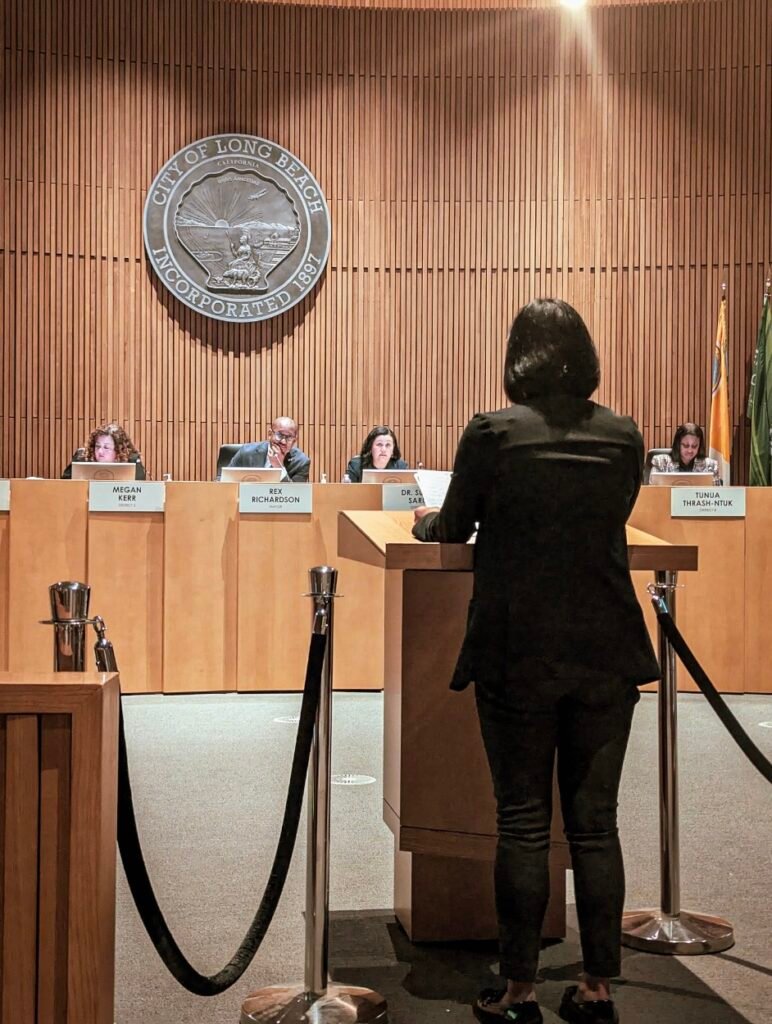
There were the words of Chris Sweeney, owner of Right Mealz in Downtown Long Beach. Neither his nor others’ words were minced last night when over 20 restaurateurs, small business owners, residents, and community leaders waited patiently to speak in support of an agenda item set to examine and increase the efforts of various city agencies to amp up public safety and the quality of life.

Loara Cadavona, an 18-year Downtown resident, talked about witnessing a young unhoused woman give birth to a stillborn baby on the sidewalk outside Ground Hideout. The incident—confirmed by multiple community members, including the owners of the coffeeshop—had been followed by several pleas from Loara and residents for authorities to get the woman into healthcare—something Loara said went “unheard.”
Orsa Modica, owner of the long-loved Modica’s deli on Ocean for over 30 years, has been through much. She once had urine thrown at her while serving on her patio. Her space has been broken into repeatedly. Her staff threatened. But like nearly everyone who spoke, she focused on a need to be partners with the city: “We’re in a public safety and mental health crisis,” she said. “And we’re here to partner with you, to work with you, to make it better.”
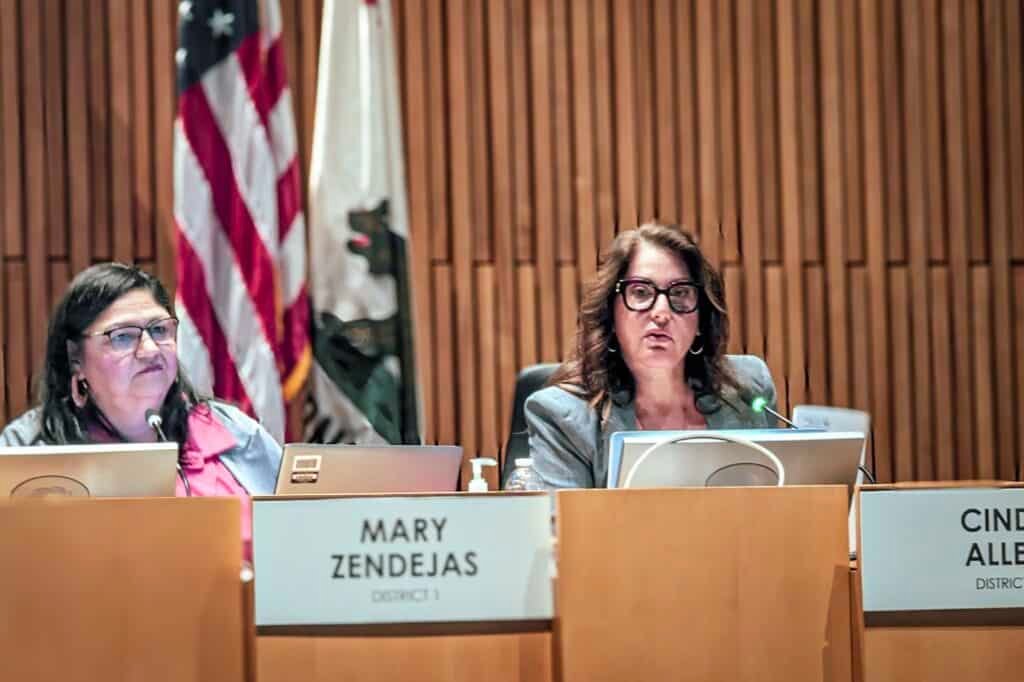
Long Beach Council Seeks New Strategies to Support Business Corridors Battling Crime, Disorder
Faced with ongoing reports of crime and quality-of-life issues impacting local businesses, the Long Beach City Council is pushing for a more coordinated, measurable, and transparent approach to improving safety in commercial and entertainment corridors across the city. A new agenda item requests that the City Manager—working with the Police Department, Economic Development, Health Department, and Financial Management—return in 90 days with a comprehensive report outlining new strategies to better support struggling corridors and nearby residential areas.
A closer look at what the City is proposing to look into
The forthcoming report would include several key components:
A deeper look at mental health responses and CARE Court
Updated information on how the Health Department and the state’s new CARE Court system are coordinating outreach to individuals with severe mental illness, particularly those who repeatedly refuse services, was requested.
Public-facing metrics and progress reports
A framework to routinely measure, track, and publicly report safety improvements—such as enforcement activity, response times, or quality-of-life observations—specific to individual business corridors was requested.

How Long Beach is adapting to Grants Pass v. Johnson
How the city is implementing action following the landmark Grants Pass v. Johnson Supreme Court ruling, as well as a May 2025 city memorandum outlining local compliance. The Court’s decision reshaped how cities nationwide can regulate public camping and address homelessness.
Exploring more funding for LBPD visibility
Councilmembers are also requesting a feasibility study on increasing police presence in key corridors—potentially including more bike patrols, more Quality-of-Life officers, and greater after-hours visibility. The City Manager would determine the duration and deployment strategy, if funding is deemed feasible.
Why this matters: Businesses say the numbers don’t match their reality
Although LBPD’s July 2025 Crime Reduction Update shows significant declines in homicides, shootings, and property crimes citywide, many business owners say those improvements aren’t being felt on their block. Across neighborhoods, owners and Business Improvement Districts continue to report familiar problems: vandalism, drug activity, loitering, break-ins, harassment, and other behavior that keeps customers away.
Local groups—business associations, community organizations, BIDs—have already been partnering with city departments through programs like the Visual Improvement Program Grant and Level Up LB. But the council acknowledges that even with these resources, many corridors feel stuck in cycles of disruption and instability that undermine economic recovery.
City staff argue that while large-scale crime trends are improving, the lived experience in some commercial areas lags behind. That mismatch has fueled calls for more targeted, corridor-specific approaches, more boots on the ground, and better sharing of information between police, businesses, and neighborhood groups.
Fiscal considerations and staff impact
Most of what the council is requesting involves updates, analysis, and planning—work that is expected to have moderate staffing impacts across multiple departments. However, the proposed creation of a new citywide corridor metrics system could require substantial new technological and staffing resources. The feasibility of reallocating funds for additional LBPD presence will also be evaluated and returned to council.
No direct job impacts are expected at this stage.