

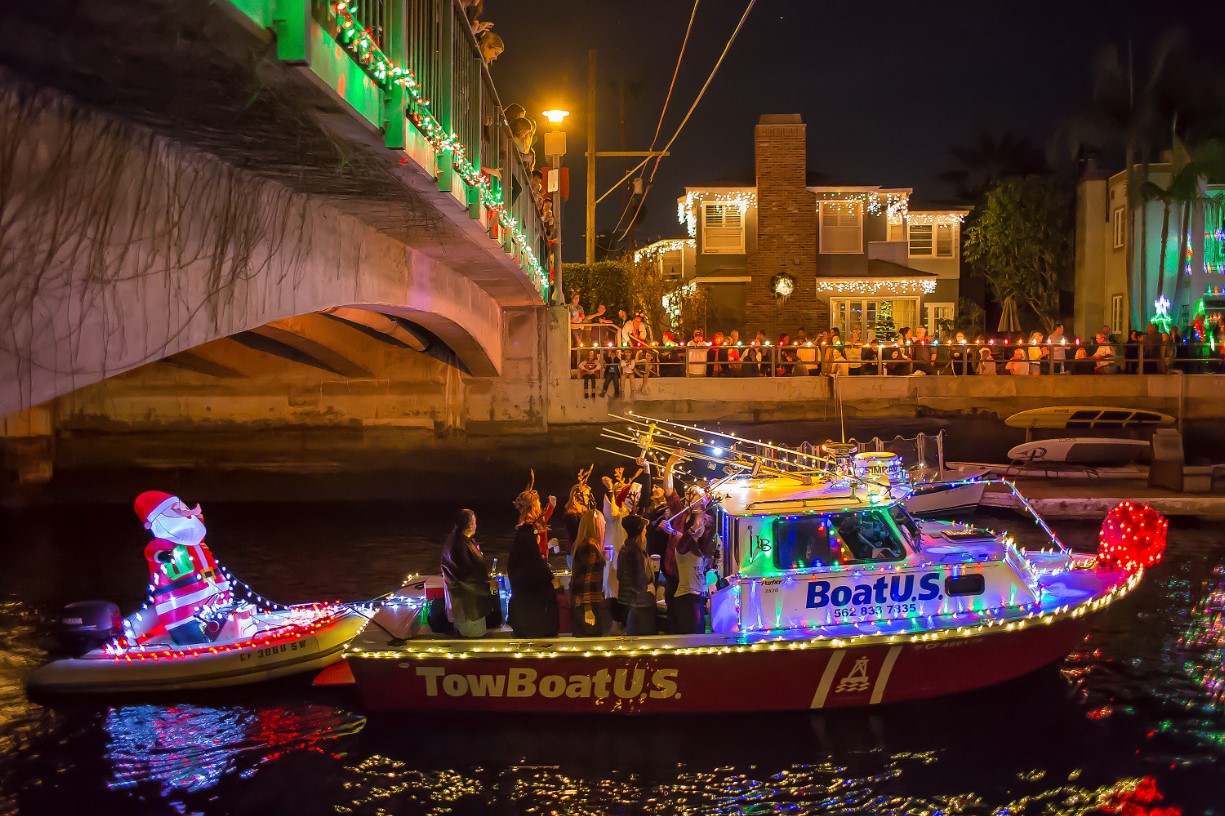
For generations, Naples has offered Long Beach a particularly SoCal version of Christmas: lights reflected in canal water, decorated boats slipping beneath bridges, and a neighborhood whose waterfront becomes part of the celebration. This December, that tradition is taking a pause.
The Naples Improvement Association announced Nov. 7 that the 2026 Naples Island Holiday Boat Parade is canceled, its first cancellation since the pandemic. President Ben Fisher cited flooding risks and waterfront hazards in an email.
It is “too unsafe to draw tens of thousands of people to visit Naples this holiday season,” Fisher wrote in an email sent out to subscribers. He described deteriorating seawalls, exposed rebar, and altered docks.
A Christmas tradition shaped by the water
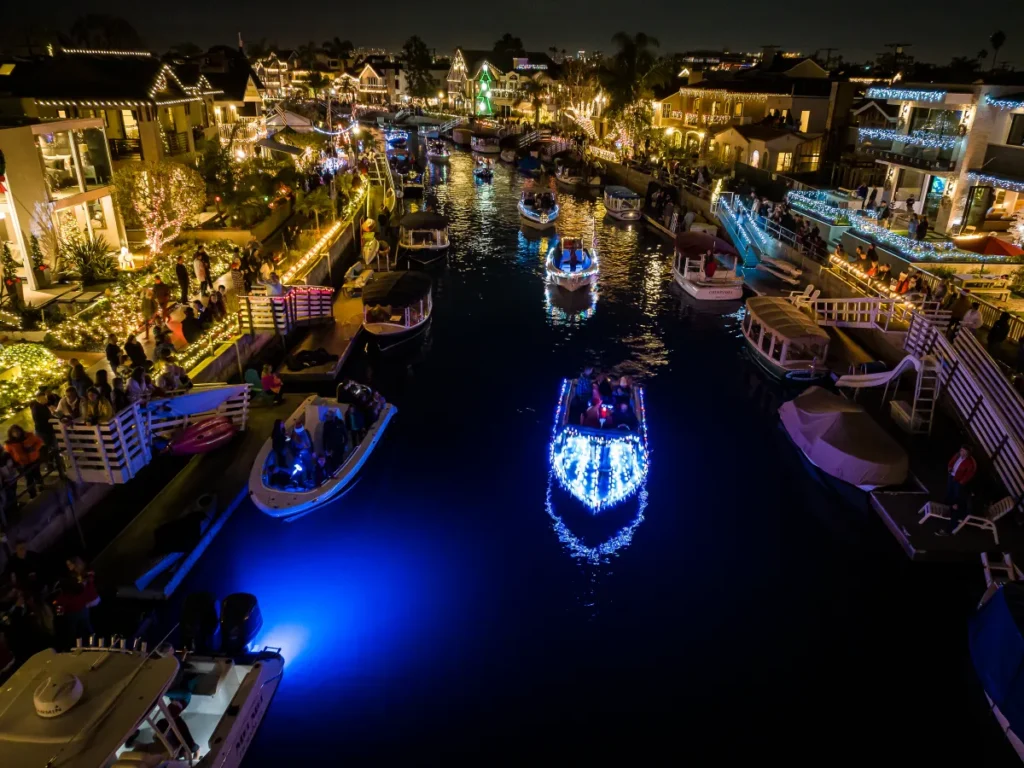
The parade dates to 1946, making it an 80-year-old piece of Long Beach’s holiday identity. Canal-side decorating has become its own seasonal attraction, extending the neighborhood’s Christmas presence beyond a single procession. Long Beach Waterbikes’ local history traces the parade’s beginnings and the waterfront’s longstanding holiday traditions.
Water levels have always helped dictate how the celebration works. Small boats travel through the canals, while larger vessels follow a separate bay route; the bridges limit what can pass beneath them. Before the cancellation, the association had listed this year’s parade for Dec. 12, according to a review of its published calendar.
This year, the concern extends to the shore.
El Niño adds pressure to an already vulnerable waterfront
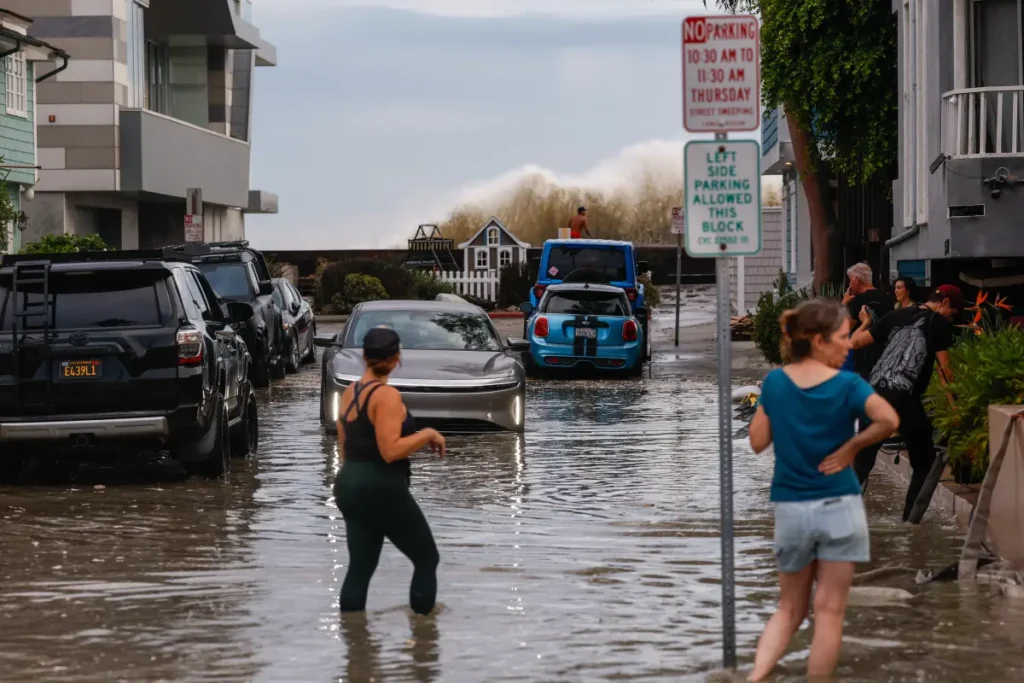
In a Nov. 4 update, NOAA reported that late October brought record water levels to several California tide gauges, including Los Angeles. The agency identified a combination of unusually high astronomical tides, El Niño-driven ocean waves and a marine heatwave.
Those ocean waves, called Kelvin waves, can temporarily elevate coastal sea levels by 6 to 12 inches or more over several weeks. Warm water also expands, adding to the height of the water beneath each incoming tide.
NOAA identifies Nov. 22 through 27 and Dec. 22 through 26 as periods of above-normal high tides and increased flooding risk. Those windows describe broader seasonal concerns; they are not a forecast for conditions on the parade’s previously scheduled date.
The seawalls are part of the story
Long Beach’s own Naples Seawall project documentation says a 2009 evaluation found significant disrepair. It also identifies the seawall as public infrastructure for which the city is responsible. Replacement work encompasses more than the walls themselves: sidewalks, drainage, railings and dock access are all part of the waterfront system.
Fisher’s criticism highlights an unresolved infrastructure problem. Councilmember Kristina Duggan, meanwhile, said the seawalls remain stable under high tidal pressure and that work to reduce seepage would begin the following week.
Parade funds will instead support pumps, hoses, plugs, and generators—“resources our waterways and neighbors desperately need,” Fisher wrote. Individual homeowners will decide whether to decorate.