
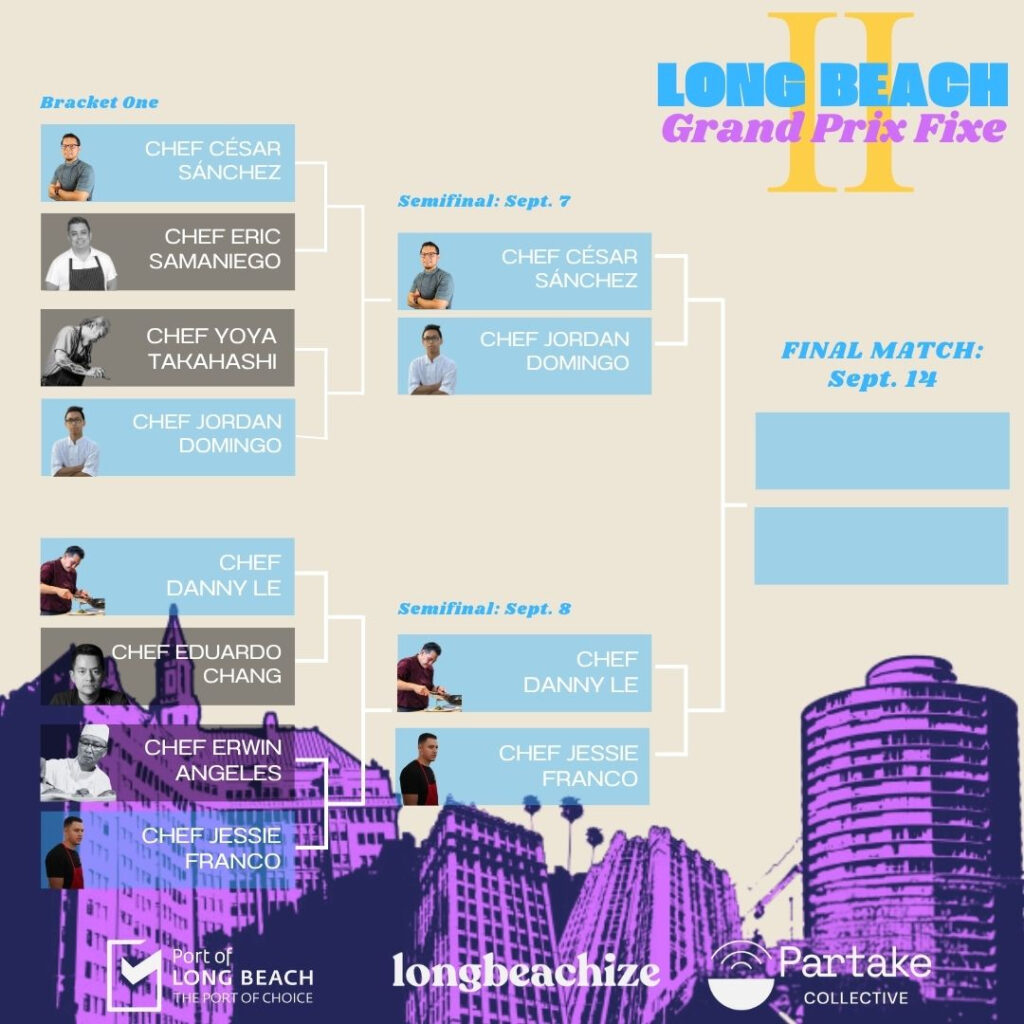
The semifinal field for the second annual Long Beach Grand Prix Fixe is officially set.
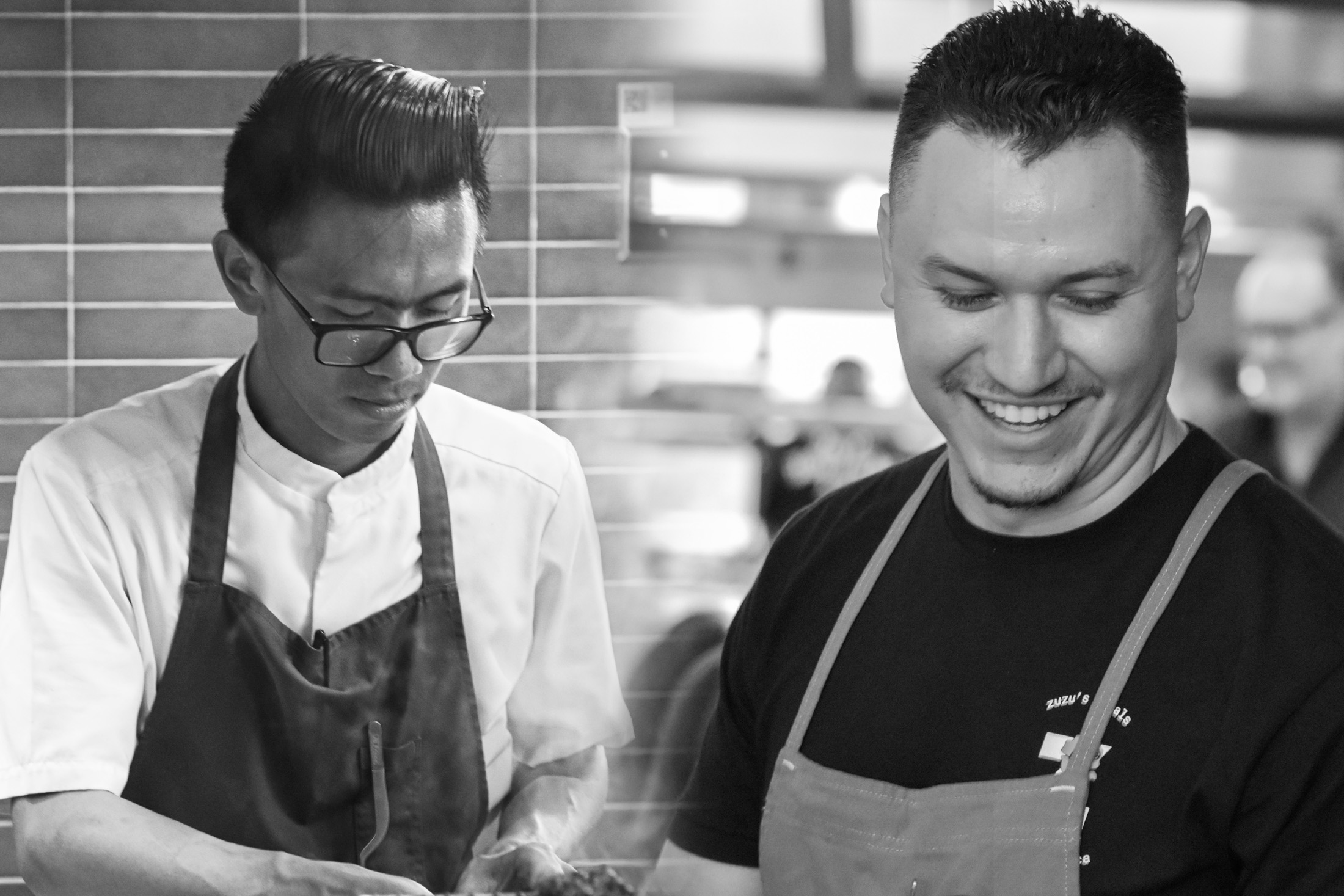
Chef Jordan Domingo of Slao defeated Chef Yoya Takahashi of Homareya on Monday, Aug. 31. The following evening, Chef Jessie Franco of Zuzu’s Petals emerged victorious over Chef Erwin Angeles of Kihon.
Their victories complete the opening bracket of this year’s competition, joining Chef César Sánchez of Ruta 15 and Chef Danny Le of Chez Bacchus in the semifinals on Monday, Sept. 7, and Tuesday, Sept. 8.
And for both chefs, the wins represented something particularly meaningful.
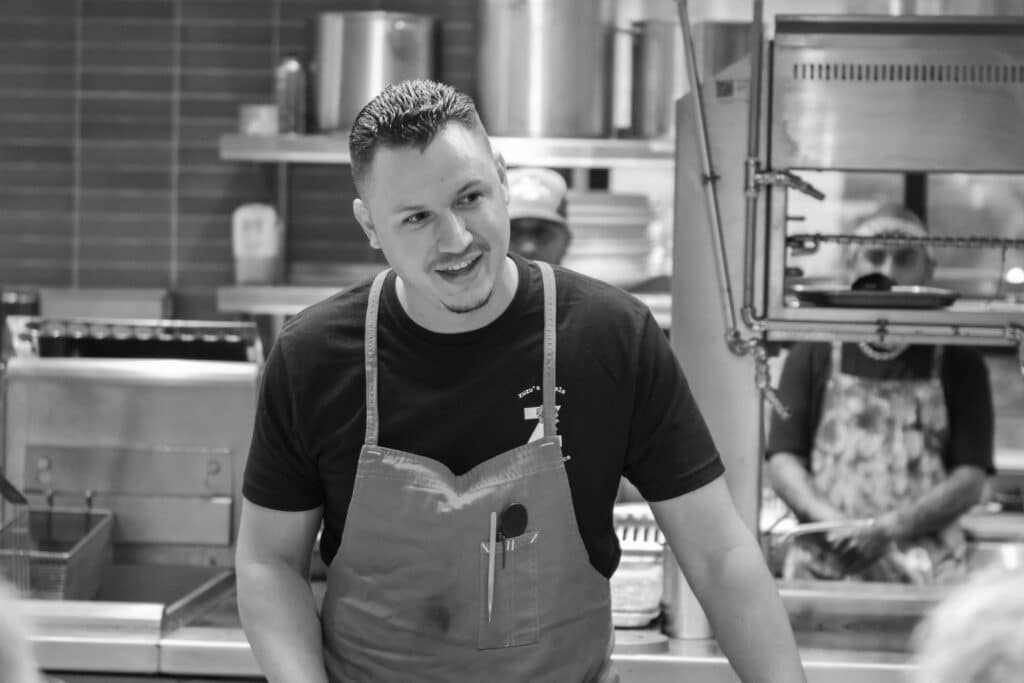
For Chef Jordan, it marked the culmination of a journey. And it’s a journey that began behind the scenes of last year’s competition, when he served as sous chef to Chef Maxwell Pfeiffer throughout his run to the finale. This year, Chef Jordan entered the Grand Prix Fixe with a menu. A two-man team. And an emerging steakhouse concept entirely his own.
For Chef Jessie, the night provided an opportunity to step beyond the brunch framework that has made Zuzu’s Petals one of Long Beach’s most popular daytime restaurants. And finally, to show diners what his cooking looks like after dark.
Wait—so what is the Long Beach Grand Prix Fixe?
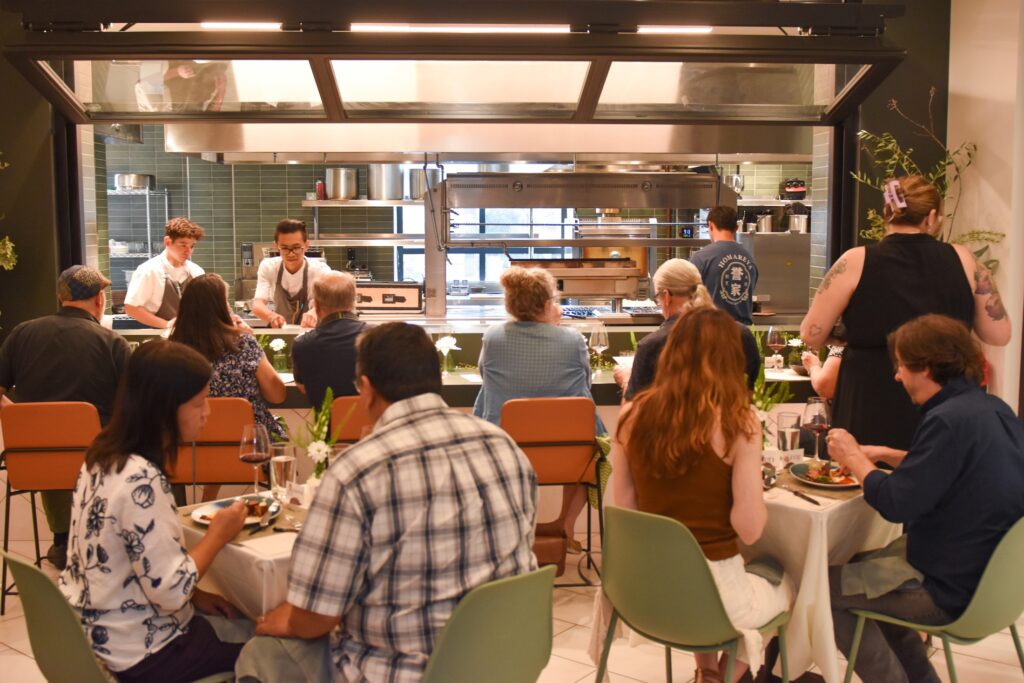
That is the Long Beach Grand Prix Fixe at its most basic: Eight chefs. Head-to-head, bracket-style dinners. Three courses from each competitor served side by side. And, ultimately, one chef left standing after diners decide who was best overall after breaking down their plates on everything from presentation and taste to storytelling and cohesion. Following that, the chef moving on will have to create an entirely new menu the following week.
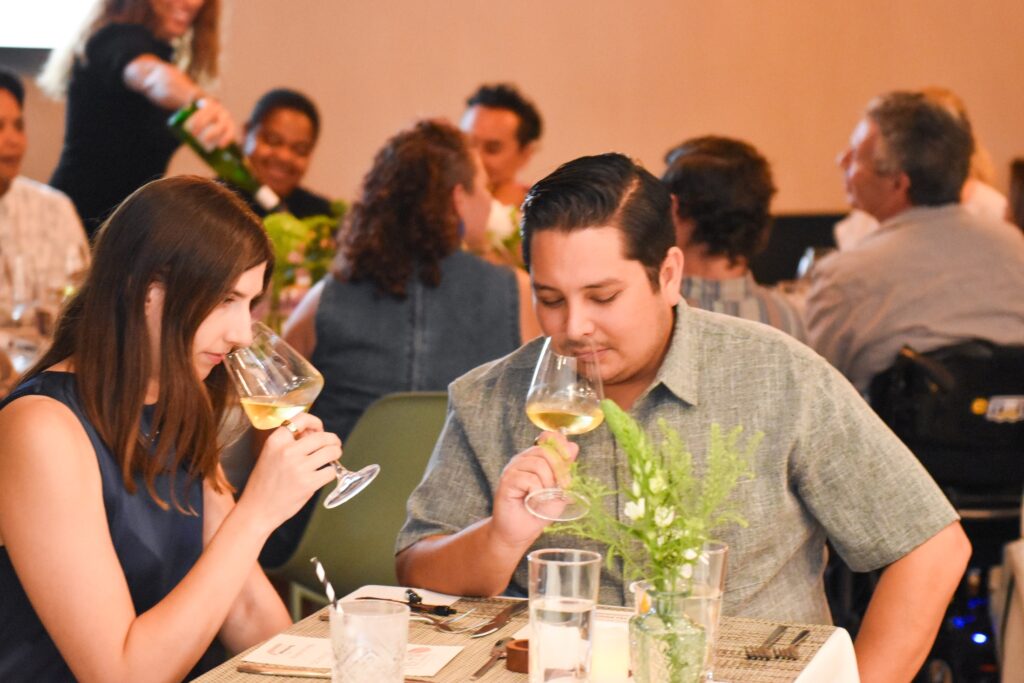
Even more, we’ve tried to make it even more local: We have partnered with the Long Beach Farmers Market to provide produce for the chefs each week while connecting with wine bars and wineries for the pour. This week, we connected with the fine folks at The Vintage LBC in Bixby Knolls and Marlena owner and sommelier Robert Smith, each of whom provided the wine.
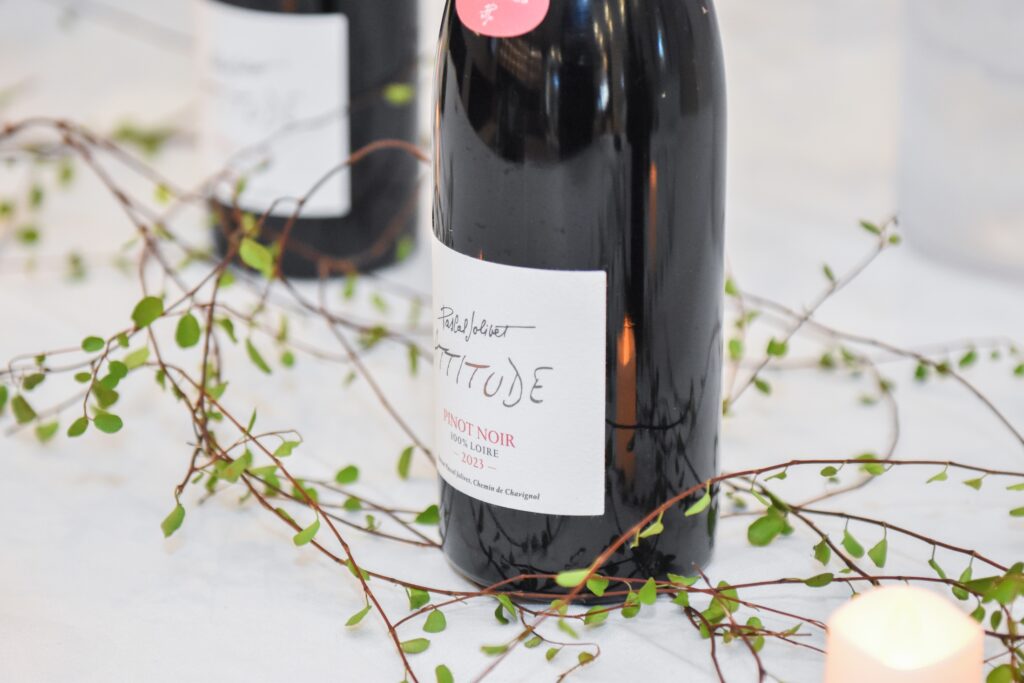
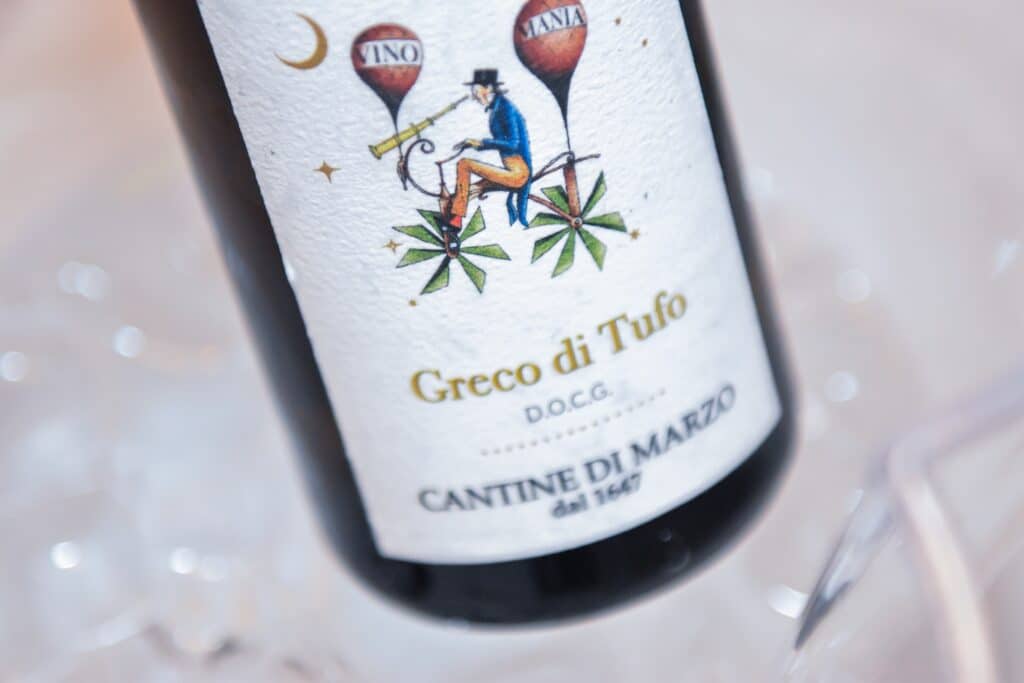
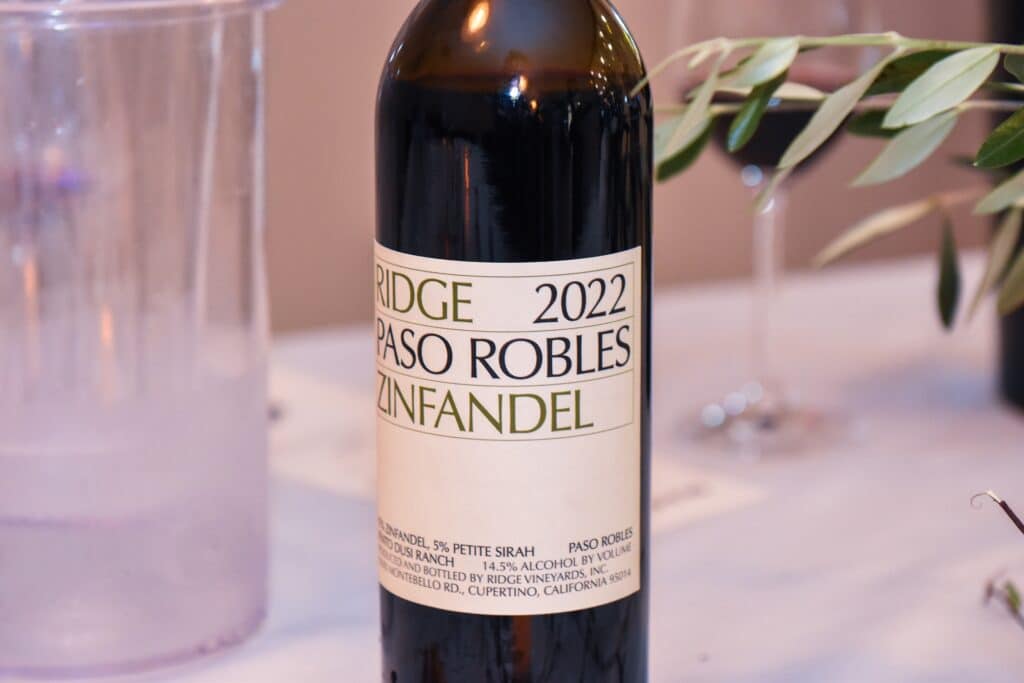
Thank you to The Vintage LBC and Marlena for their gracious support in providing this week’s wine service. Photos by Brian Addison.
That last part is vital. The Long Beach Grand Prix Fixe is not simply a string of tasting dinners; it is a competition built around evolution. Each bracket carries its own theme and set of expectations, forcing chefs to move beyond a single polished menu as they inch toward the finale.
Bracket 1, dubbed “Self,” asks a simple question: What shapes each chef’s culinary identity?
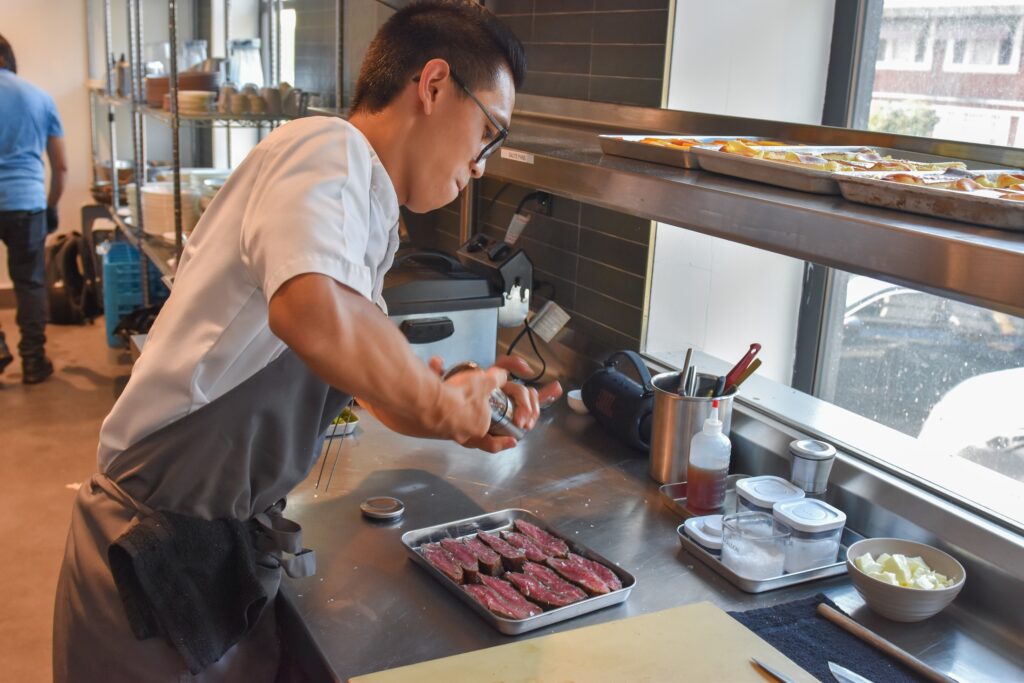
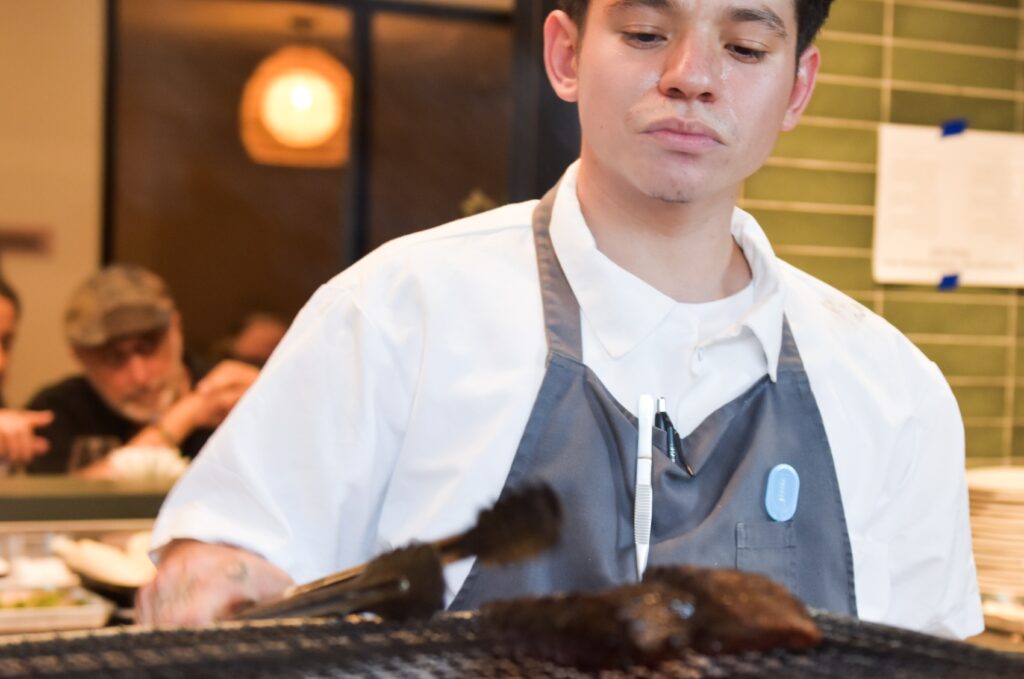
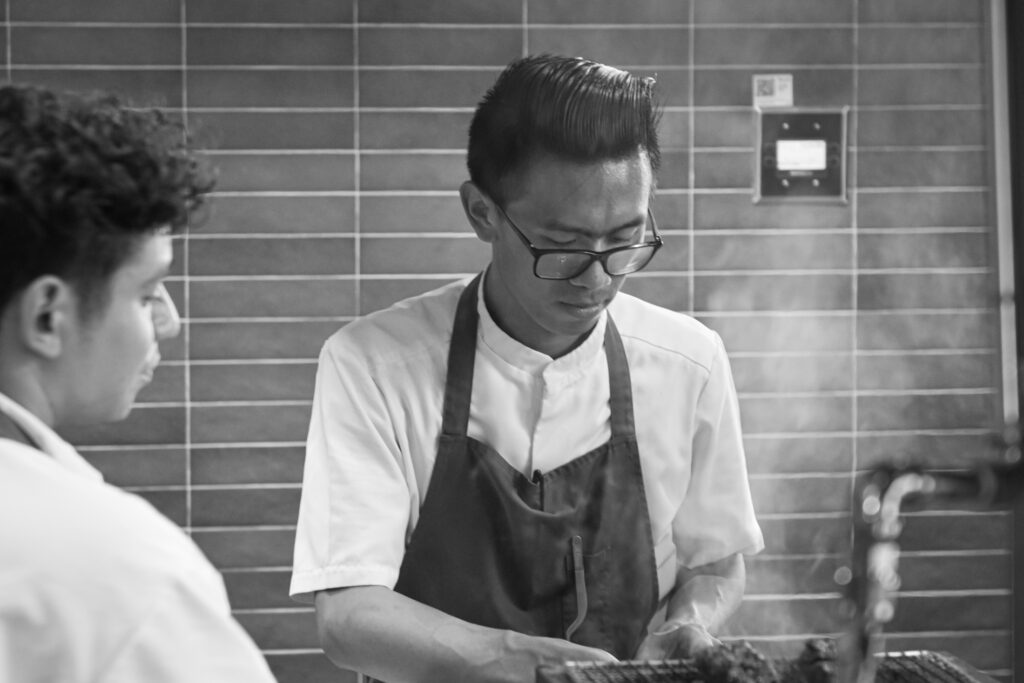
Chef Jordan Domingo makes the competition his own
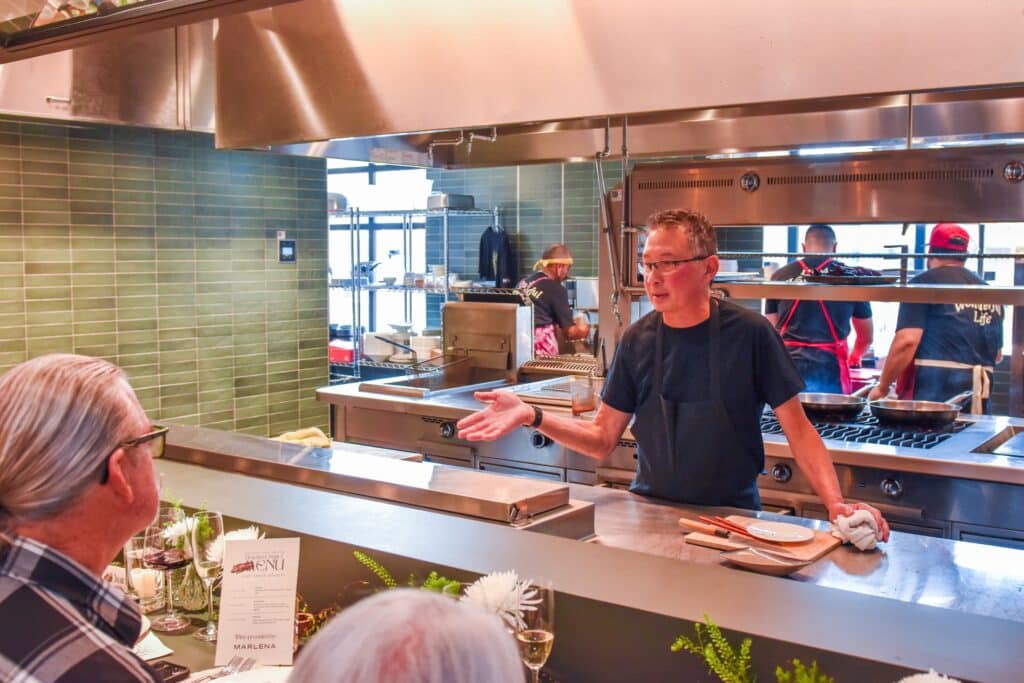
On Monday, Chef Jordan returned to Partake Collective’s R&D kitchen in a vastly different position. And that i as s the chef whose name was printed across one side of the menu.
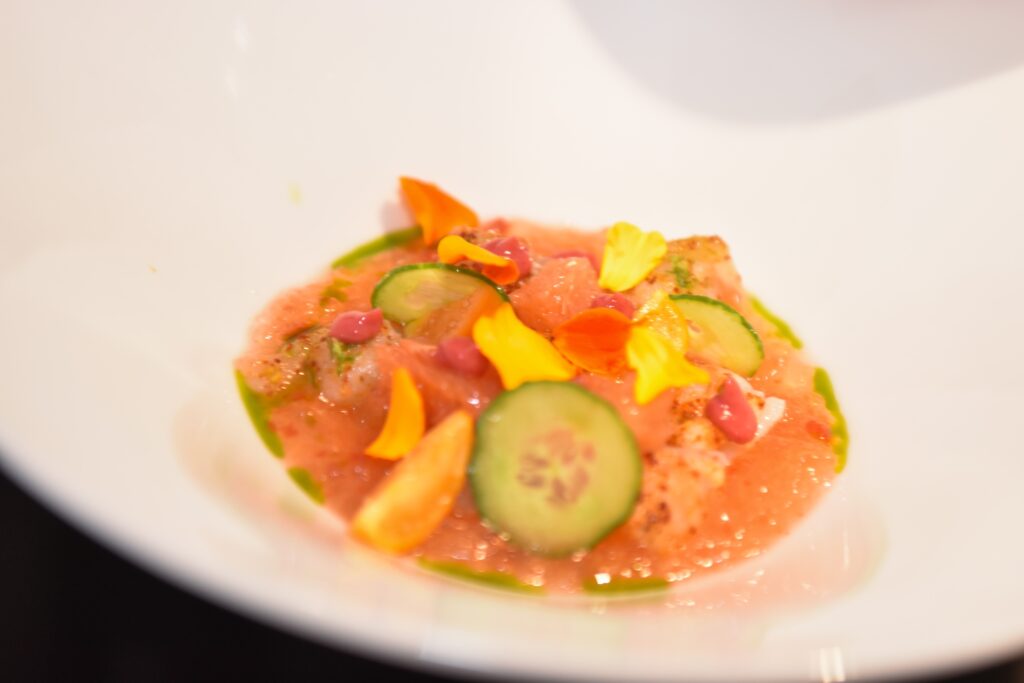
Chef Jordan opened with chilled prawns surrounded by fermented raspberry, citrus, cucumber and tomato consommé, basil oil and marigold. It was a bright, highly composed beginning. One that balanced the sweetness of the prawns and fruit against acidity, fresh herbs and the savory clarity of the consommé.
But the heart of Chef Jordan’s menu—and, fittingly, the clearest expression of Slao—was his ribeye.
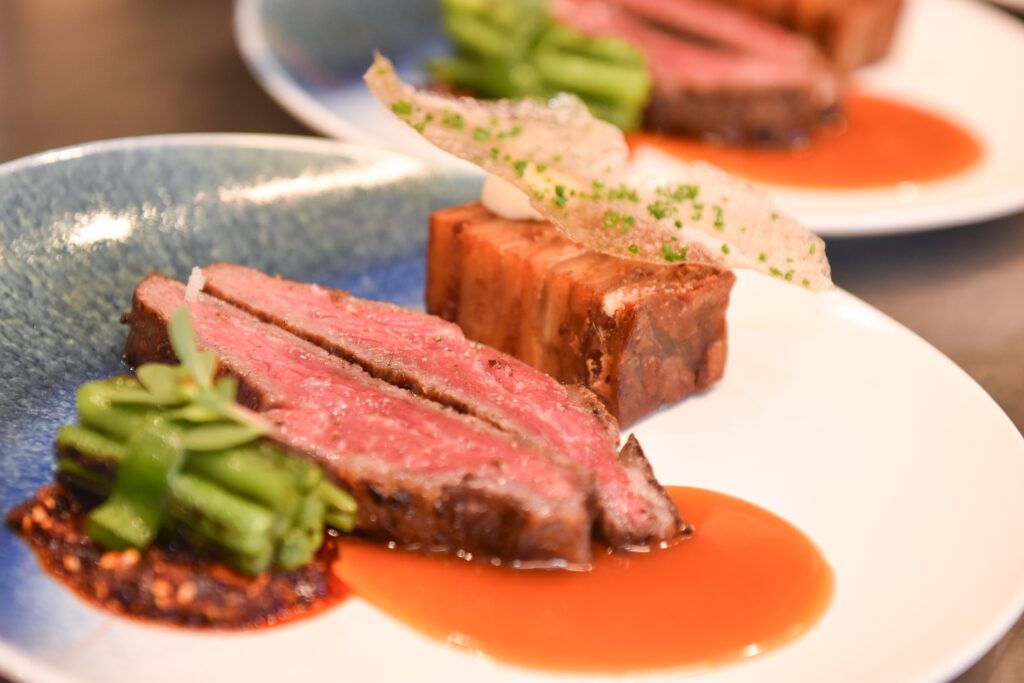
The 15-day dry-aged USDA Prime beef. Charred green beans. Chile-onion crunch. A playfully reimagined “baked potato” and smoked-watermelon bordelaise. It was a steakhouse plate in structure, but not one bound by steakhouse convention: familiar elements were filtered through smoke, chile, texture and a touch of summer fruit.
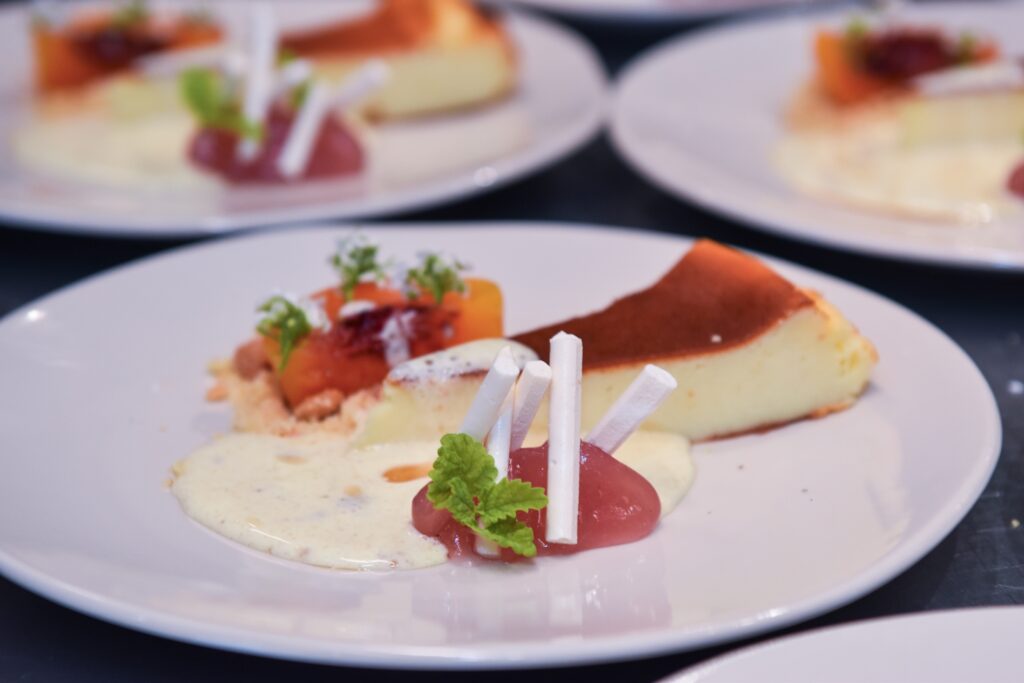
He closed with a Basque-style cheesecake accompanied by poached peaches, peach gel, almond sablé, meringue and coffee. It brought the meal back toward comfort without abandoning the detail that ran throughout the menu.
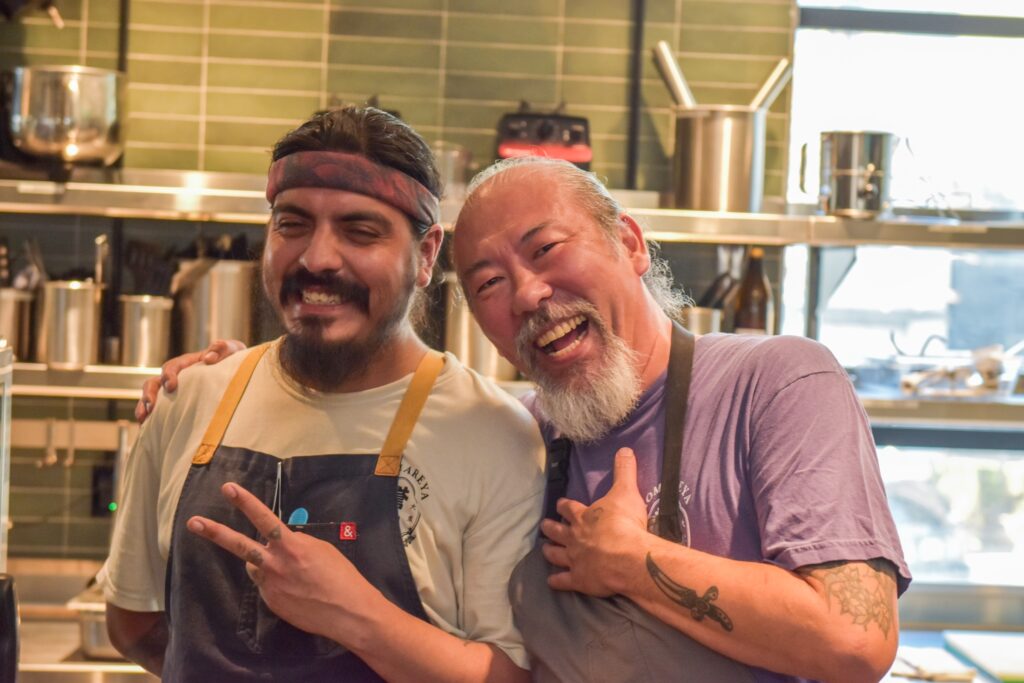
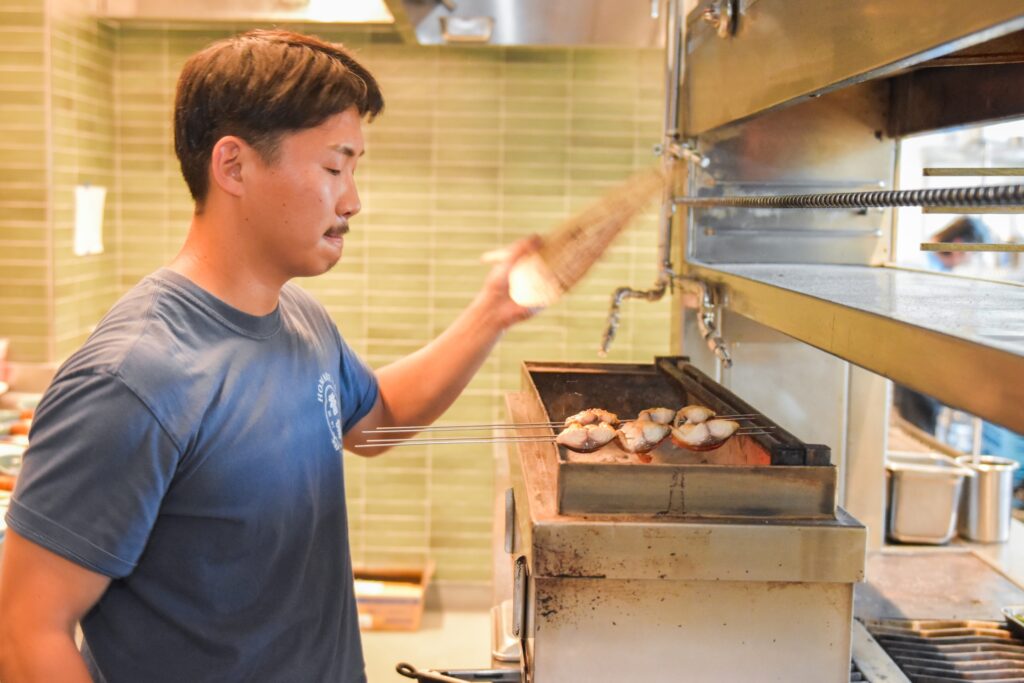
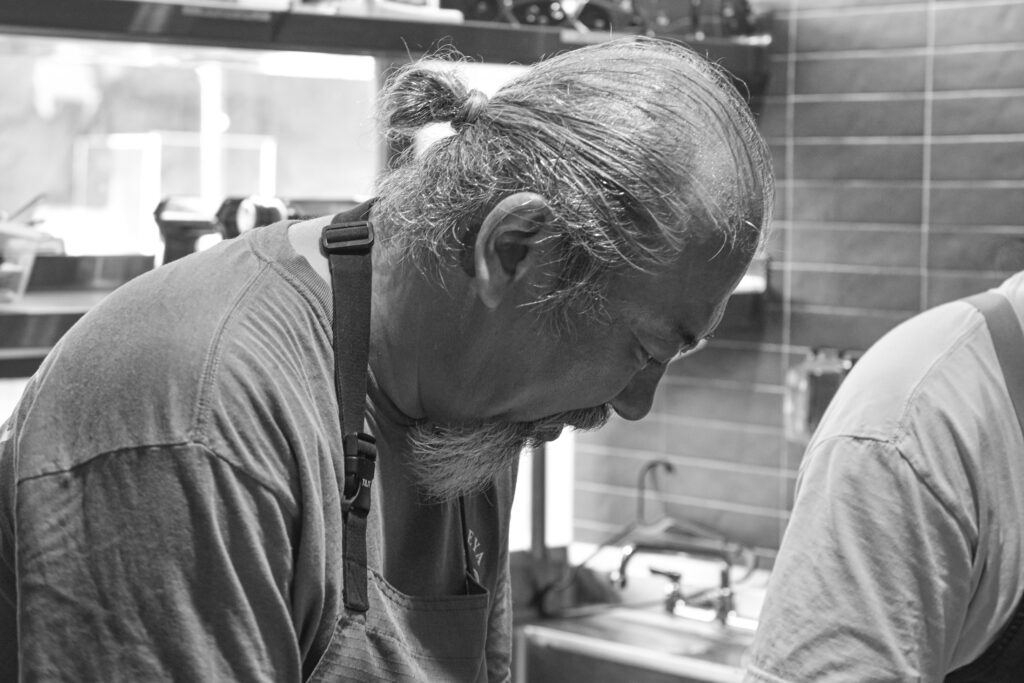
Chef Yoya Takahashi offers an unmistakably Japanese progression
Across the kitchen, Chef Yoya Takahashi delivered a concise menu that spoke directly to the Japanese cooking at the heart of Homareya.
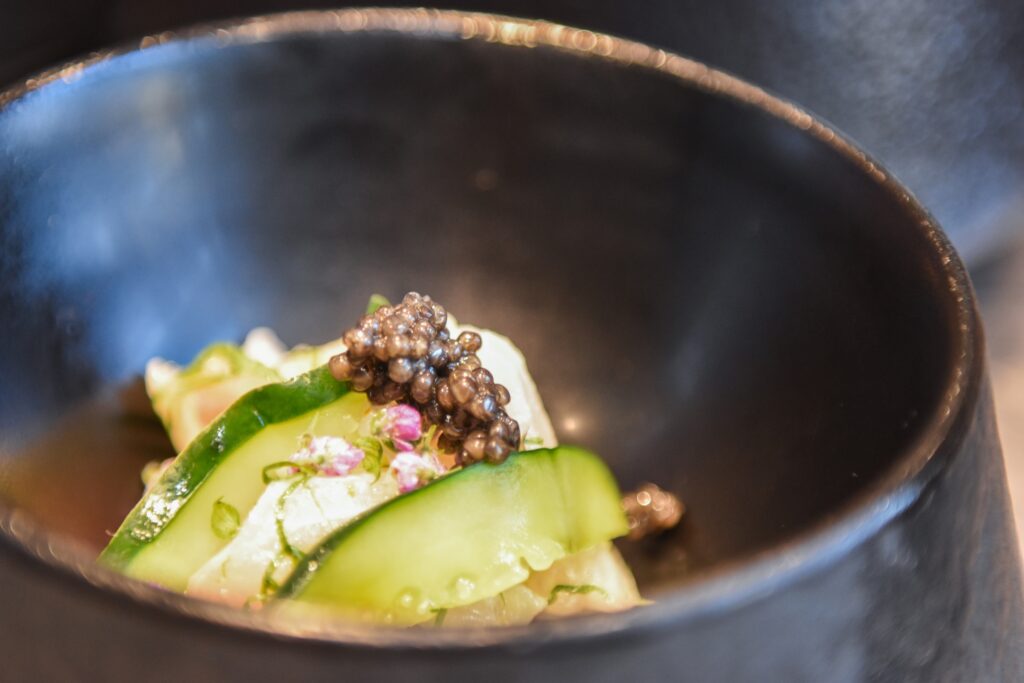
He began with sea bream dressed with citrus and white ponzu—a restrained opening that placed the fish itself at the center of the plate.
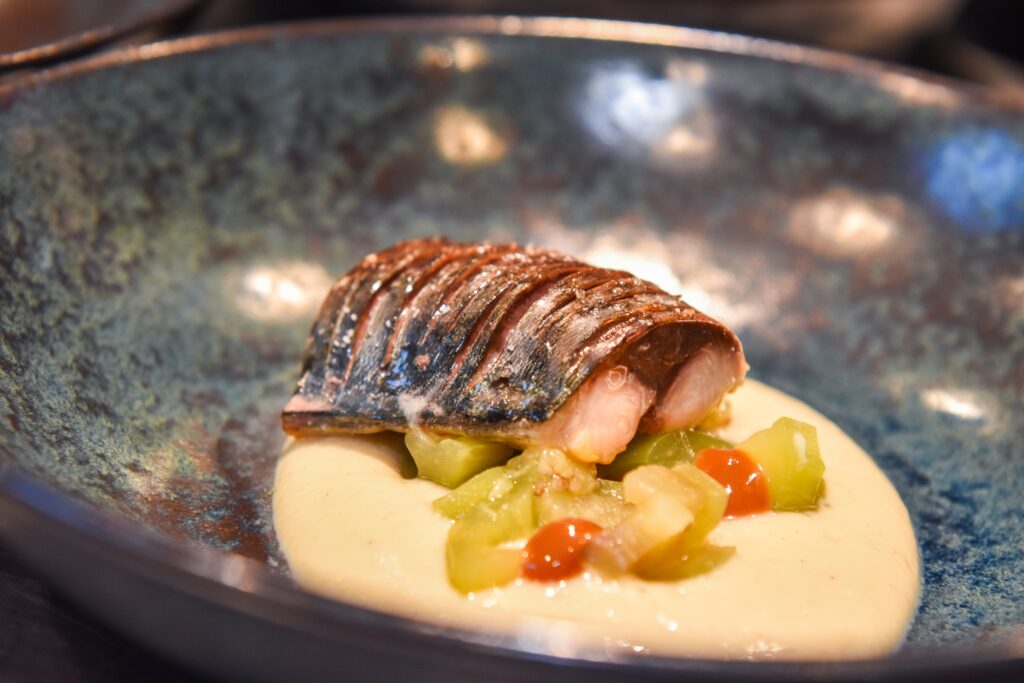
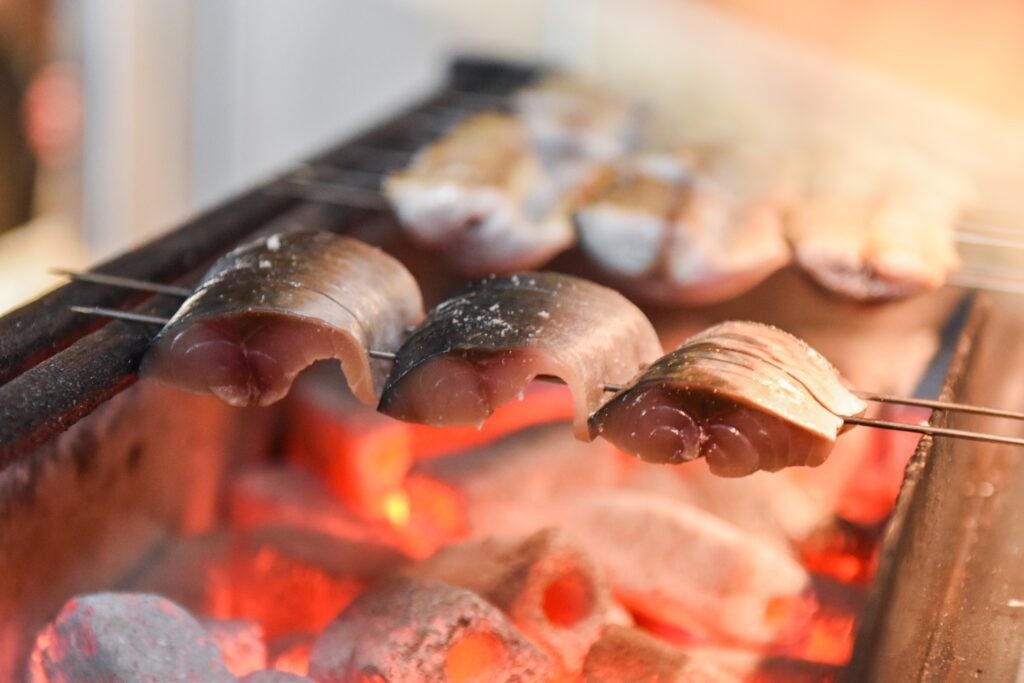
His second course turned to grilled mackerel, accompanied by home-grown chard, Japanese eggplant and tofu purée. Mackerel’s richness, the char of the grill and the grounding quality of tofu and eggplant created a dish that felt unmistakably connected to the type of food Chef Yoya has made central to Homareya: deeply considered Japanese cooking without unnecessary embellishment.
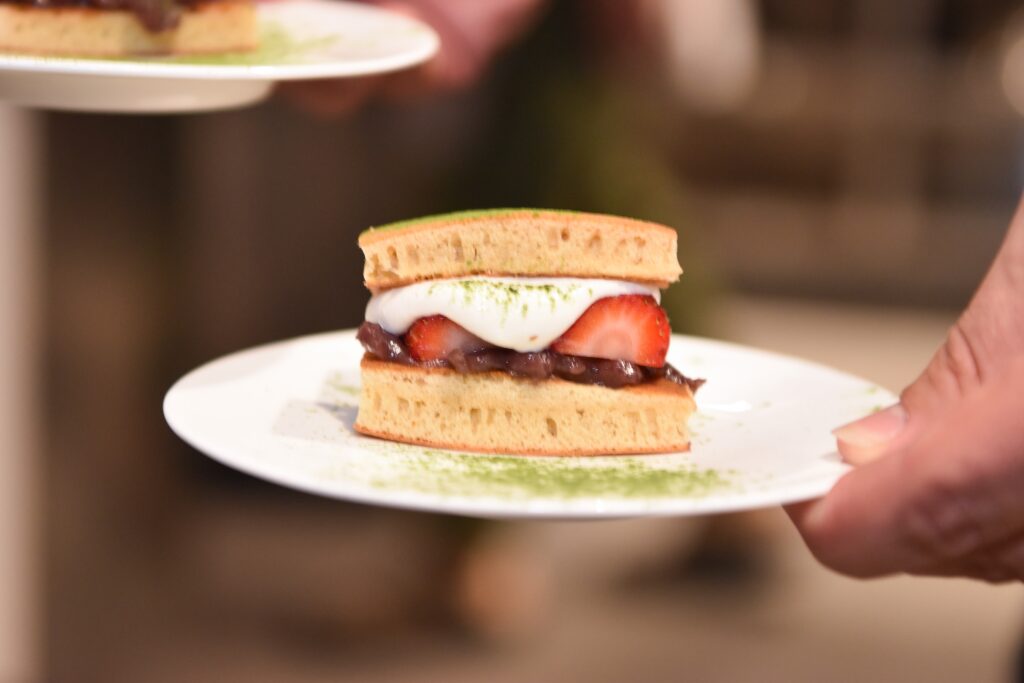
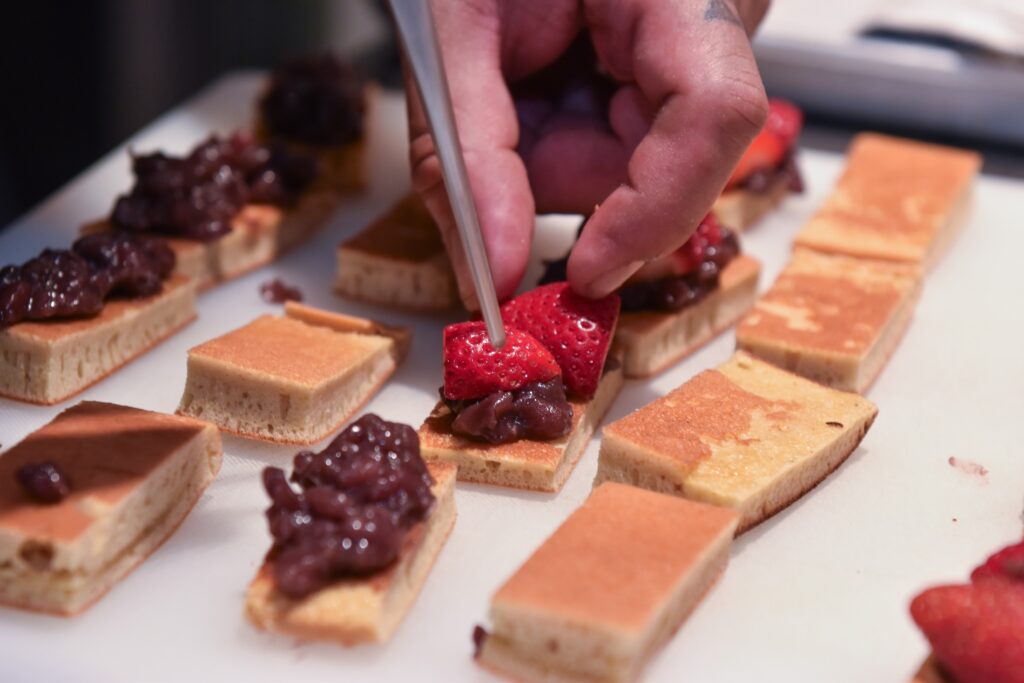
For dessert, he served dorayaki—Japanese pancakes traditionally sandwiched around a sweet filling—paired with blueberry.
Still, the diners handed the evening’s victory to Chef Jordan, securing Chef Jordan’s place opposite Chef César Sánchez in the first semifinal.
Chef Erwin Angeles journeys through Filipino flavors
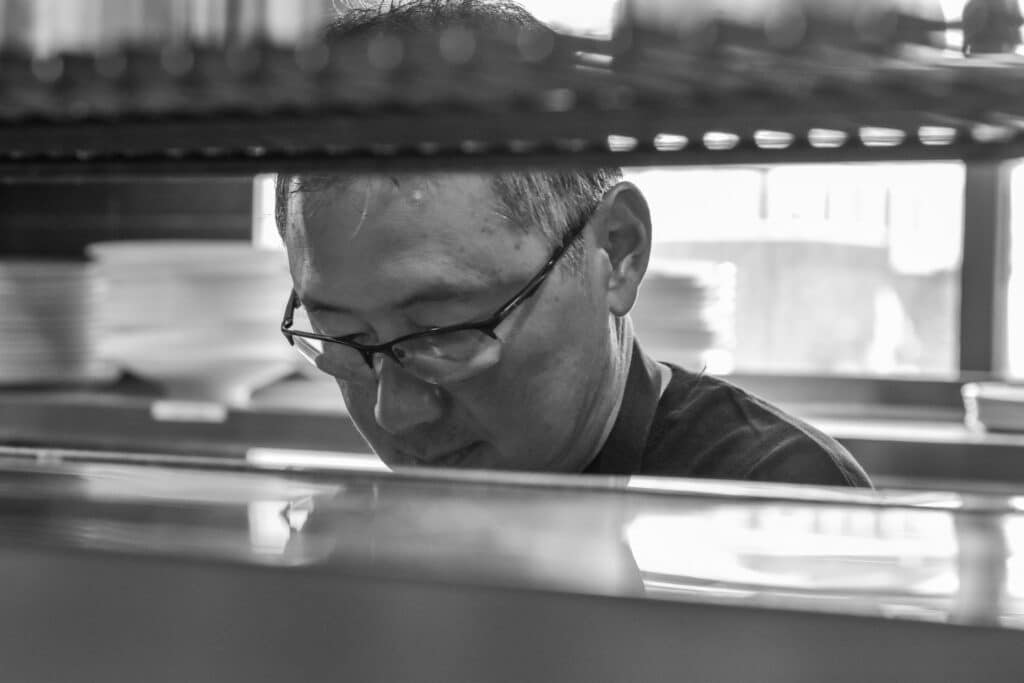
Tuesday brought Chef Erwin, who has spent years establishing himself as one of Long Beach’s most dedicated practitioners of traditional Japanese food. First through Kihon and, more recently, through Tanuki Curry House. But his Grand Prix Fixe menu turned toward Filipino flavors and dishes, offering diners a side of the chef they rarely get to experience through his restaurants.
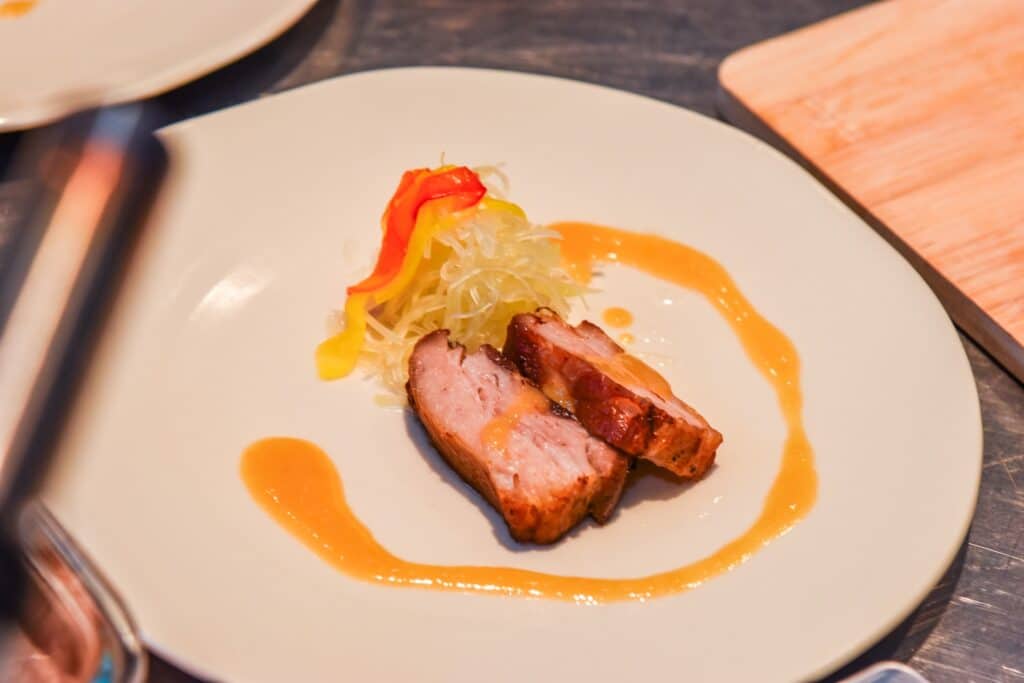
He opened with lechon: pork belly confit seasoned with Cebu-style lechon aromatics and paired with papaya relish. Richness was the point, but the fruit brought the acid and freshness needed to lift it.
His second course moved toward kare-kare, the beloved Filipino stew traditionally built around a peanut-based sauce. Chef Erwin’s version paired beef short rib with peanut-and-toasted-rice gravy, garlic-and-annatto seed oil, spinach ohitashi and miso eggplant.
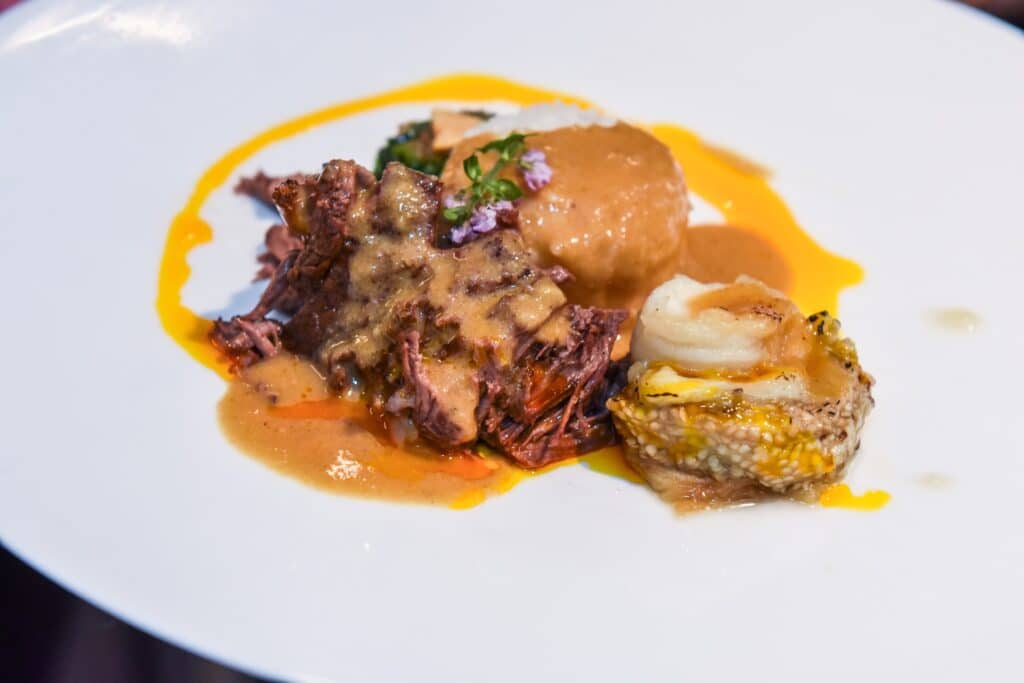
The plate neatly reflected the overlapping parts of his culinary identity. Kare-kare provided its Filipino foundation, while ohitashi, miso and the controlled composition reflected the Japanese technique and vocabulary diners have long associated with Kihon.
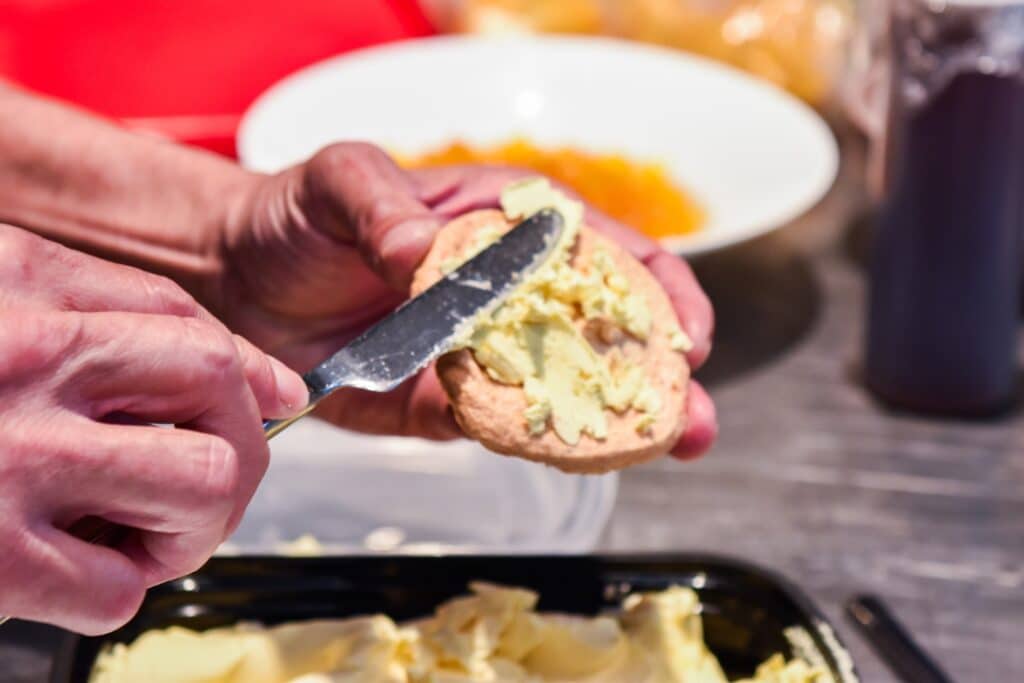
For dessert, he served silvana, layering cashew meringue cookie, buttercream and mango mousse with a plum-wine reduction. Like the courses before it, the dessert used Filipino tradition as its starting point before passing it through Chef Erwin’s distinctly personal lens.
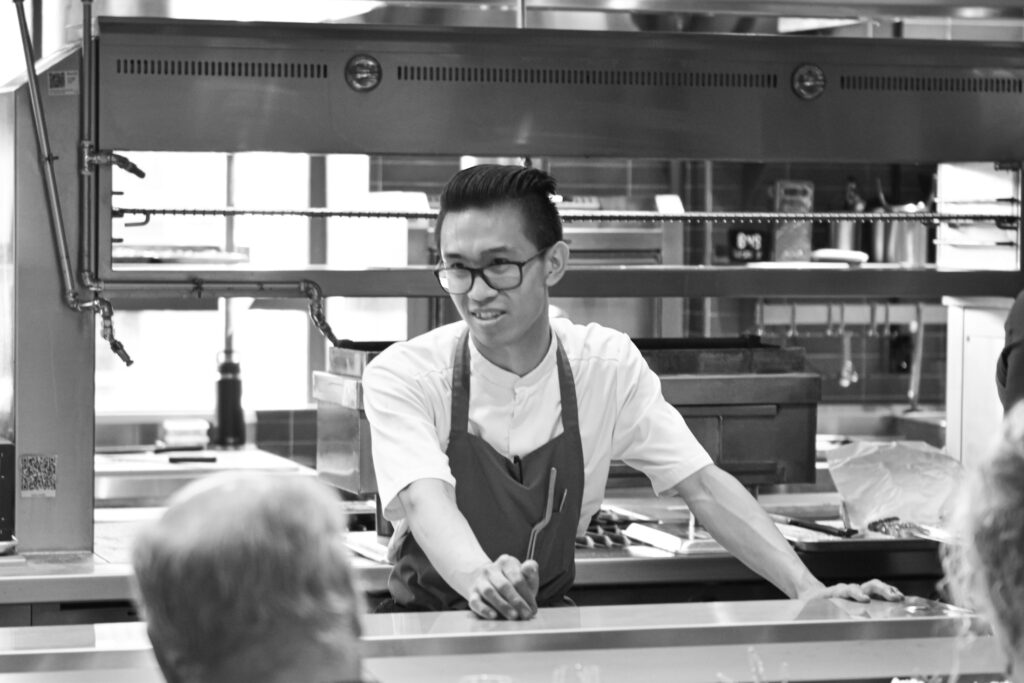
Chef Jessie Franco takes Zuzu’s Petals into the evening
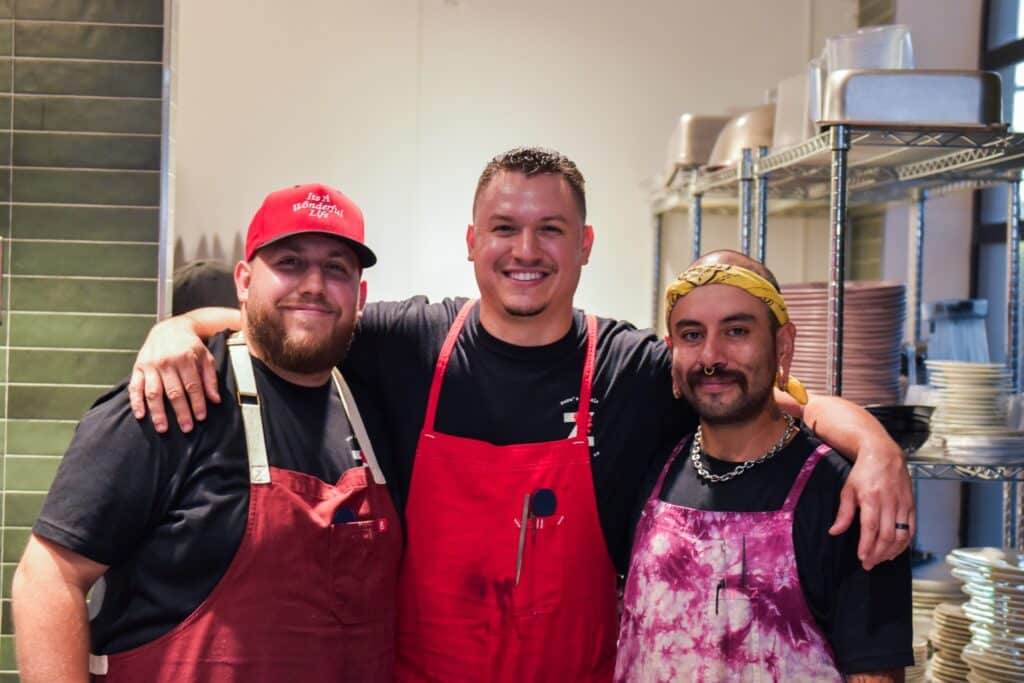
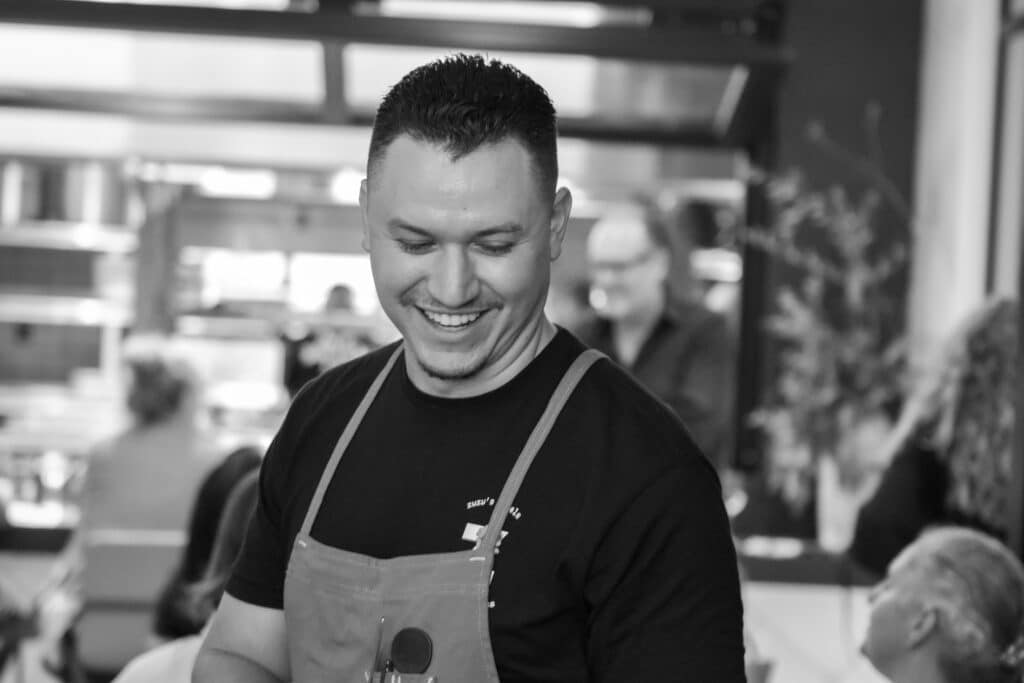
If Chef Erwin used the competition to explore the Filipino side of his identity, Chef Jessie Franco used it to answer a question that has lingered around Zuzu’s Petals since it opened: What would dinner from this kitchen look like?
Zuzu’s has become Long Beach’s only truly seasonally focused, chef-driven breakfast restaurant, building a following through delicate omelets, evolving pancakes, and vegetable-forward plates shaped by the markets. But Chef Jessie has long wanted to show that his cooking extends far beyond breakfast and brunch. Grand Prix Fixe finally gave him the platform to do it.
His menu moved through three ideas—“The Coast,” “The Fire” and “Home”—forming a progression that was as much about place and memory as it was about ingredients.
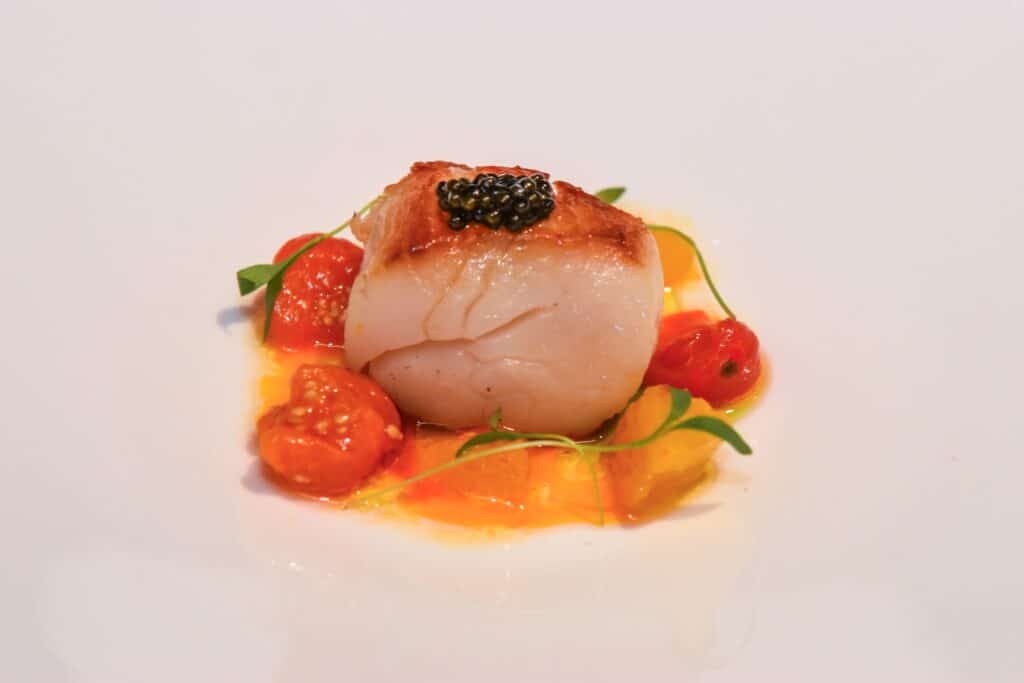
“The Coast” opened the meal with a seared Hokkaido scallop served with Sungold tomato conserva, citrus, caviar, cilantro and extra-virgin olive oil. Sweet scallop and concentrated tomato sat at the center, lifted by citrus and cilantro and given a touch of salinity and indulgence through caviar.
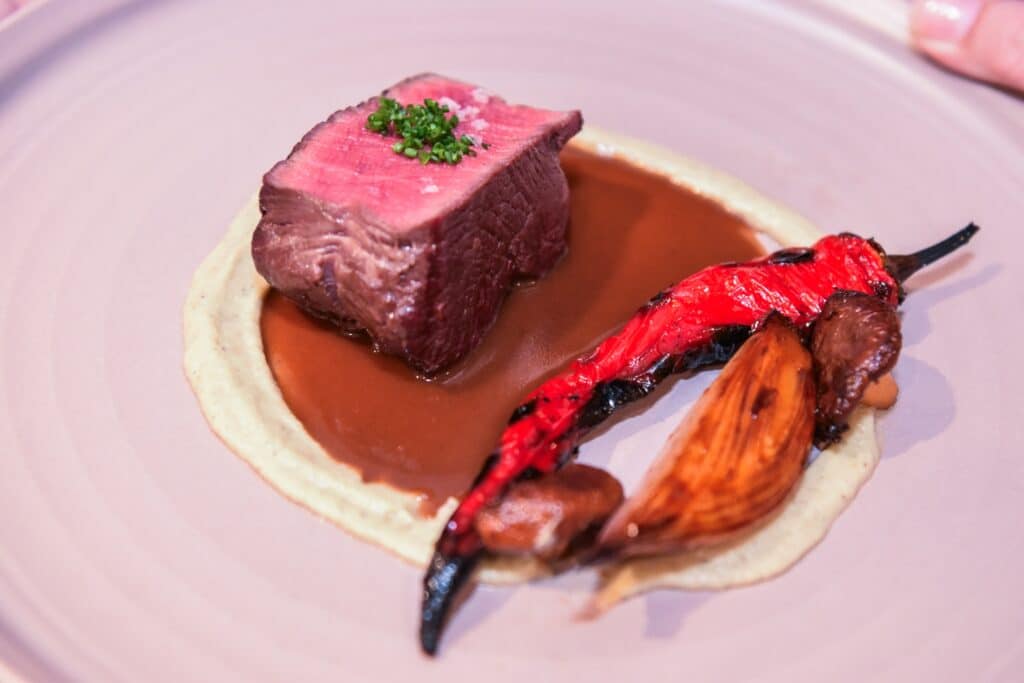
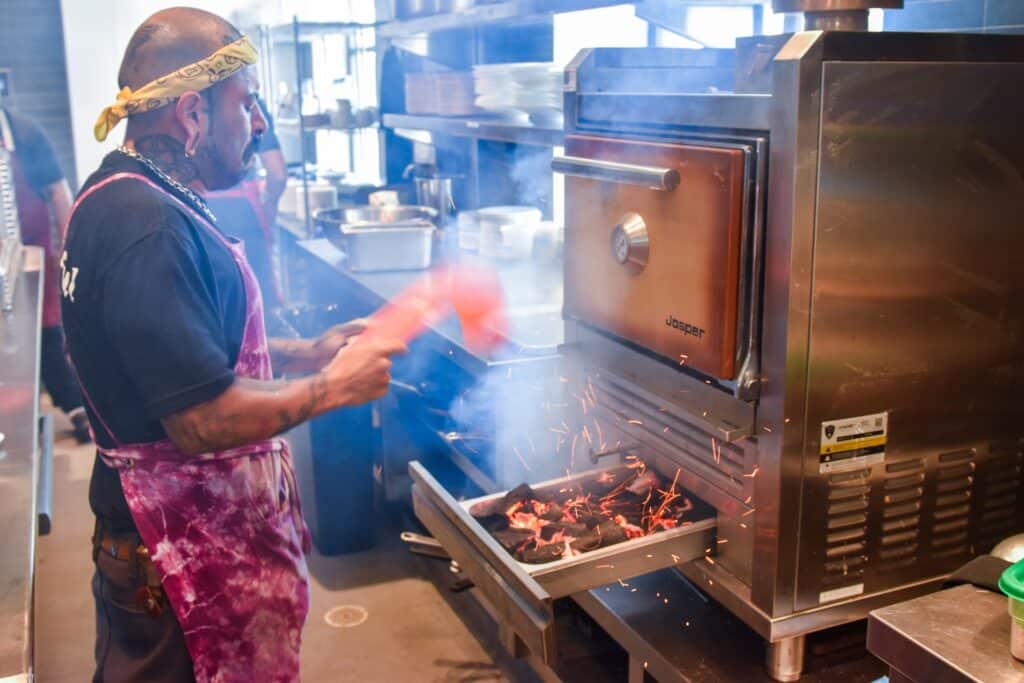
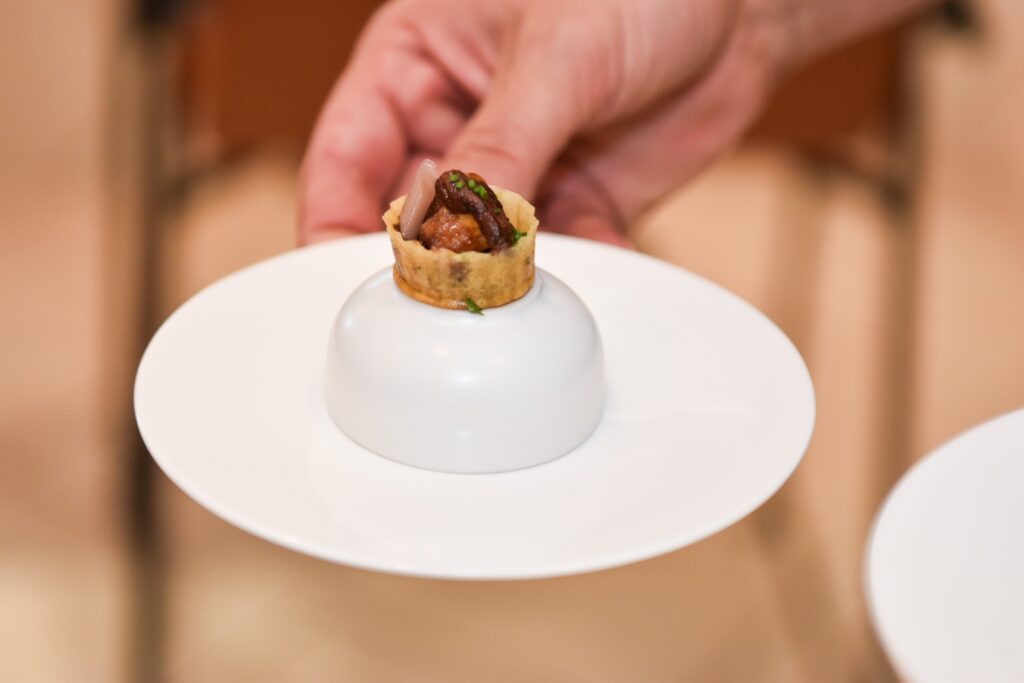
“The Fire” brought Josper-roasted prime beef tenderloin with smoked eggplant, Jimmy Nardello pepper, chanterelles, roasted shallot and red wine jus. It was a distinctly late-summer plate: deeply savory and built around smoke and char, but surrounded by ingredients that placed it firmly within Chef Jessie’s produce-driven approach.
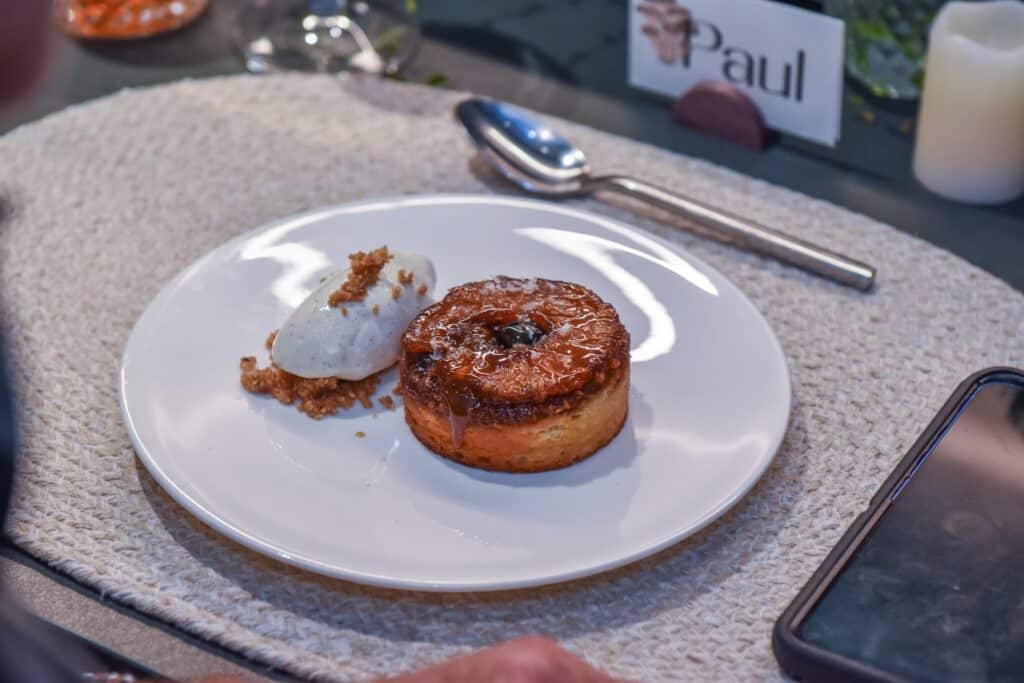
He finished with “Home,” a brown-butter pineapple upside-down cake accompanied by vanilla bean ice cream, brown butter, macadamia crumble, Amarena cherry and pineapple caramel.
The Grand Prix Fixe grows in its second year
Beyond the competing chefs, this year’s Grand Prix Fixe represents a significant behind-the-scenes expansion that I must highlight and be grateful for.
Chef Matthew Roberts—currently of Colossus and formerly of Alder & Sage and Olive & Rose—has joined the team as expediter, overseeing the precarious dance between two chefs, six courses and a room of diners who must receive competing plates as simultaneously as possible. It is no small role. Unlike a traditional tasting dinner, where an entire kitchen is pushing toward a single menu, Grand Prix Fixe requires two separate culinary teams to operate beside one another while maintaining their own timing, plating and intent.
Front-of-house has also expanded with two deeply experienced people: Lauren Harvey, formerly of Heritage and Olive & Rose, and Debra Zelenka, formerly of Marlena and Michael’s on Naples. Together, they have helped create a level of service that matches the ambition coming from the R&D kitchen at Partake Collective.
The growth is especially meaningful given how many guests have returned after attending the inaugural competition last year. Some have come back for multiple battles, once again committing themselves to the strange responsibility—and undeniable joy—of determining which chefs continue forward.
That returning patronage signals that the Grand Prix Fixe is becoming more than a novelty. Guests are not simply buying dinner. They are investing in the competition’s arc, watching chefs move from one theme to another and seeing how their food changes under pressure.
The semifinals—one sold out; one with a handful of tickets—are next…
With Bracket 1 complete, four chefs remain.
On Monday, Sept. 7, Chef César Sánchez of Ruta 15 will face Chef Jordan Domingo of Slao. The pairing places one of Long Beach’s most ambitious practitioners of regional Mexican cooking opposite an emerging chef attempting to rethink what a modern steakhouse can be. A handful of tickets remain for Monday’s dinner.
Then, on Tuesday, Sept. 8, Chef Jessie Franco of Zuzu’s Petals will face Chef Danny Le of Chez Bacchus—a meeting of two chefs whose opening menus were deeply rooted in Southern California produce and seasonality, even if their approaches were markedly different.
That semifinal is already sold out.
The four chefs now enter “Sustainability,” the competition’s second theme. The chefs are no longer only being asked to tell diners who they are; they must show how creatively and responsibly they can respond to limitations. As always, the diners will decide who succeeds.
The winners of the two semifinals will face one another during the Long Beach Grand Prix Fixe finale on Monday, Sept. 14. Tickets for the finale are currently on sale, but it is already nearing a sellout.
Four chefs remain. Two dinners will decide who reaches the final table. And after an opening bracket defined by culinary identity, the competition is about to become much more unpredictable.