
Eight chefs became four. And now, after two evenings built around sustainability, the second annual Long Beach Grand Prix Fixe has its finalists.
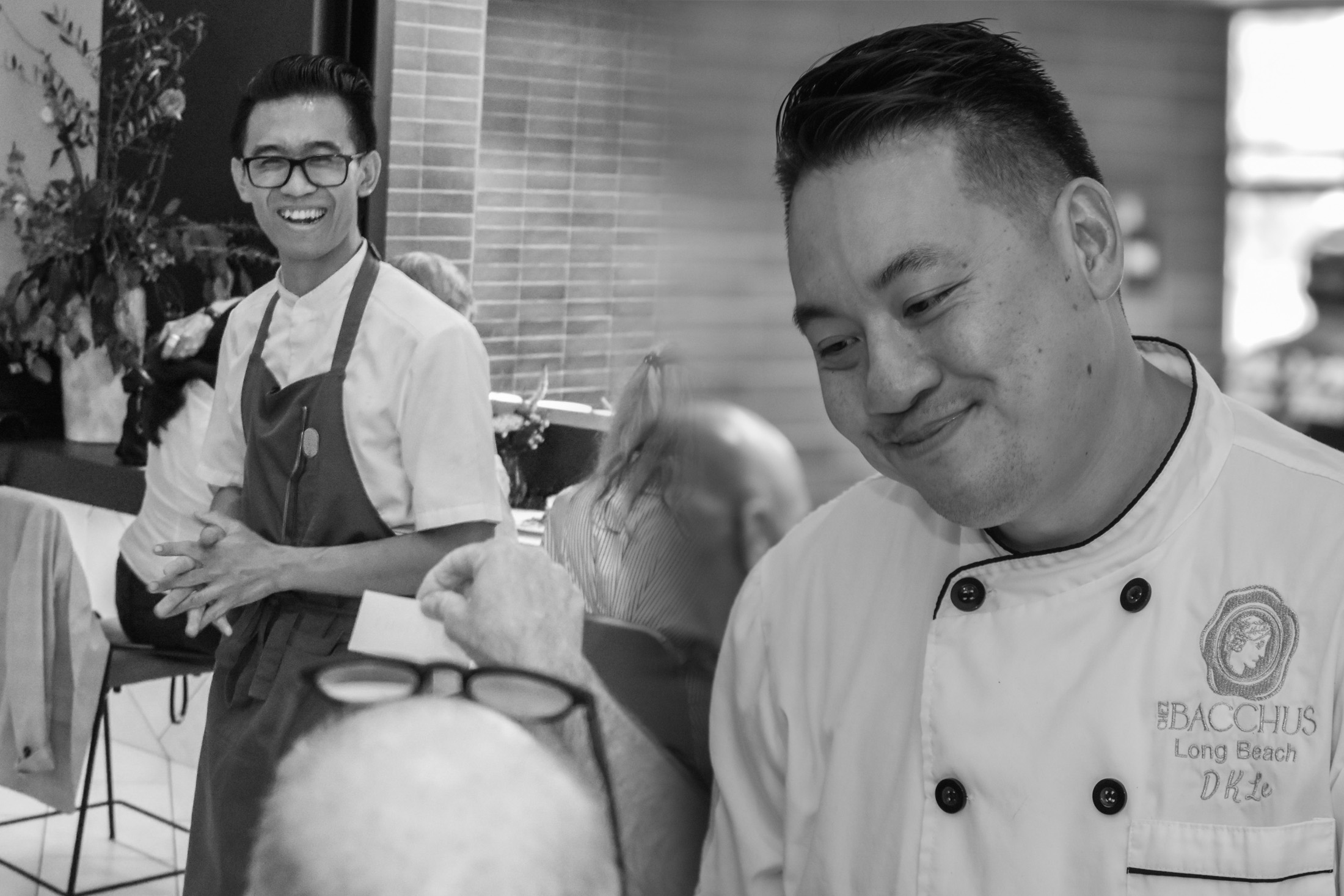
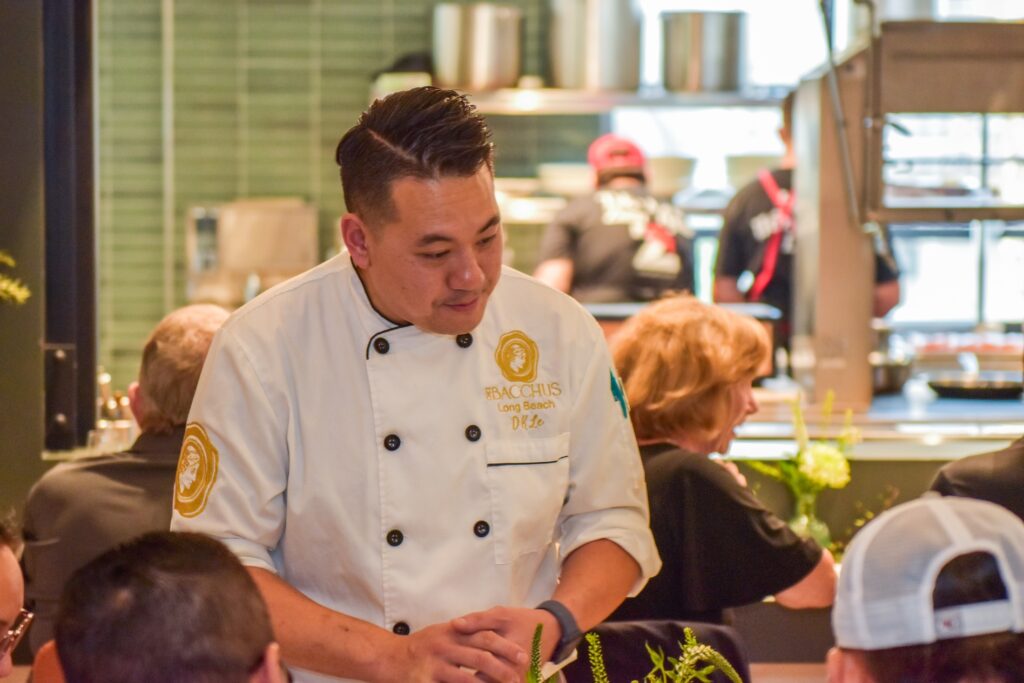
Chef Jordan Domingo of Slao defeated Chef César Sánchez of Ruta 15 on Monday, Sept. 7. The following evening, Chef Danny Le of Chez Bacchus narrowly defeated Chef Jessie Franco of Zuzu’s Petals in what was the tightest battle yet of the competition on Tuesday, Sept. 8.
Their victories head the series toward its final act: the already-sold-out finale on Monday, Sept. 14
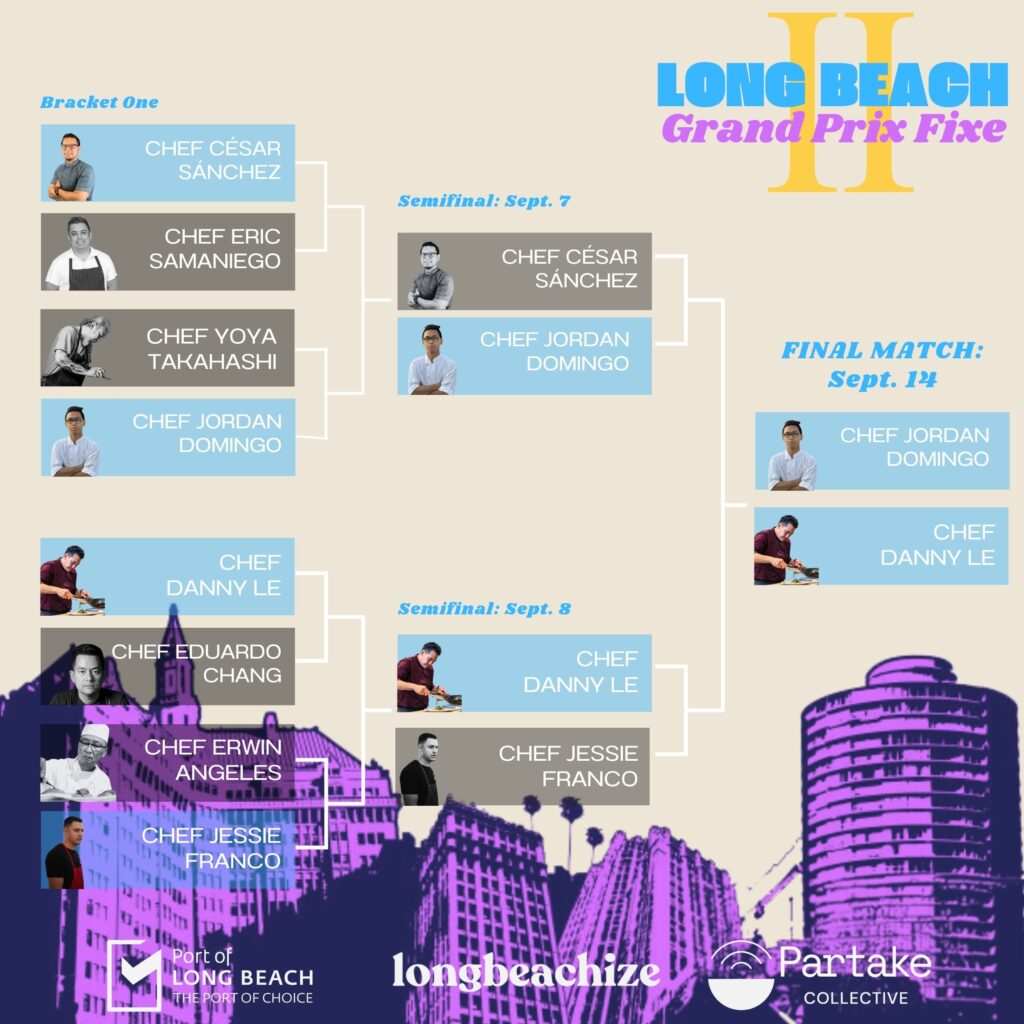
For Chef Jordan, it represents a remarkable shift from last year’s competition, when he worked as Chef Maxwell Pfeiffer’s sous and helped carry the Sky Room chef into the finale. This time, Jordan will enter that final kitchen representing himself and Slao.
Chef Danny, meanwhile, has quietly worked his way through the competition with two tightly composed, distinctly Californian menus—first defeating Chef Eduardo Chang of Sushi Nikkei and now besting Chef Jessie.
But before they face one another, it is worth pausing to acknowledge just how ambitious the semifinal round became.
Wait—so what is the Long Beach Grand Prix Fixe?
That is the Long Beach Grand Prix Fixe at its most basic: Eight chefs. Head-to-head, bracket-style dinners. Three courses from each competitor served side by side. And, ultimately, one chef left standing after diners decide who was best overall after breaking down their plates on everything from presentation and taste to storytelling and cohesion. Following that, the chef moving on will have to create an entirely new menu the following week.
Even more, we’ve tried to make it even more local: We have partnered with the Long Beach Farmers Market to provide produce for the chefs each week while connecting with wine bars and wineries for the pour. This week, we connected with the fine folks at The Vintage LBC in Bixby Knolls and Marlena owner and sommelier Robert Smith, each of whom provided the wine.
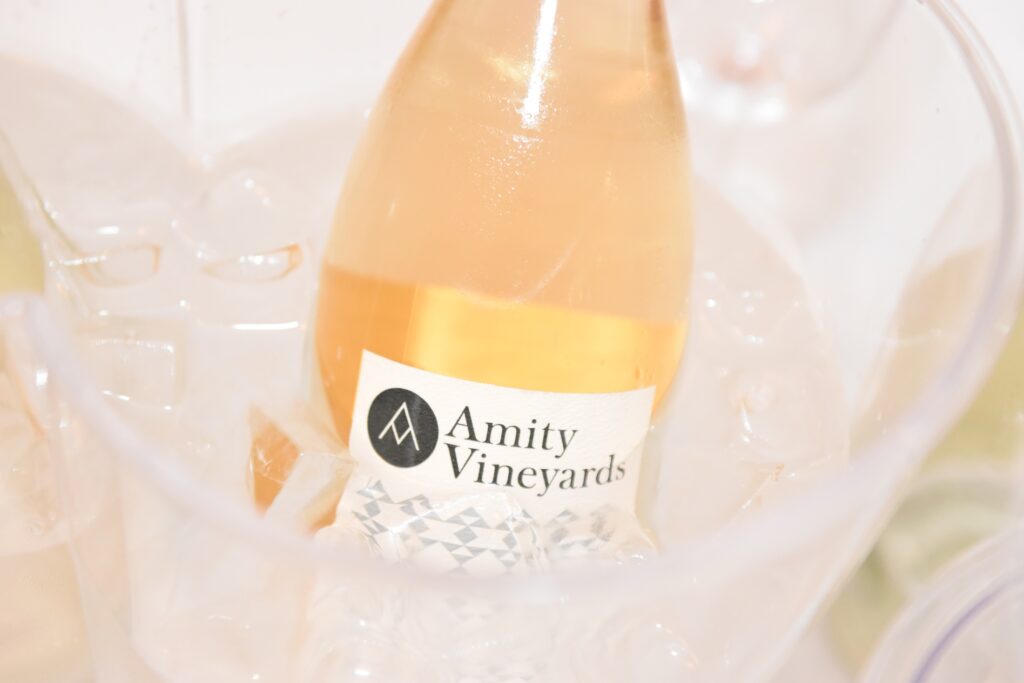
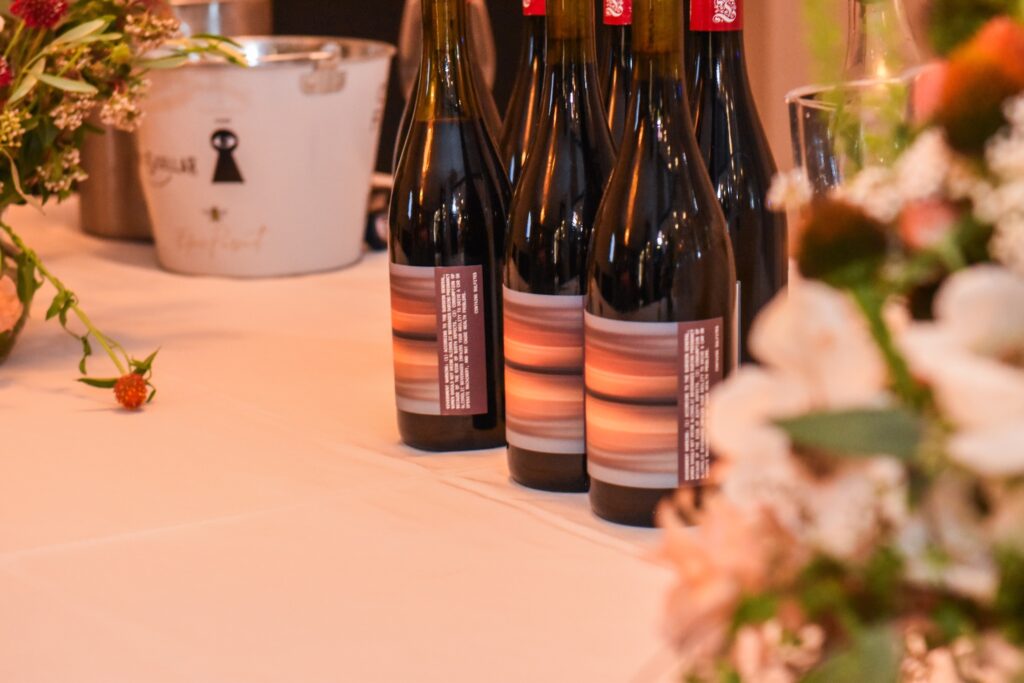
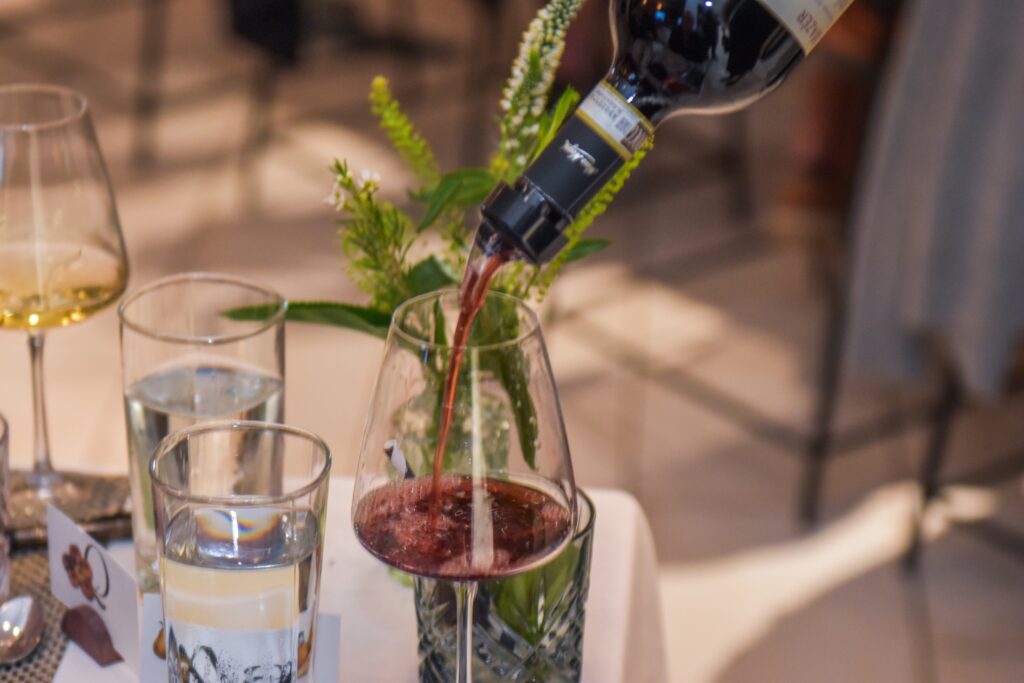
Thank you to Iano Dovi of The Attic and Josh Riviera of The Vintage LBC for their gracious support in providing this week’s wine service. Photos by Brian Addison.
That last part is vital. The Long Beach Grand Prix Fixe is not simply a string of tasting dinners; it is a competition built around evolution. Each bracket carries its own theme and set of expectations, forcing chefs to move beyond a single polished menu as they inch toward the finale.
The semifinals, dubbed “Sustainability,” ask a simple question: Why is sustainability so important—and how can a menu be crafted through and by it?
What did sustainability look like in the Long Beach Grand Prix Fixe?
While Bracket 1, dubbed “Self,” asked each competitor to explore what shaped their culinary identity, the semifinals turned to “Sustainability.”
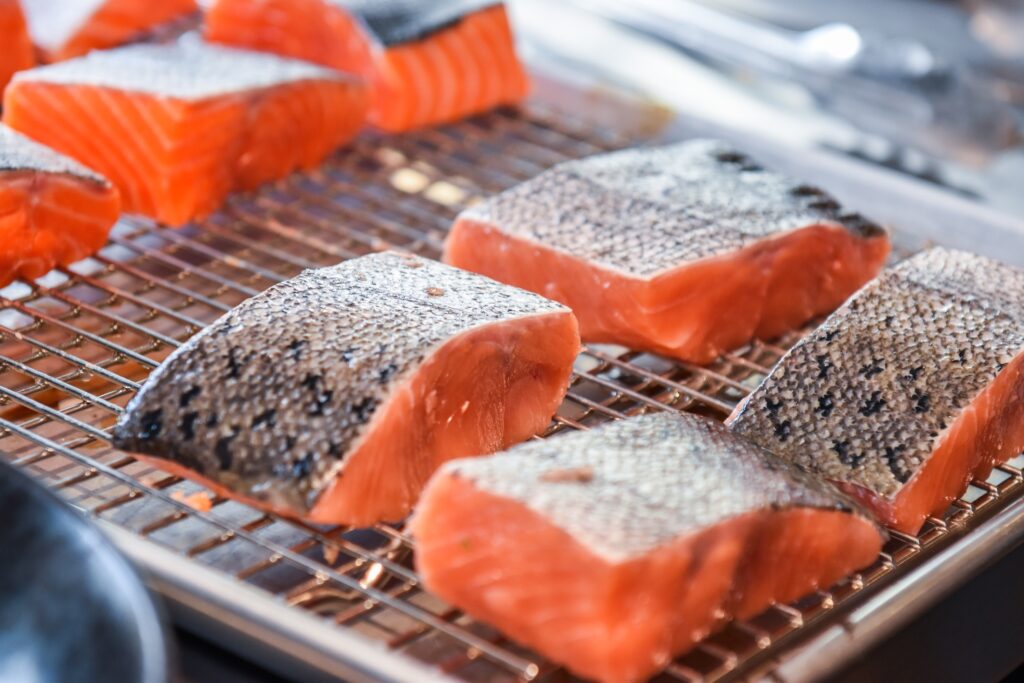
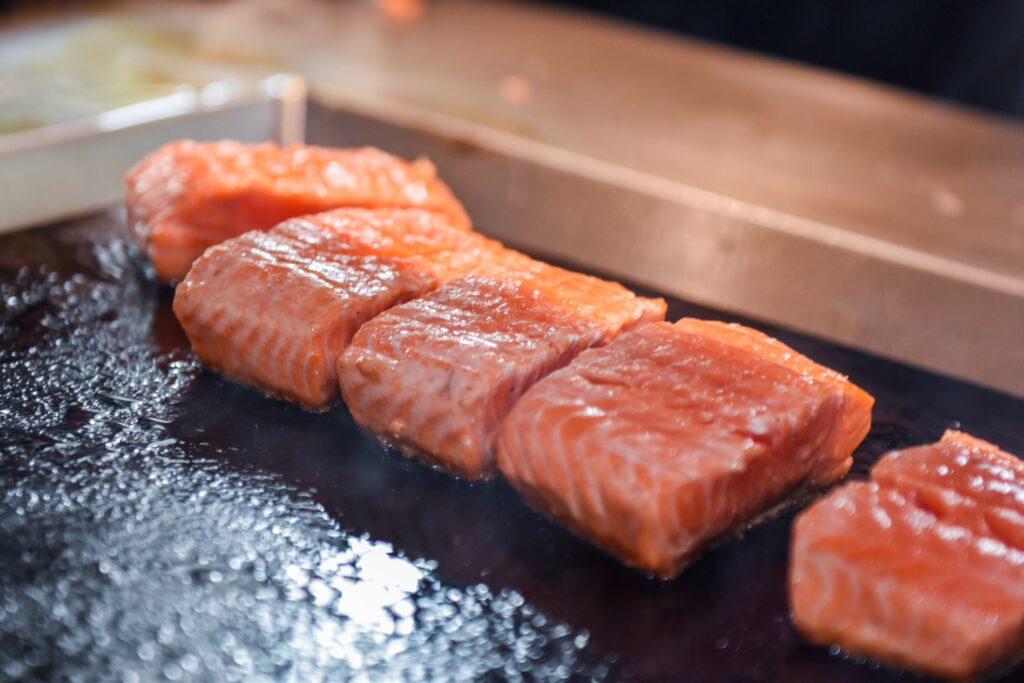
Sustainability in a kitchen can mean utilizing an animal or fish as completely as possible—in the case of Chef Jessie, using an entire King salmon. It can mean elevating offcuts, peels, stems and other ingredients that might ordinarily be discarded—like Chef Jordan with his “pellicle jus.” It can mean centering produce, sourcing locally or transforming a humble ingredient through technique rather than relying on excess—like Chef César’s love of vegetables.
Across the two semifinal dinners, all four chefs interpreted the challenge differently.
This was sustainability not as deprivation, but as possibility.
Chef César Sánchez creates a landscape of fire, land and sea
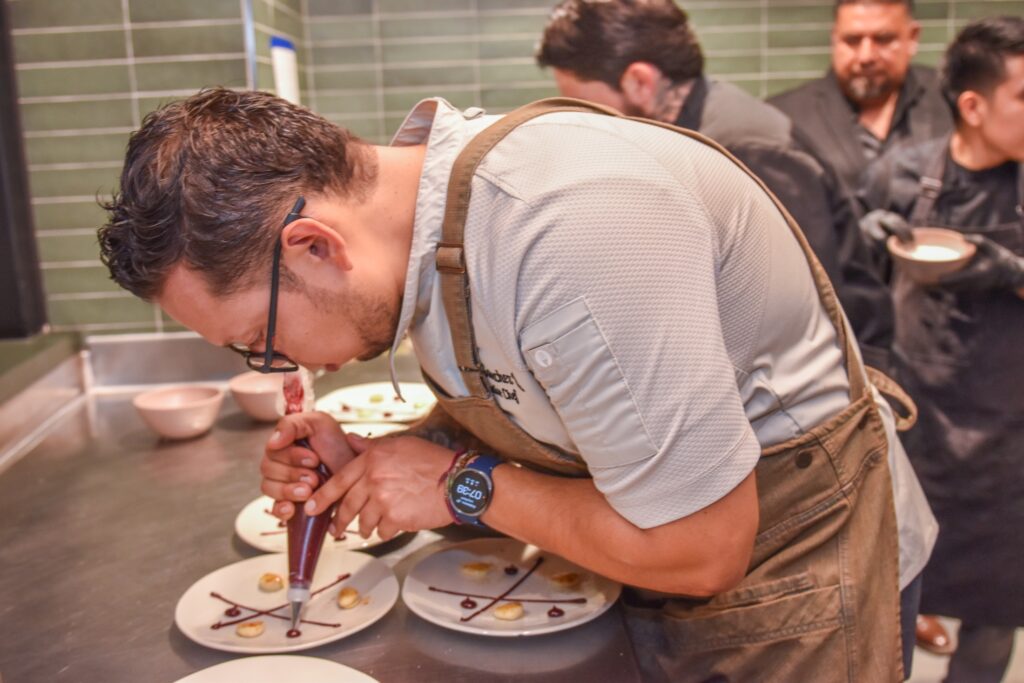
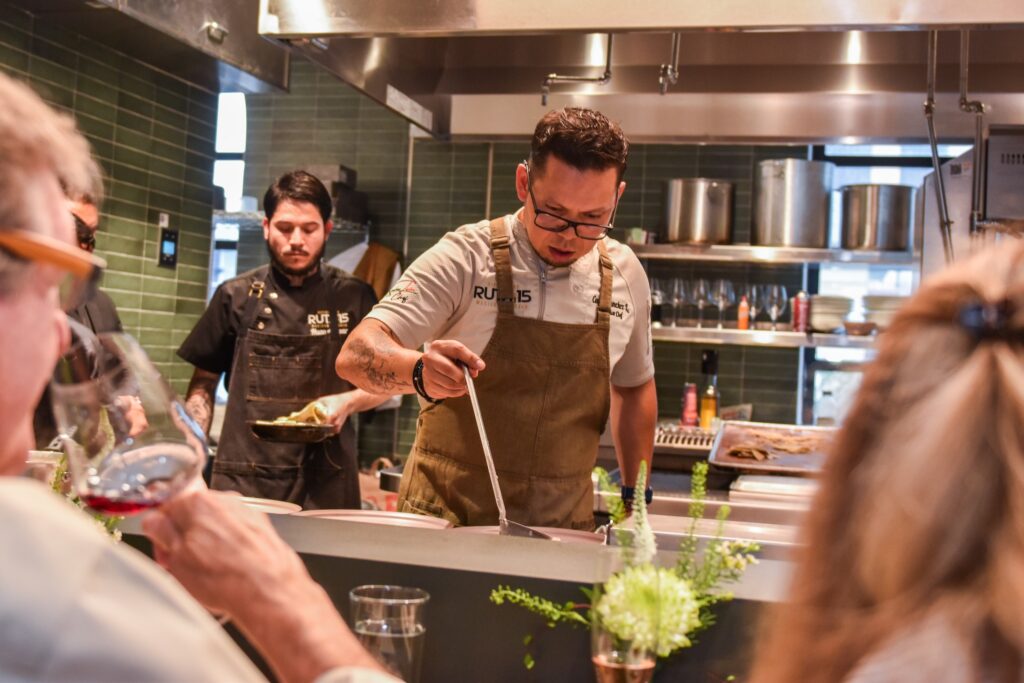
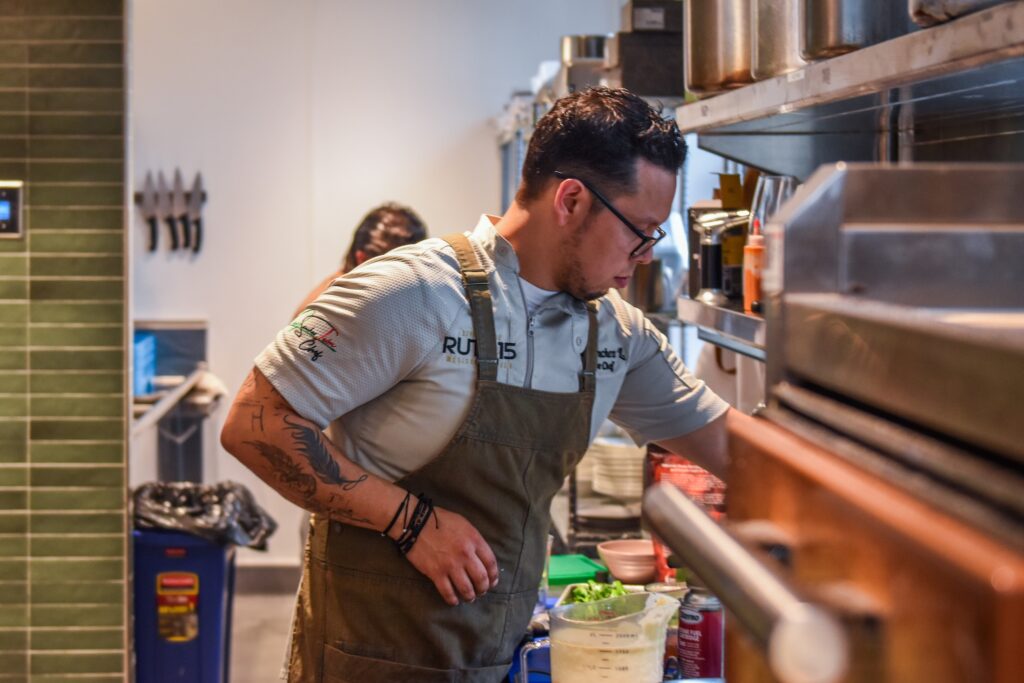
Chef César Sánchez has spent the competition proving that Ruta 15—his much-loved DTLB mariscos space—represents only one part of his ability. His opening menu moved far beyond seafood and into regional Mexican cooking, pairing a vegetable-and-mushroom corunda with charred pork rib before presenting beef short rib through black chichilo, almond mole and masa chochoyotes.
For the semifinals, he pushed even further into produce.
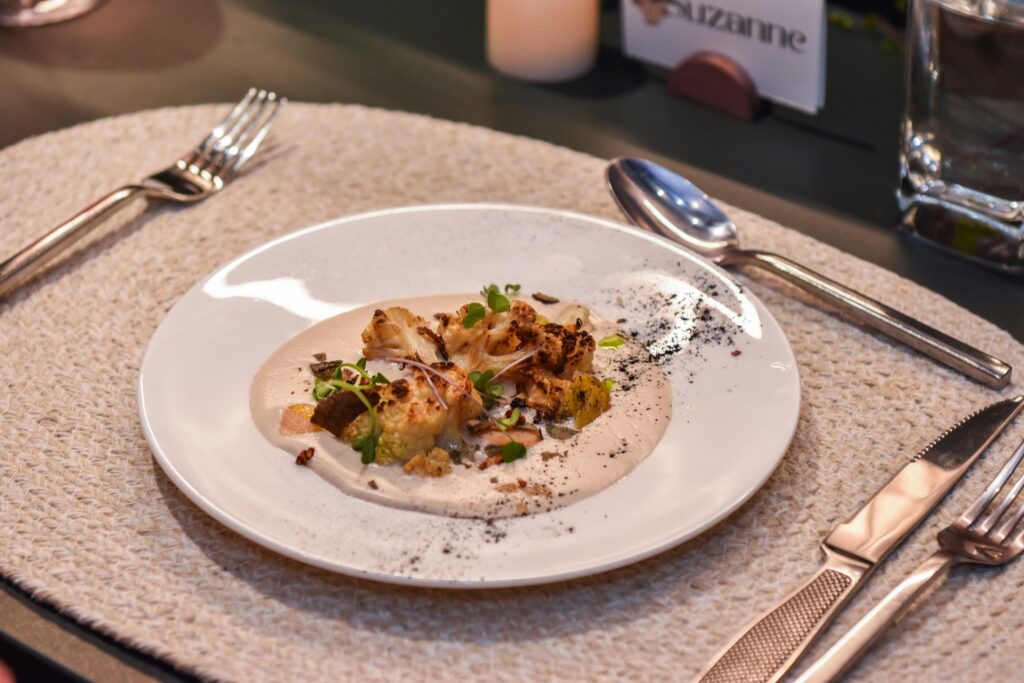
“Tierra de Fuego,” or “Land of Fire,” centered cauliflower confit with epazote clarified butter, habanero-and-ricotta white mole, pickled carrot, crispy corn and cotija, dried chile and seed soil, and cilantro-lime oil.
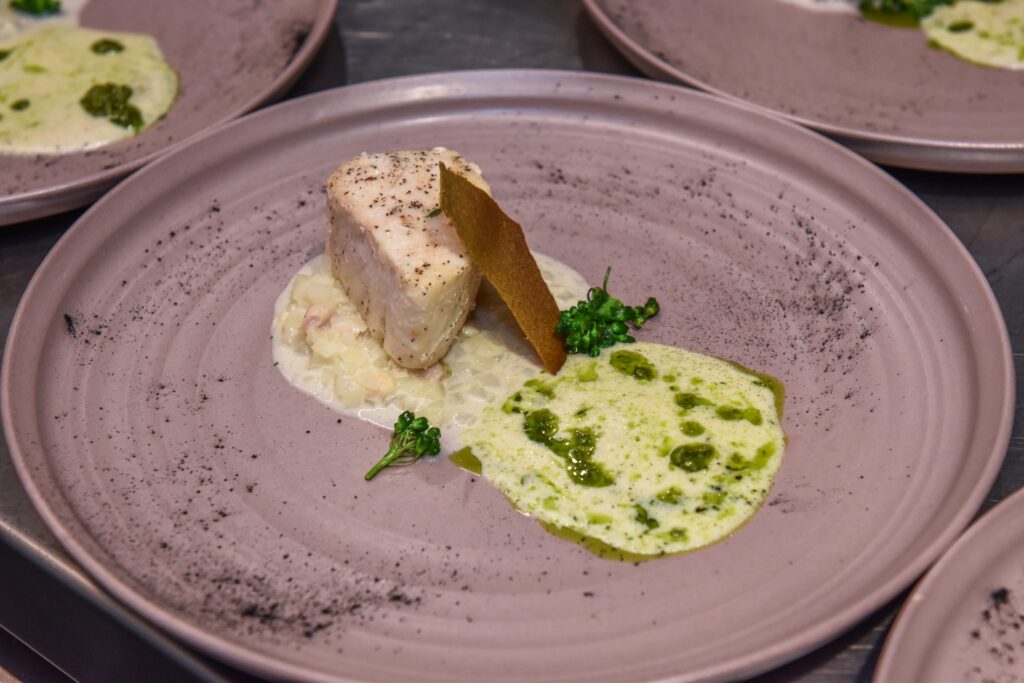
His second course, “Marea de Tierra,” or “Tide of the Land,” paired olive oil-confited escolar with hoja santa, potato risotto, clam cream, green salsa macha, crispy green olive, roasted broccolini and a hoja santa-lime “clam air.” Even the title reflected the plate’s overlapping worlds. Seafood met the land through potatoes, broccolini and herbs, while hoja santa ran across multiple components to tie the dish together.
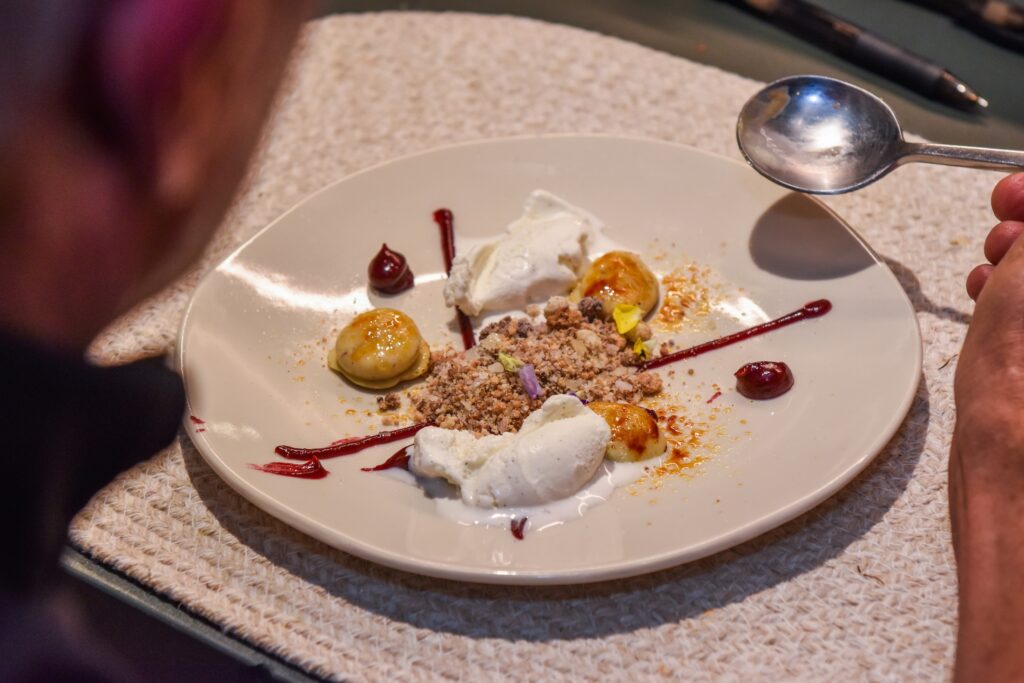
Chef César concluded with “Rocas del Último Atardecer,” or “Rocks of the Last Sunset”: flambéed banana crème brûlée with raspberry-and-hibiscus gel, corn soil, caramelized banana and cardamom-lavender ice cream. Like his opening-round dessert, “Last Sunset,” it combined fruit, florals, chiles and deeply nostalgic flavors within an elaborate composition.
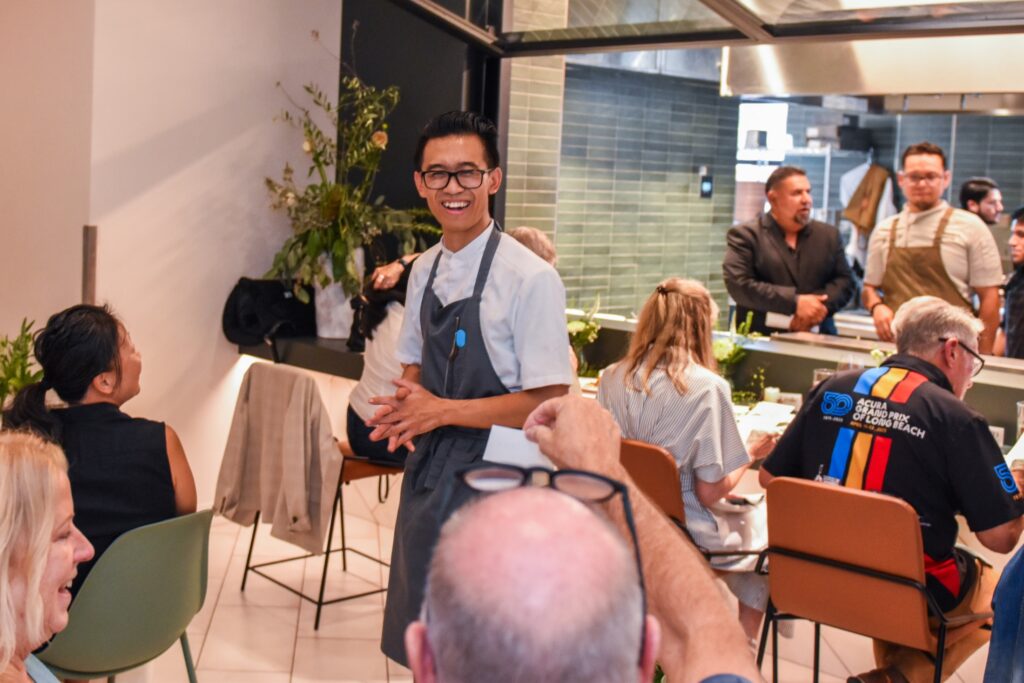
Chef Jordan Domingo strips his cooking down to its foundations
Where Chef César’s menu expanded outward through layers of sauces, herbs, chiles and textures, Chef Jordan Domingo took the opposite approach. His courses were titled simply: “Corn.” “Holstein.” “Dates.” The restraint of those names was deceptive. Each plate examined its central ingredient in multiple forms, demonstrating how a cook can create complexity through utilization rather than sheer abundance.
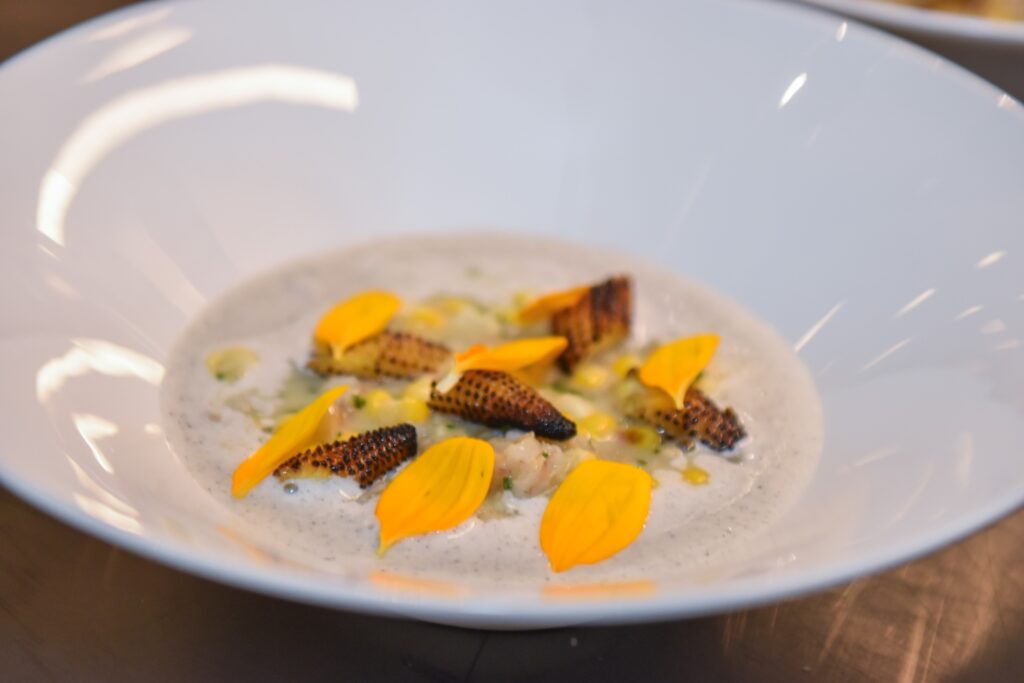
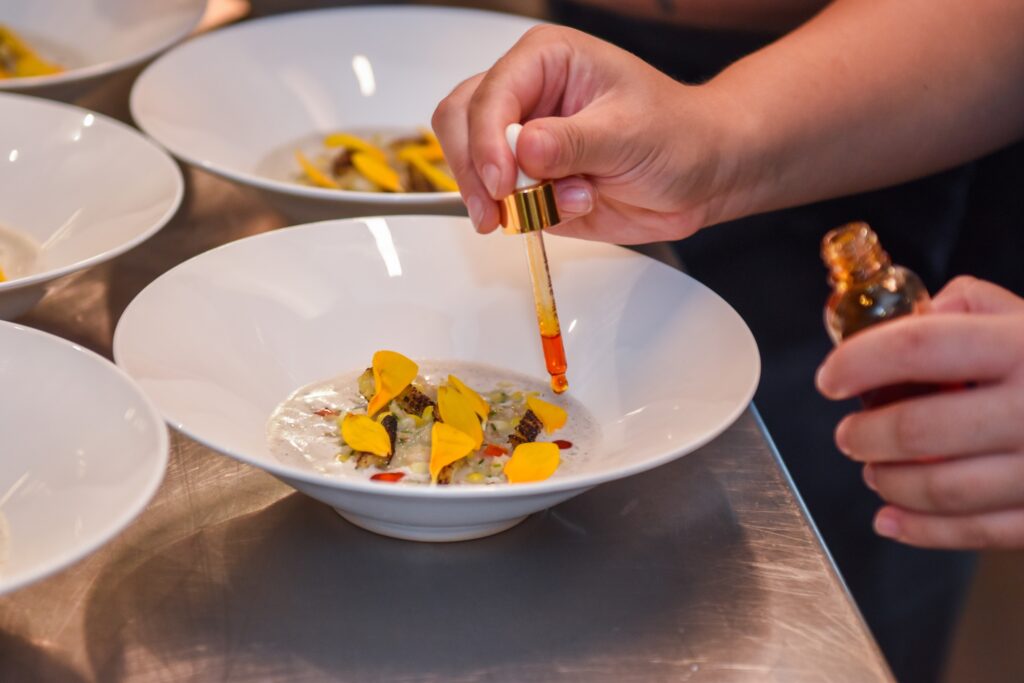
“Corn” opened the meal with pearl barley and corn kernels, cob reduction, husk cream and baby corn. The dish considered nearly the entire plant, treating the kernels, cob and husk as distinct ingredients capable of offering sweetness, body and aroma. Pearl barley reinforced the grain-like quality of the plate while providing another layer of texture.
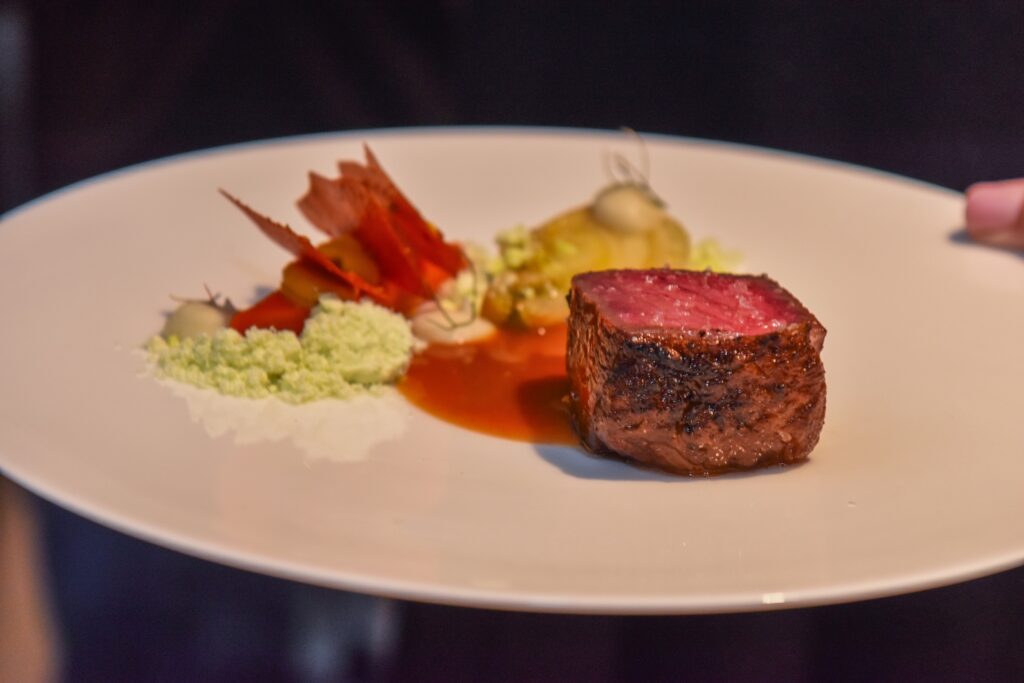
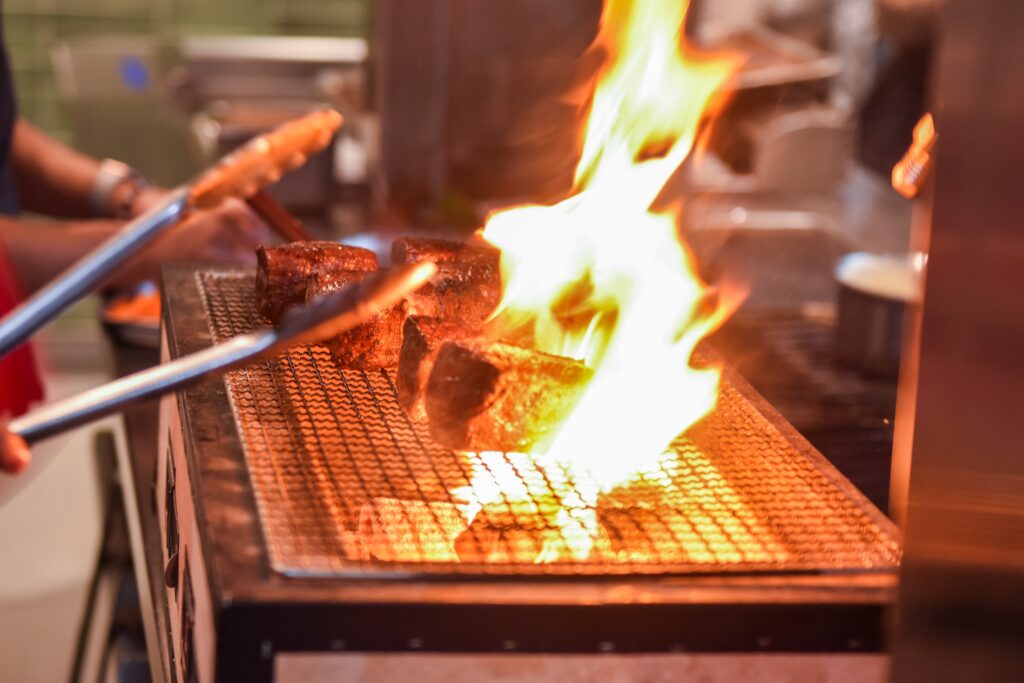
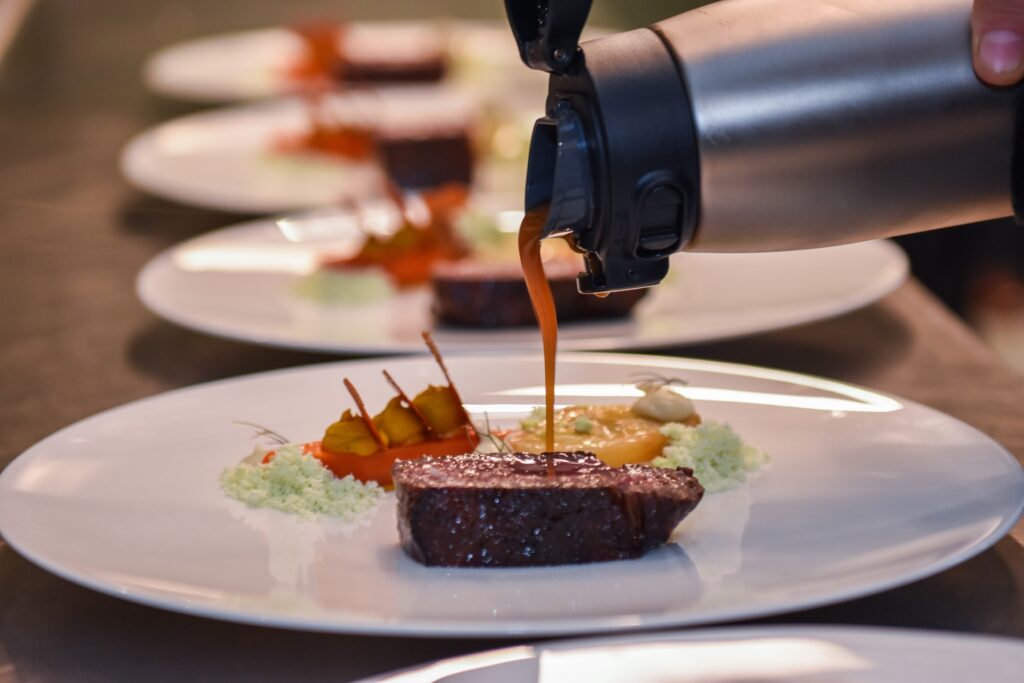
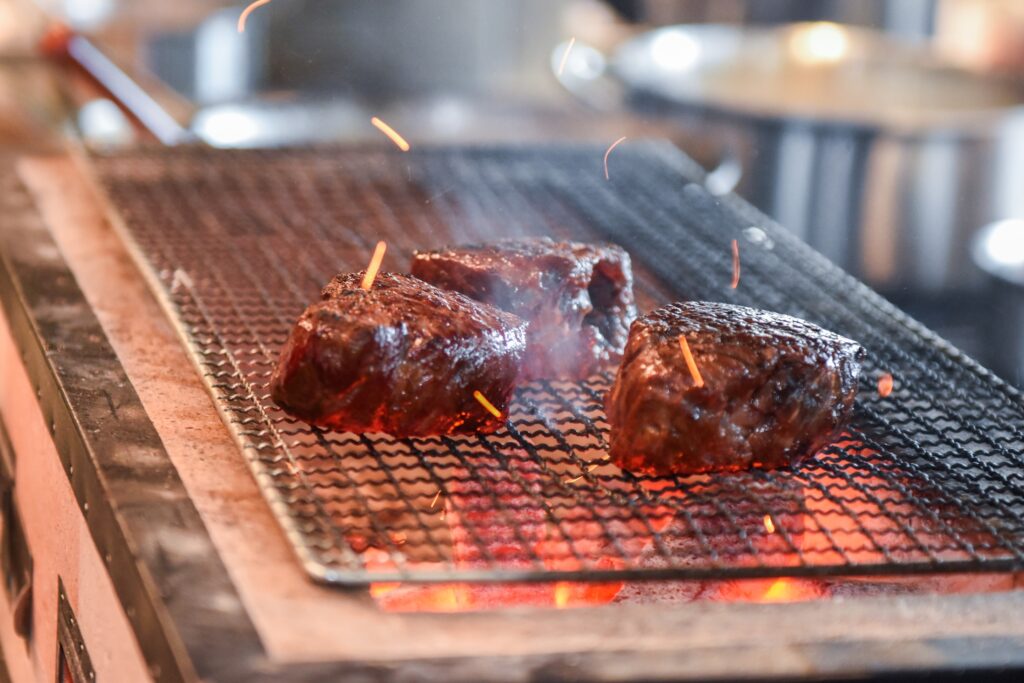
His second course, “Holstein,” centered a 30-day dry-aged cut of dairy beef—a source of meat largely left to the pasture once its dairy-giving life is complete—offering the clearest intersection between the steakhouse identity of Slao and the demands of the sustainability round.
The dry-aging process creates the pellicle—the dark, hardened exterior typically trimmed from the beef before cooking. Chef Jordan repurposed it into the jus rather than allowing one of the most flavorful results of the aging process to become waste. He applied the same thinking to the vegetables. Carrot appeared as a braise, crisp peel and powdered tops; fennel arrived roasted, puréed from its trimmings and echoed through its fronds and blossoms.
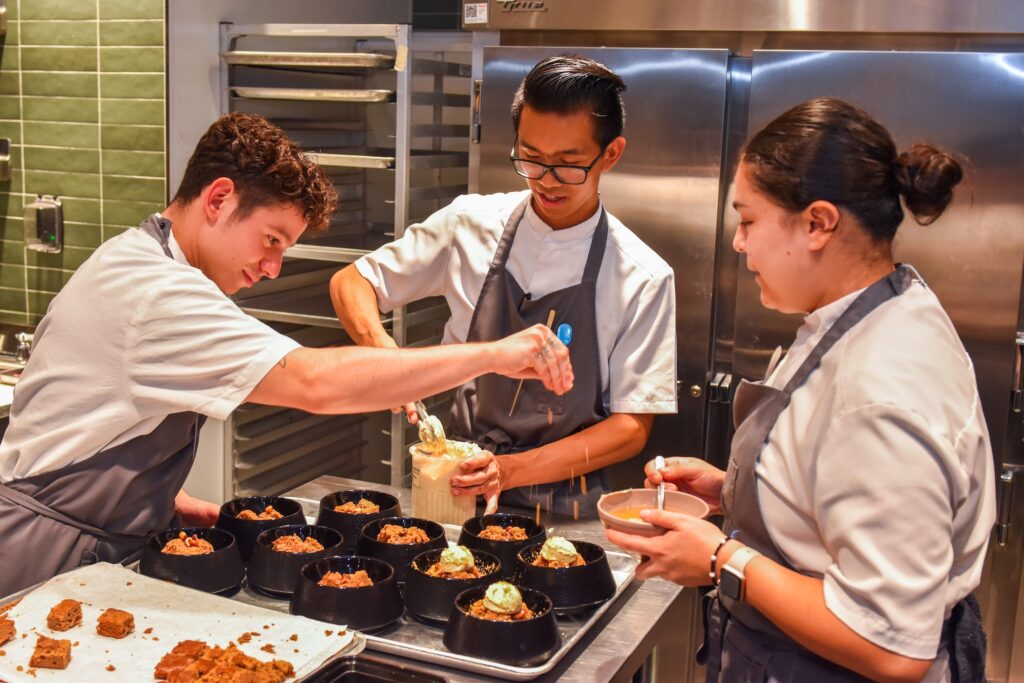
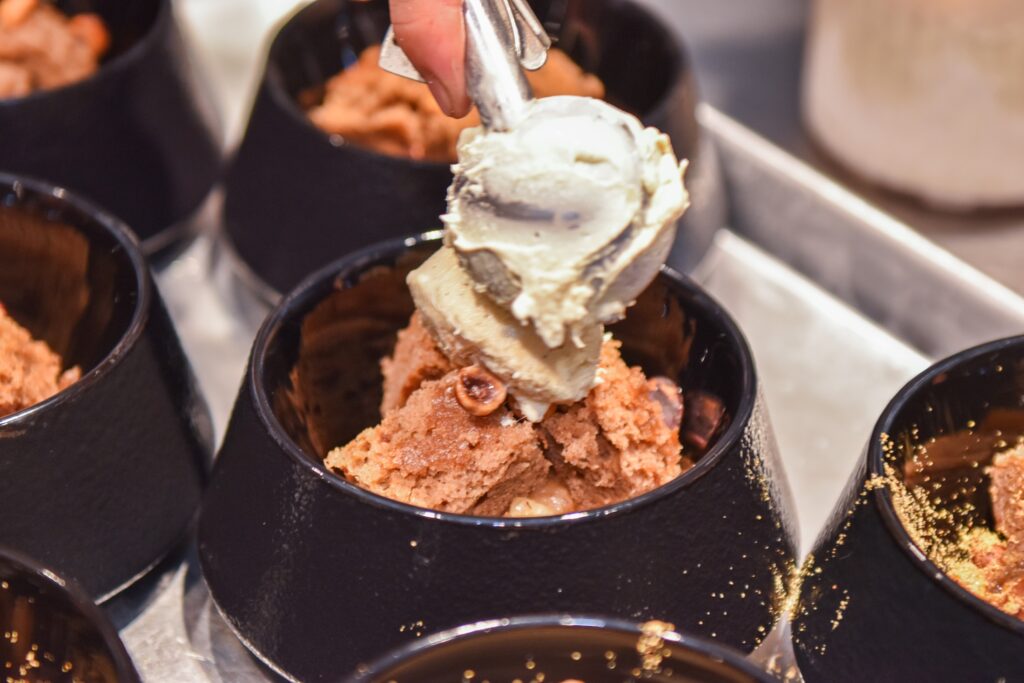
For dessert, “Dates” paired miso toffee and brown butter with caramelized bananas, banana-peel oil, hazelnuts and bone marrow ice cream. It was perhaps his most provocative expression of the evening: discarded banana peels became an aromatic oil, while bone marrow—another ingredient that speaks to utilizing the animal more completely—was transformed into ice cream.
Across three courses, Chef Jordan made sustainability feel inseparable from Slao itself. Corn was pushed through its cob and husk. A dry-aged steak incorporated the pellicle created during aging. Carrots, fennel and bananas were used beyond their most obvious parts.
It was focused, intelligent cooking—and it earned Chef Jordan the first position in the finale.
Chef Jessie Franco looks to the whole fish
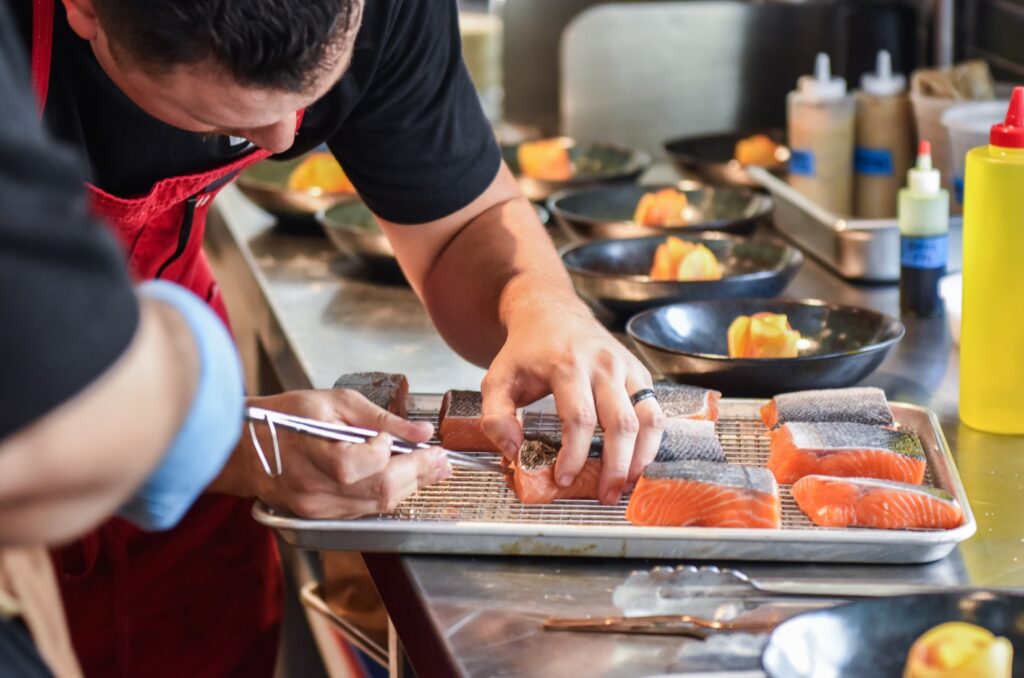
Chef Jessie Franco offered the evening’s most direct and cohesive interpretation of sustainability.
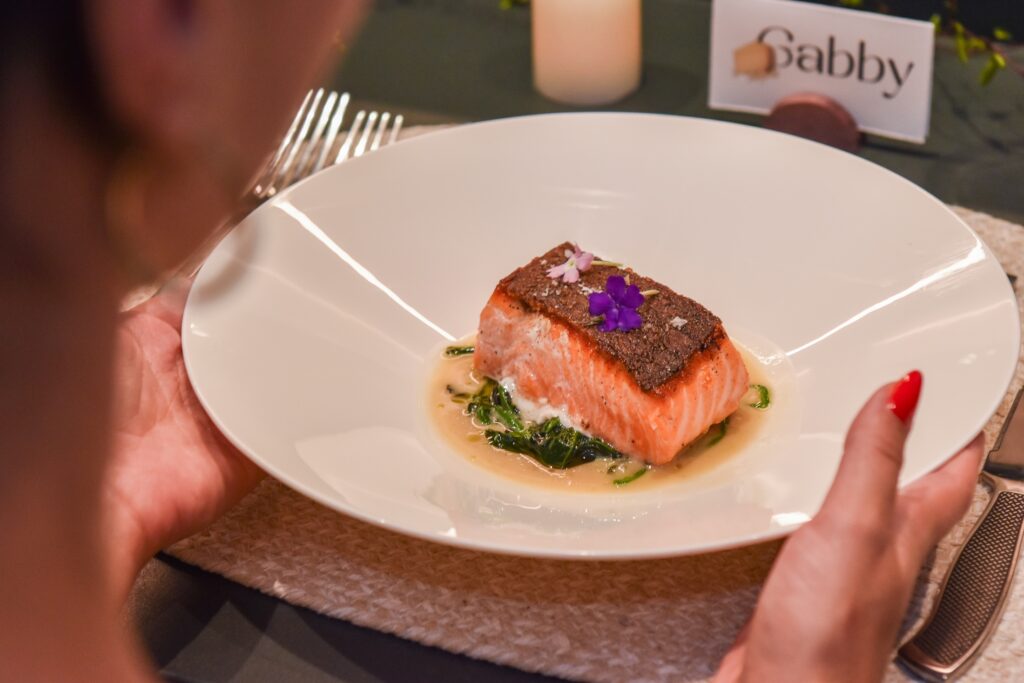
“For this menu, sustainability means honoring the whole fish,” he wrote on each menu. “Each savory course uses a different cut of a single king salmon, transforming belly, offcuts, loin, skin and bones into distinct expressions throughout the meal.”
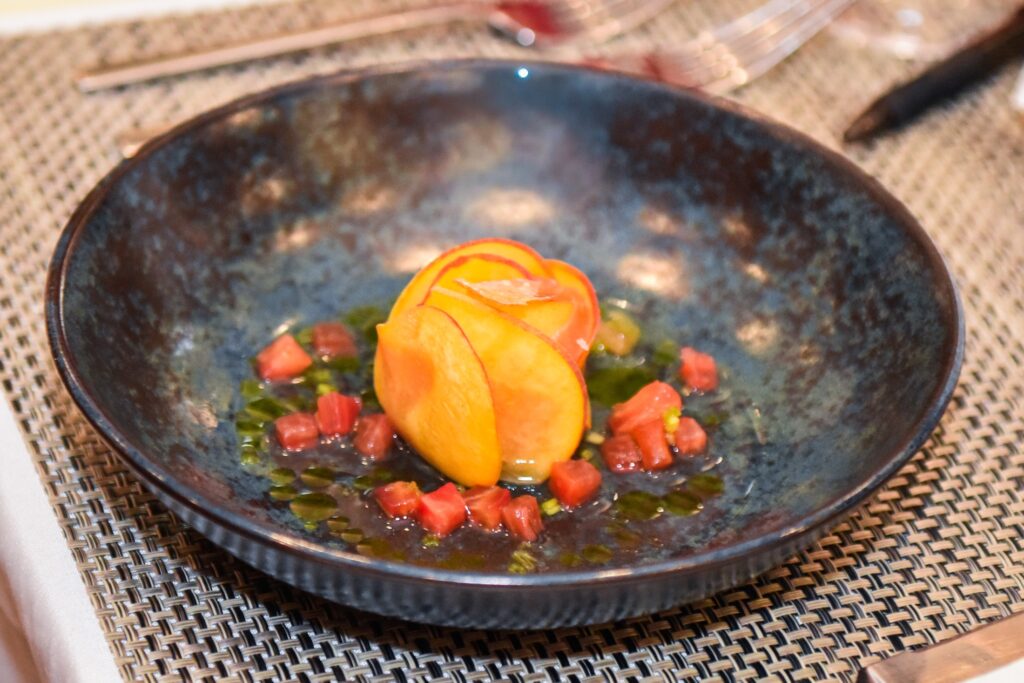
“The Offcut” followed with a king salmon-and-peach crudo rose surrounded by heirloom tomato water, tomato concassé and pickled spinach stem, then finished with a salmon-skin crisp. Here, Chef Jessie extended the zero-waste philosophy beyond the fish. Salmon offcuts became the crudo, the skin became a crisp, and spinach stems—often removed in favor of the leaves—were pickled and returned to the plate.
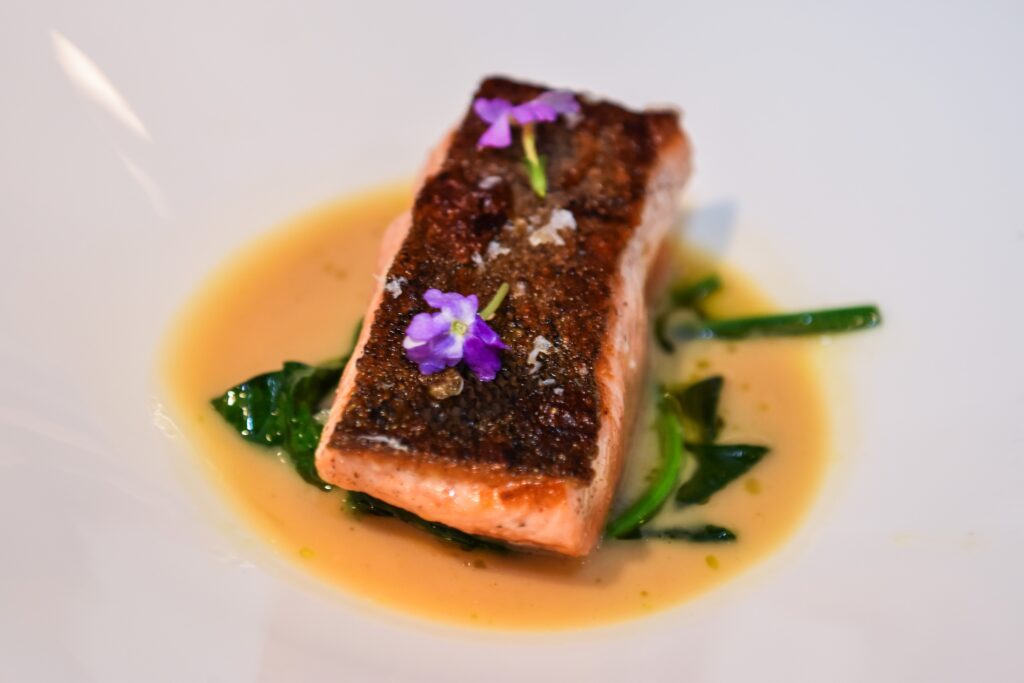
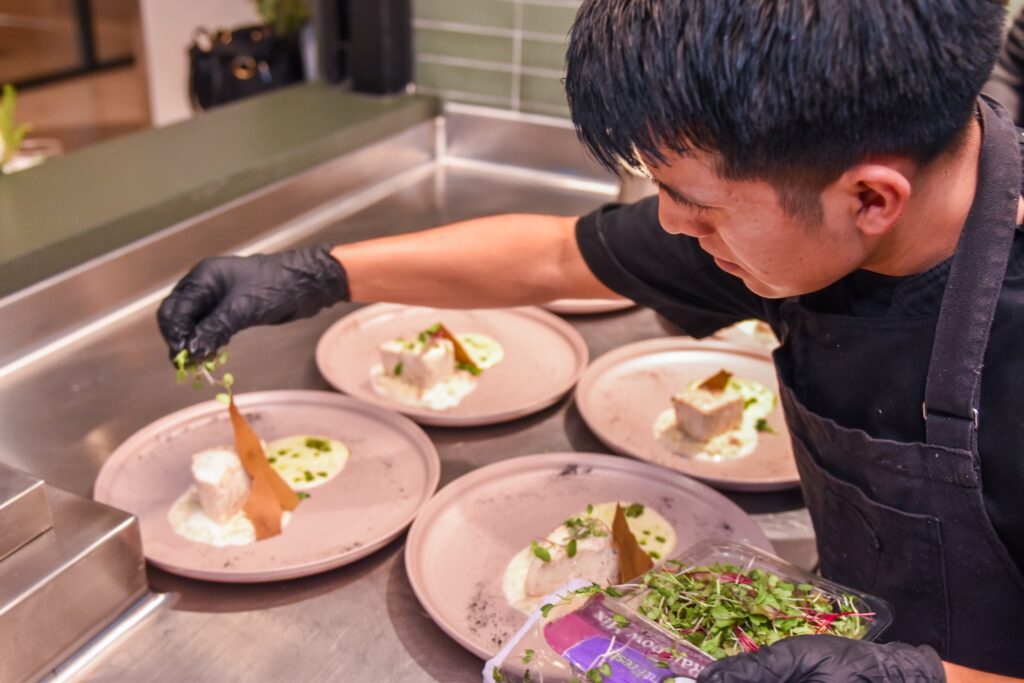
“The Loin” featured charcoal-roasted king salmon with sautéed spinach, lemon and a nage created from tomato and salmon. The dish brought the fish’s most familiar cut into focus, but the surrounding broth continued the whole-animal approach by extracting flavor from more than the loin alone.
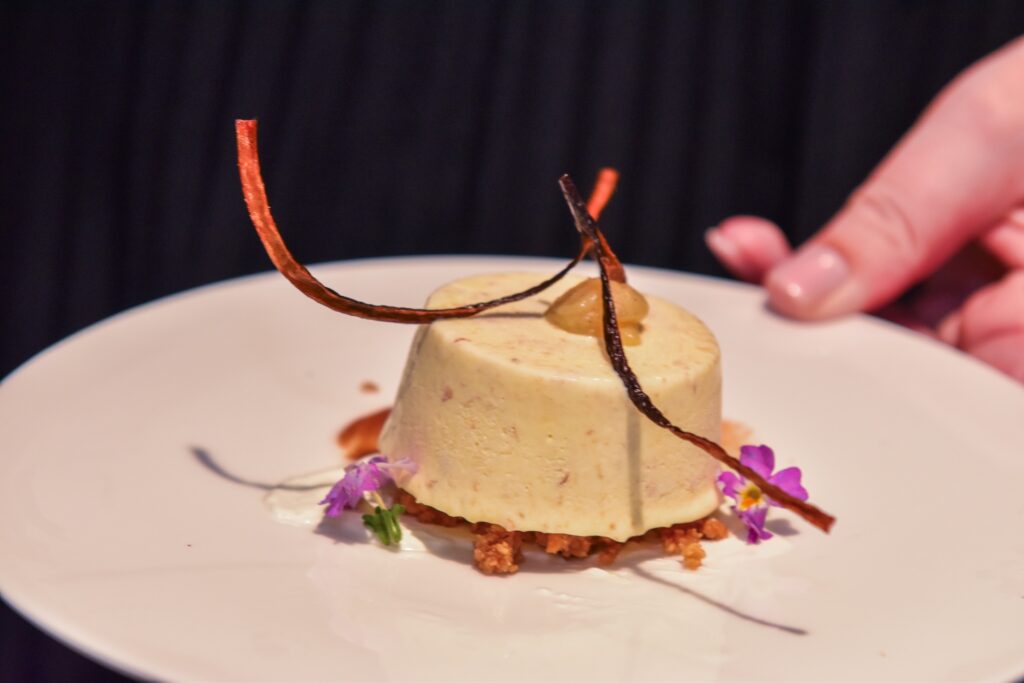
For “Zero Waste,” Chef Jessie served a banana parfait with banana jam, banana-skin caramel and hazelnut crumble. It was a smart conclusion to the menu’s thesis. The same thinking that transformed salmon skin, bones and offcuts into purposeful elements was applied to dessert, where the banana peel became part of the caramel rather than the trash.
Chef Jessie’s menu was an impressively clear demonstration of whole-fish cookery—and further proof that the chef behind one of Long Beach’s most popular brunch restaurants is capable of far more than omelettes and pancakes.
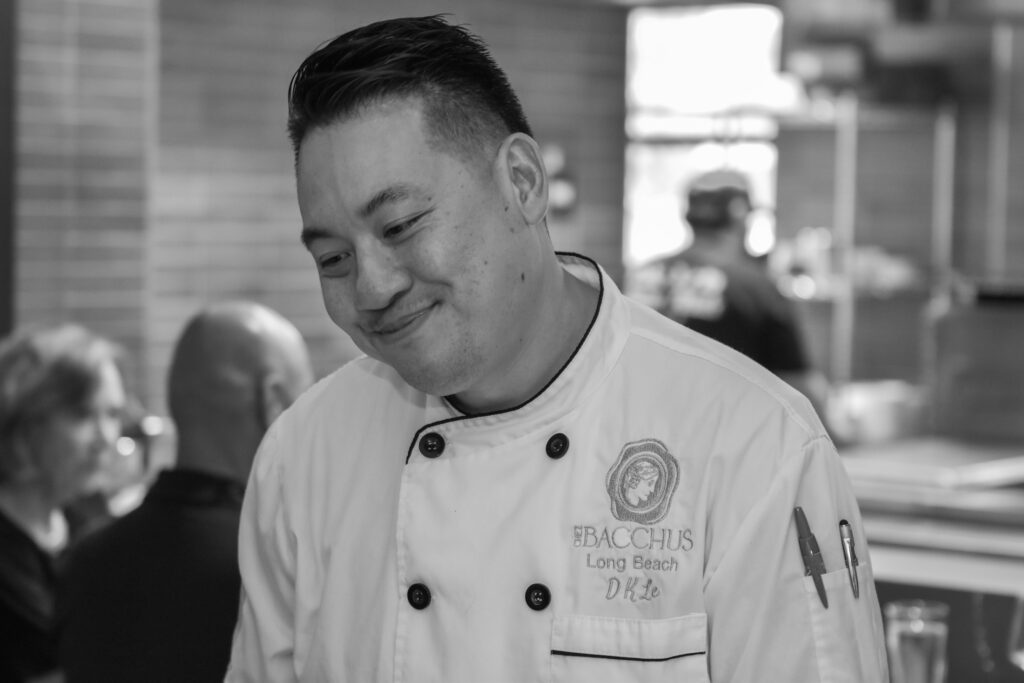
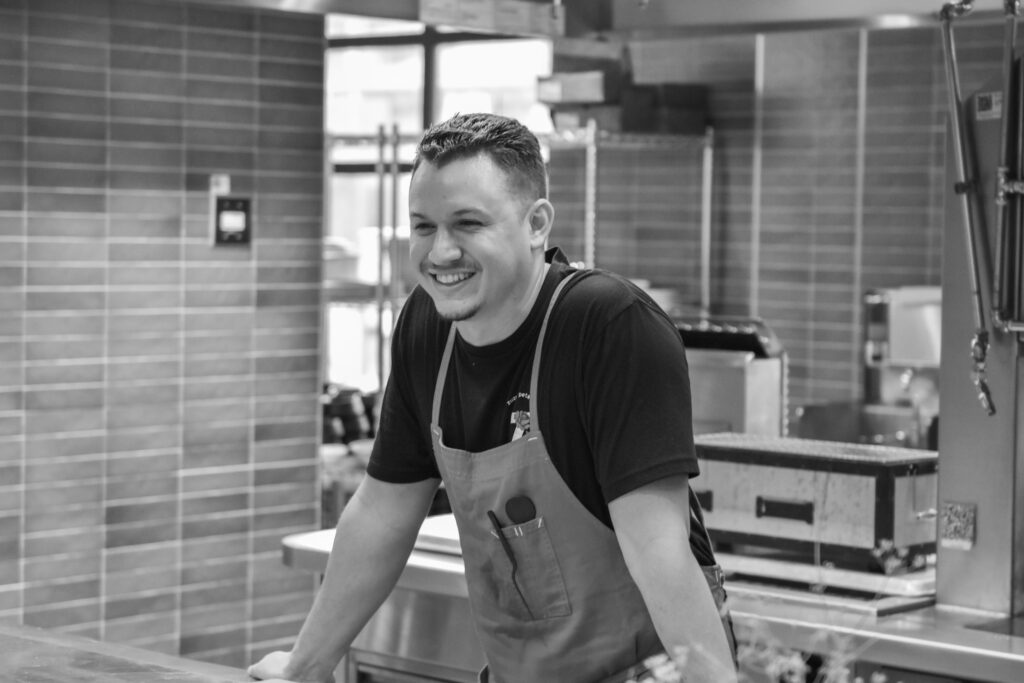
Chef Danny Le turns toward classic technique and careful sourcing
Tuesday’s sold-out semifinal placed two chefs with deeply seasonal instincts beside one another: Chef Danny Le of Chez Bacchus and Chef Jessie Franco of Zuzu’s Petals.
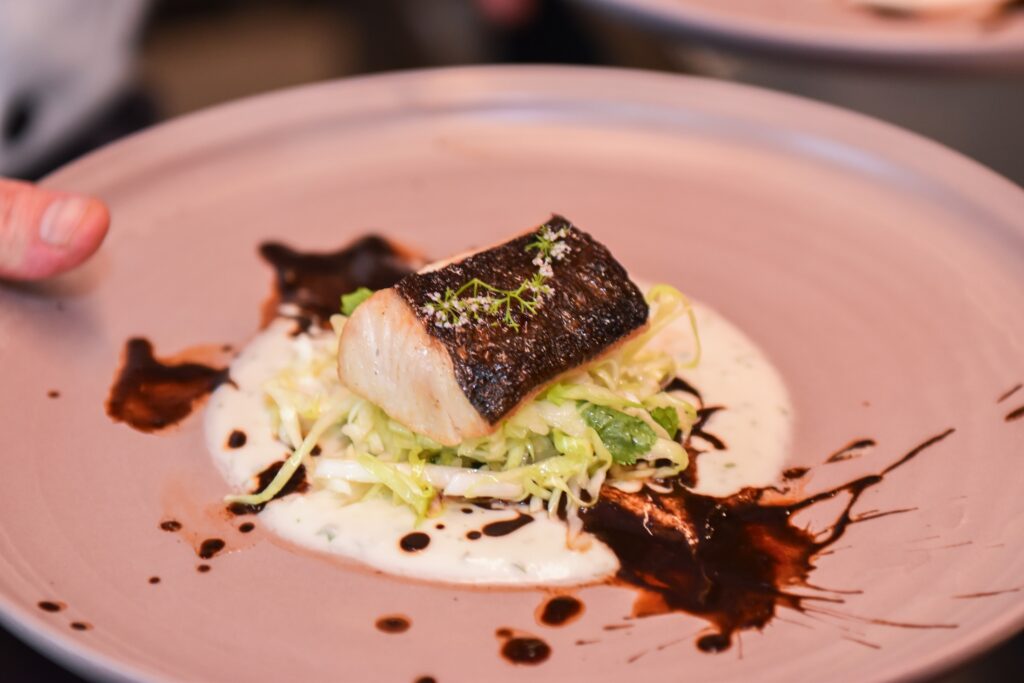
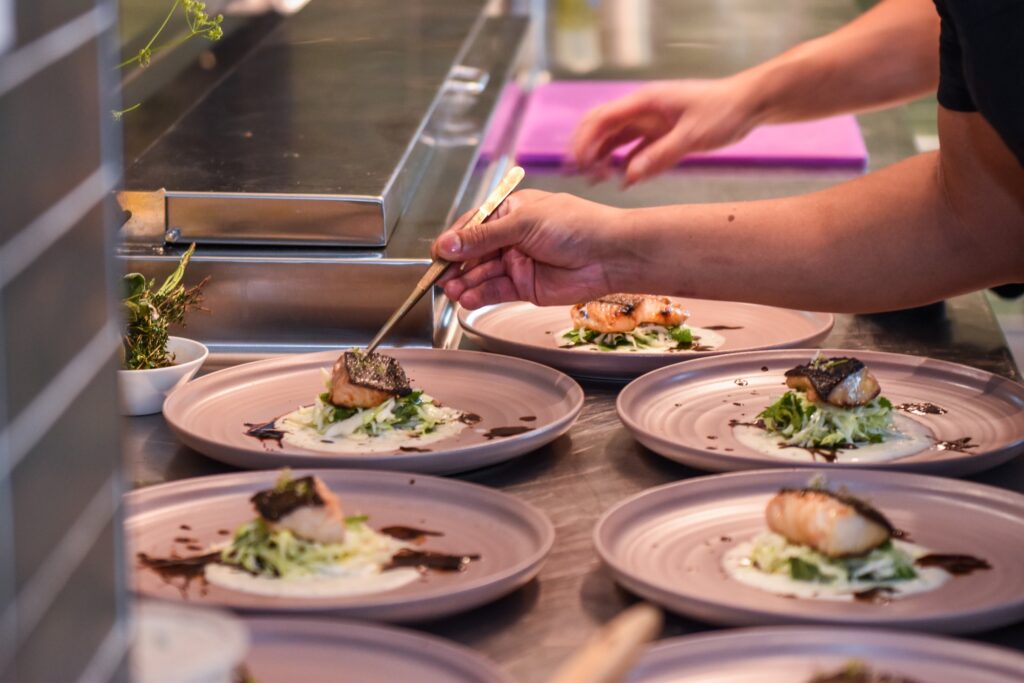
Chef Danny began with seramoni black cod dressed with coconut vinaigrette and black garlic. The plate was strikingly concise compared with some of the more elaborate menus of the competition. Rich, buttery fish met the acidity and sweetness of coconut vinaigrette, while black garlic brought its deep, almost balsamic quality.
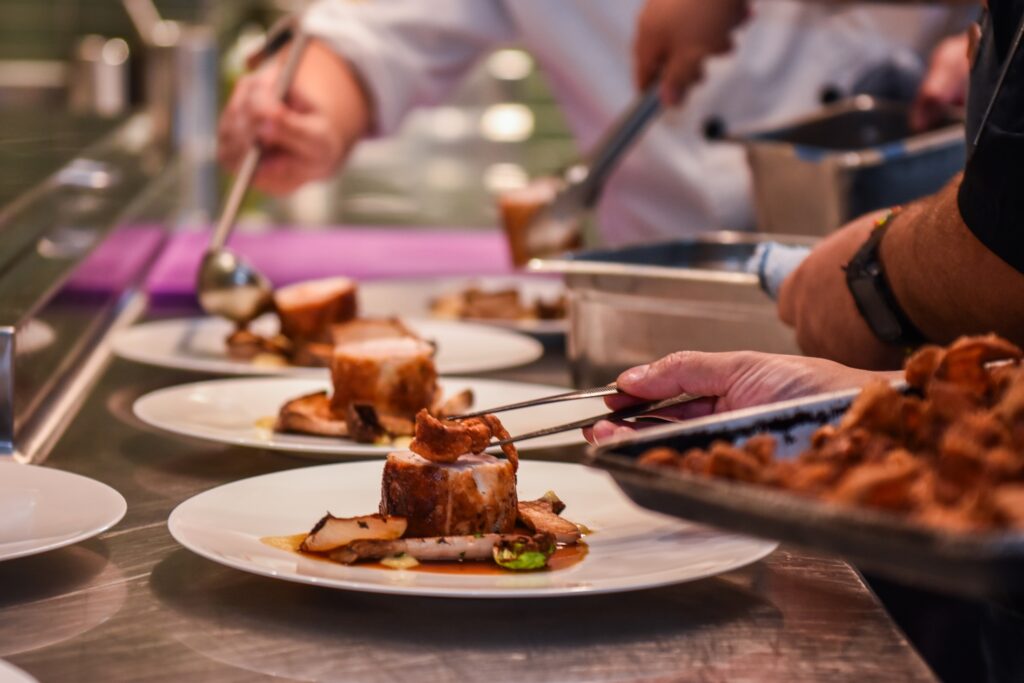
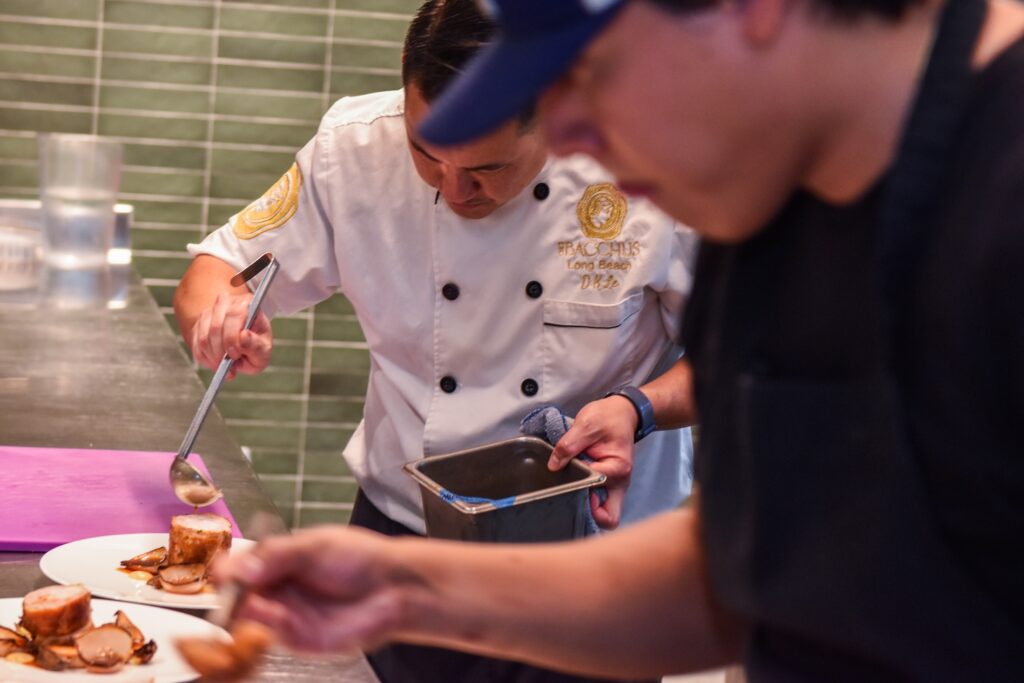
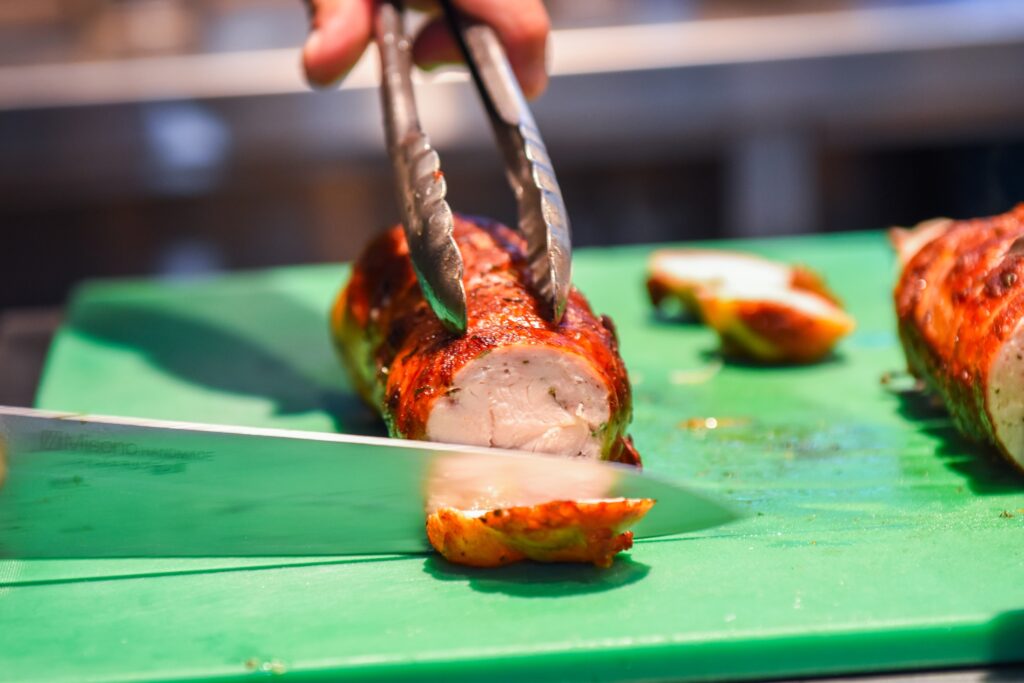
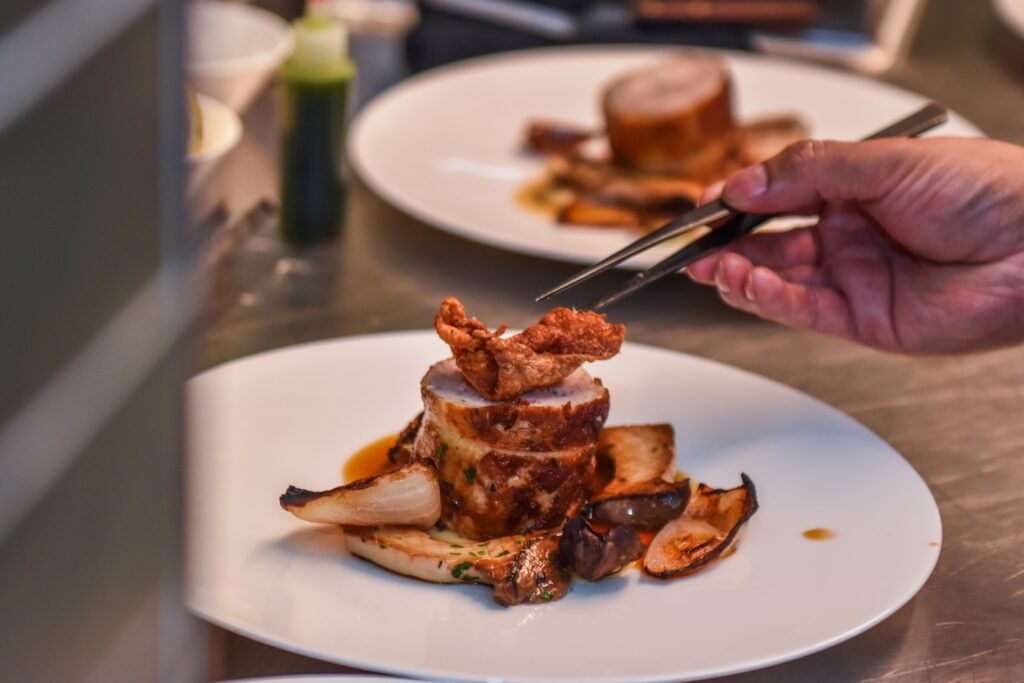
His second course was a complex but wildly executed chicken galantine accompanied by Long Beach King trumpet mushrooms, Brussels sprouts, and chicken jus. Galantine is classical cooking grounded in careful utilization: poultry is deboned, stuffed, rolled and cooked into a unified form.
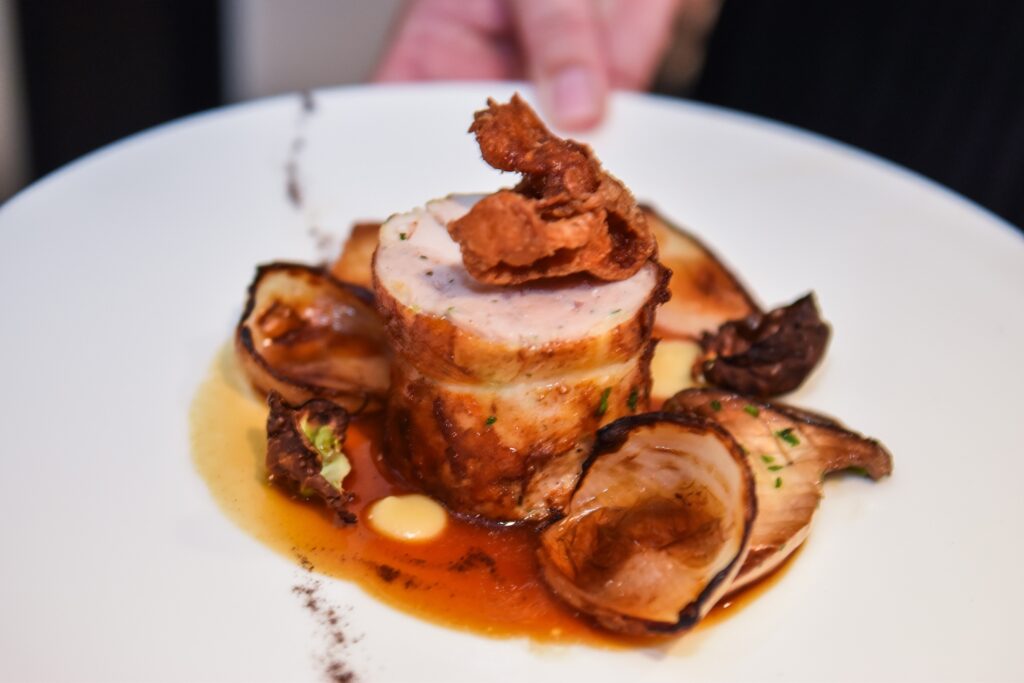
Here, it allowed Chef Danny to present chicken not as a collection of prized individual cuts, but as a composed whole enhanced by mushrooms grown in Long Beach and a jus that concentrated the bird’s flavor.
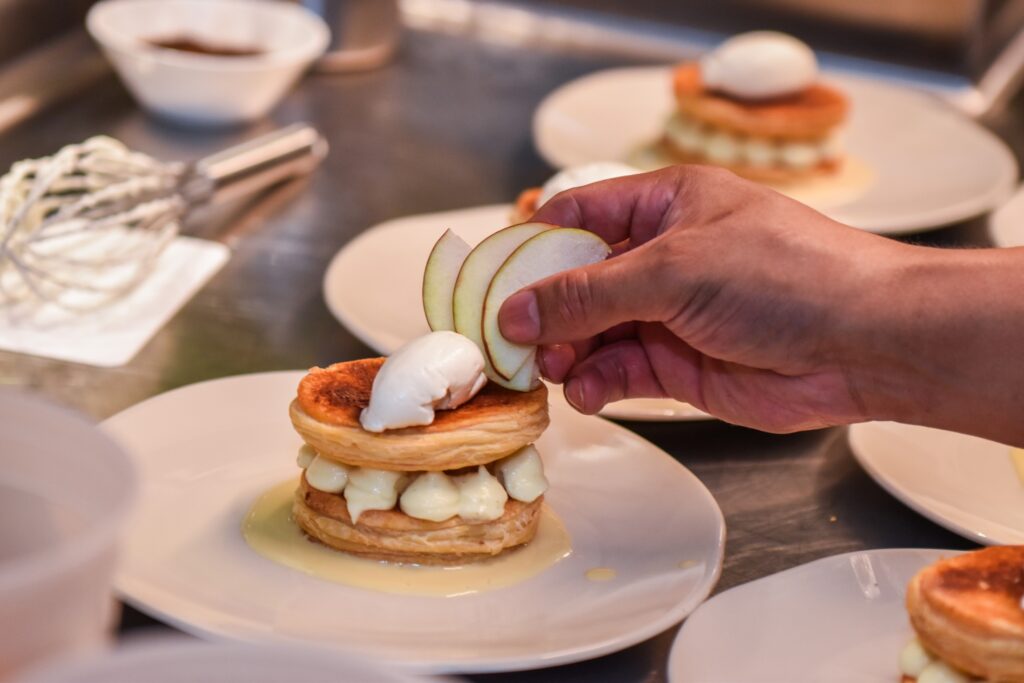
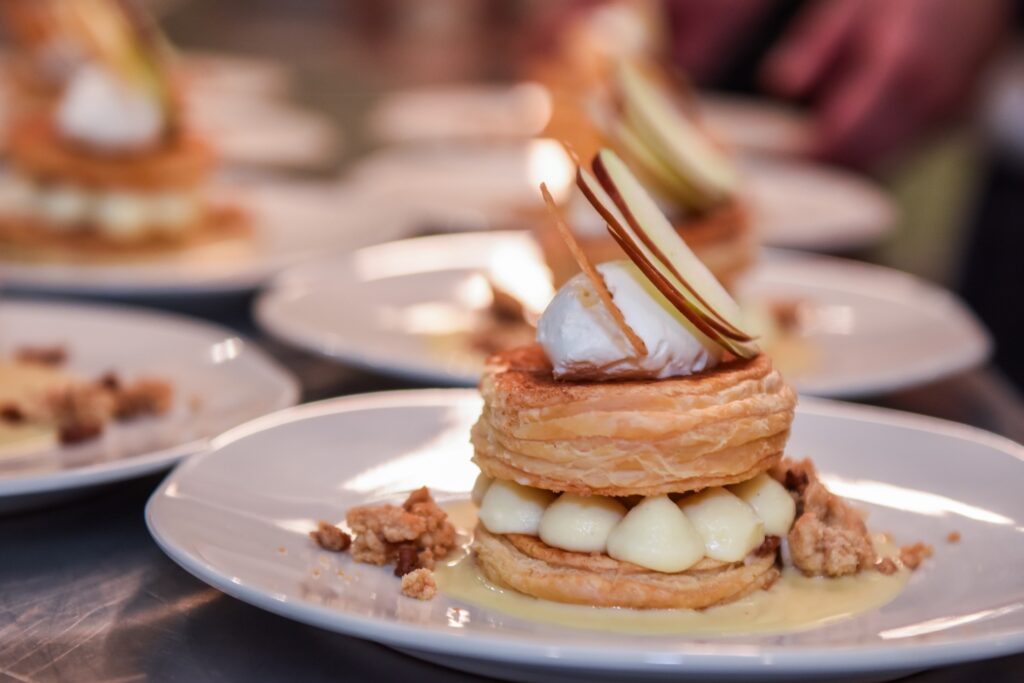
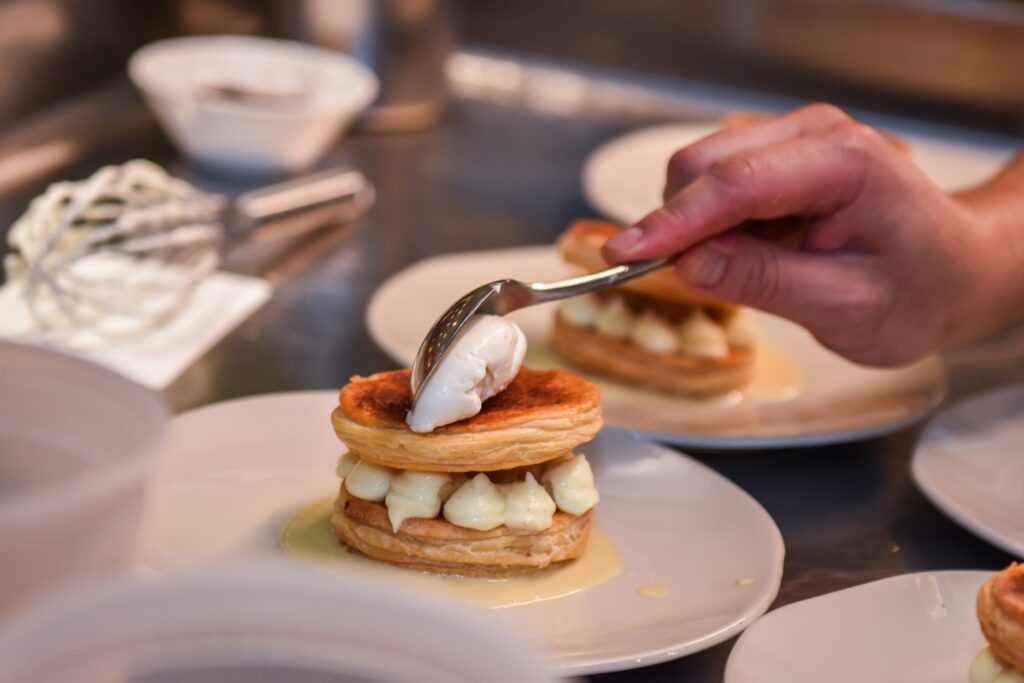
He closed with Ha’s Apple Farm mille-feuille, layering McIntosh apples with cinnamon puff pastry and vanilla cream. The dessert continued the menu’s sense of restraint. Local apples, crisp pastry, cinnamon and cream required little ornamentation—just technique and a respect for the ingredient itself.
That simplicity has been central to Chef Danny’s path through the Grand Prix Fixe. The semifinal followed the same philosophy: seasonal ingredients, recognizable forms and classical execution without unnecessary complication.
It ultimately carried him into the finale.
The Grand Prix Fixe grows in its second year
Beyond the competing chefs, this year’s Grand Prix Fixe represents a significant behind-the-scenes expansion that I must highlight and be grateful for.
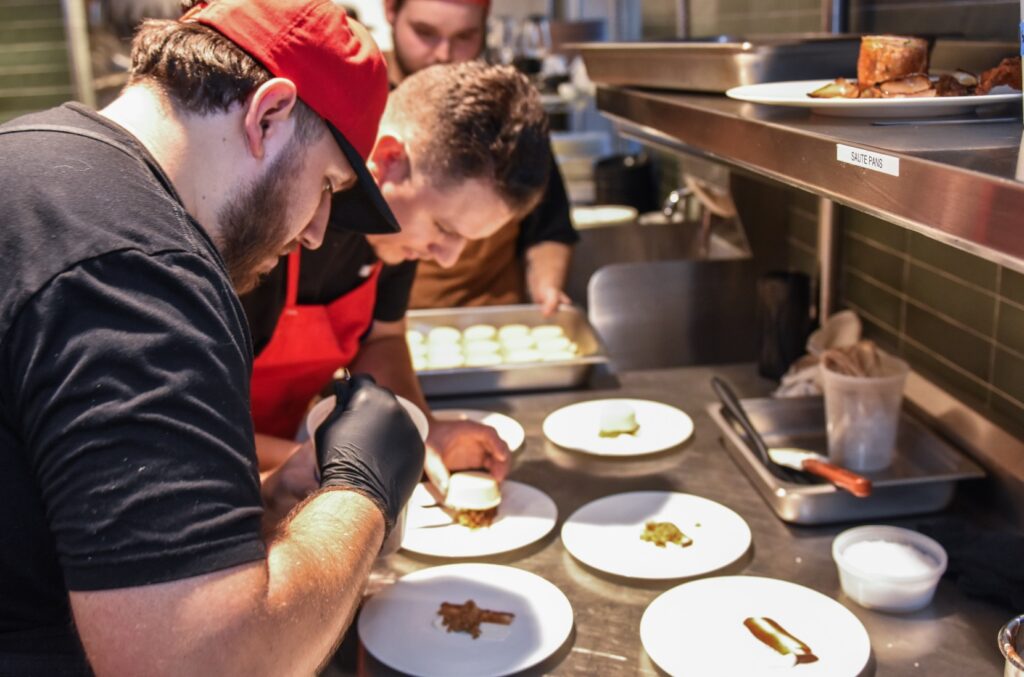
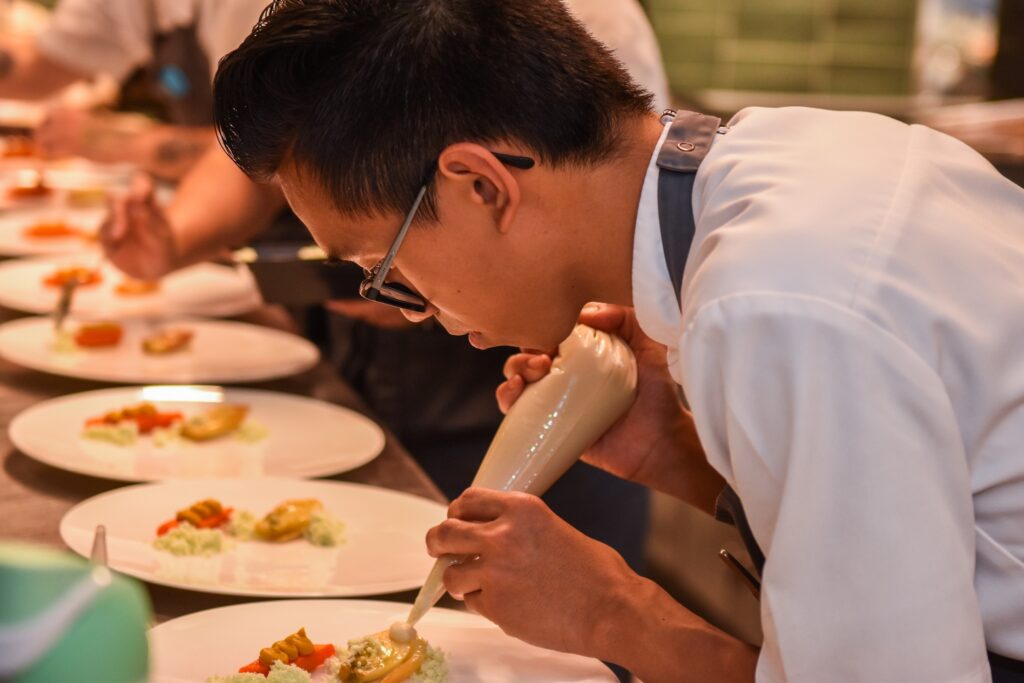
Chef Matthew Roberts—currently of Colossus and formerly of Alder & Sage and Olive & Rose—has joined the team as expediter, overseeing the precarious dance between two chefs, six courses and a room of diners who must receive competing plates as simultaneously as possible. It is no small role. Unlike a traditional tasting dinner, where an entire kitchen is pushing toward a single menu, Grand Prix Fixe requires two separate culinary teams to operate beside one another while maintaining their own timing, plating and intent.
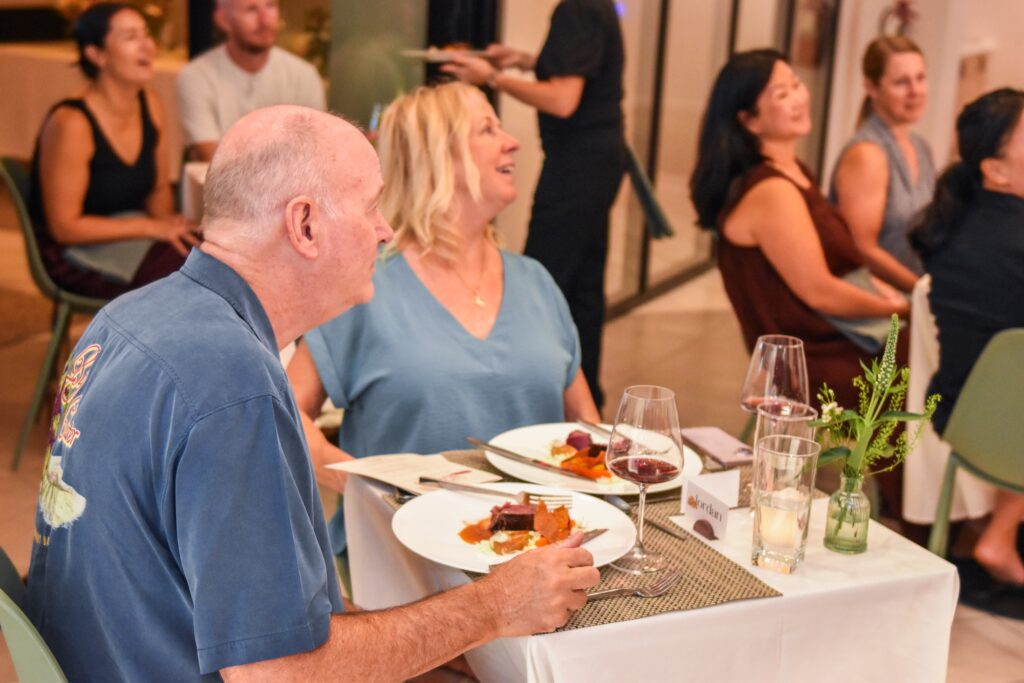
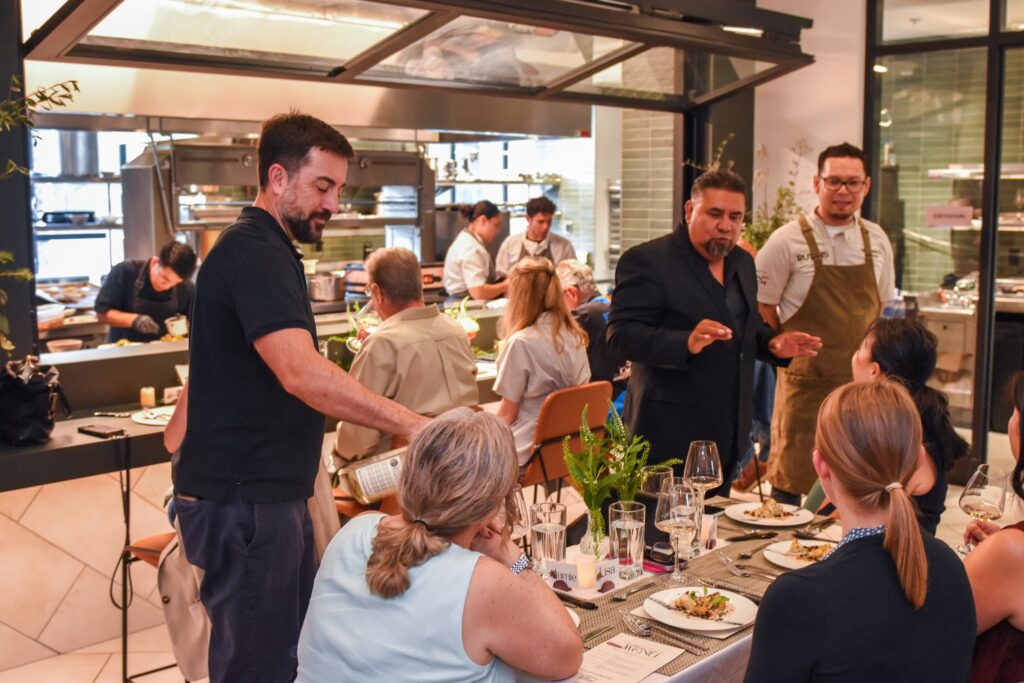
Front-of-house has also expanded with two deeply experienced people: Lauren Harvey, formerly of Heritage and Olive & Rose, and Debra Zelenka, formerly of Marlena and Michael’s on Naples. Together, they have helped create a level of service that matches the ambition coming from the R&D kitchen at Partake Collective.
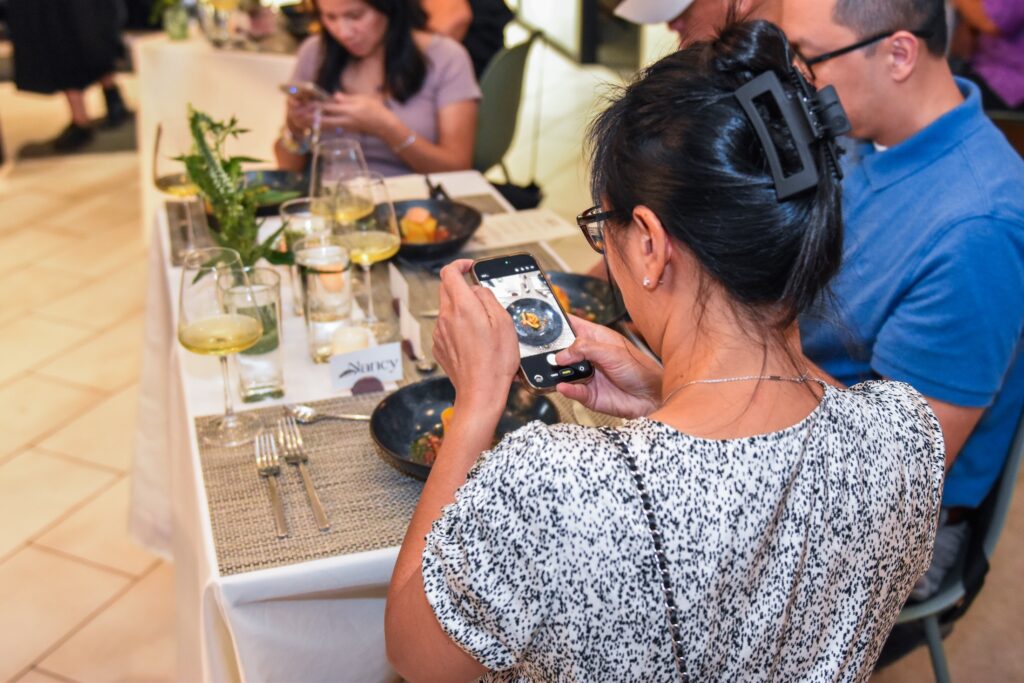
The growth is especially meaningful given how many guests have returned after attending the inaugural competition last year. Some have come back for multiple battles, once again committing themselves to the strange responsibility—and undeniable joy—of determining which chefs continue forward.
That returning patronage signals that the Grand Prix Fixe is becoming more than a novelty. Guests are not simply buying dinner. They are investing in the competition’s arc, watching chefs move from one theme to another and seeing how their food changes under pressure.
The finale—already sold out—is next…
That finale is already sold out.
The two chefs now enter “Seminal,” the competition’s third and final theme for 2026. Here, they are to create a menu that will hopefully act as a divisional charting course for their career. It sounds heavy and, in a sense, it should be. This isn’t about cooking for a restaurant. Or even the award itself. Or even the patrons. This is about creating something that inherently writtten into their creative DNA.
May the best chef win.