
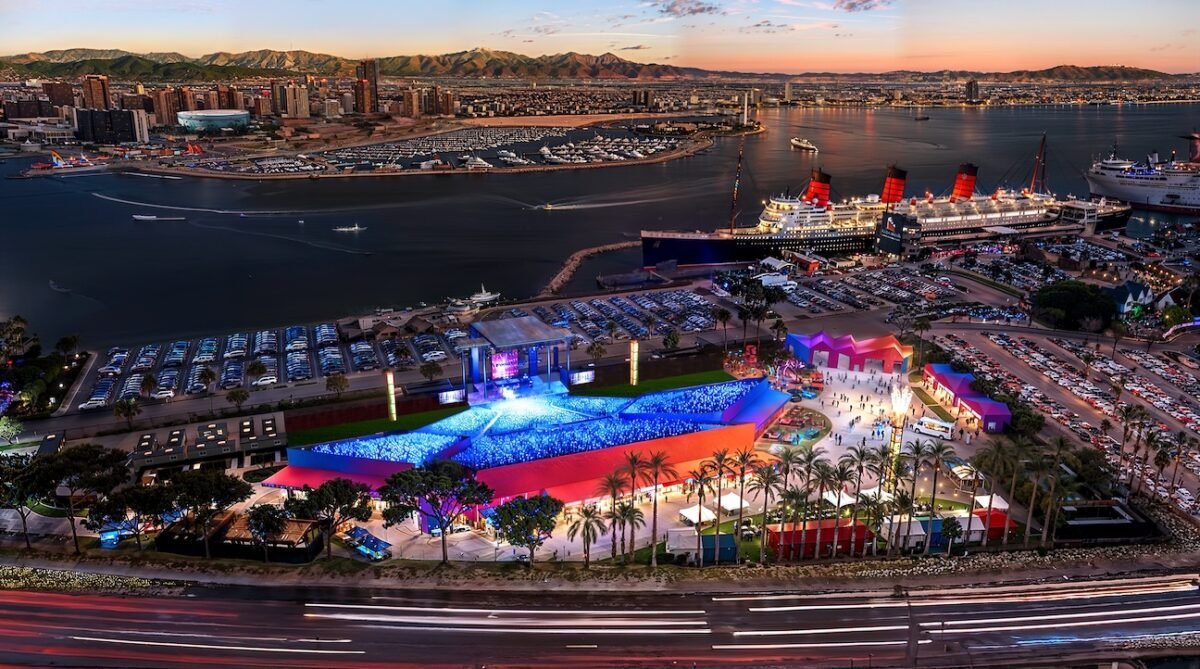
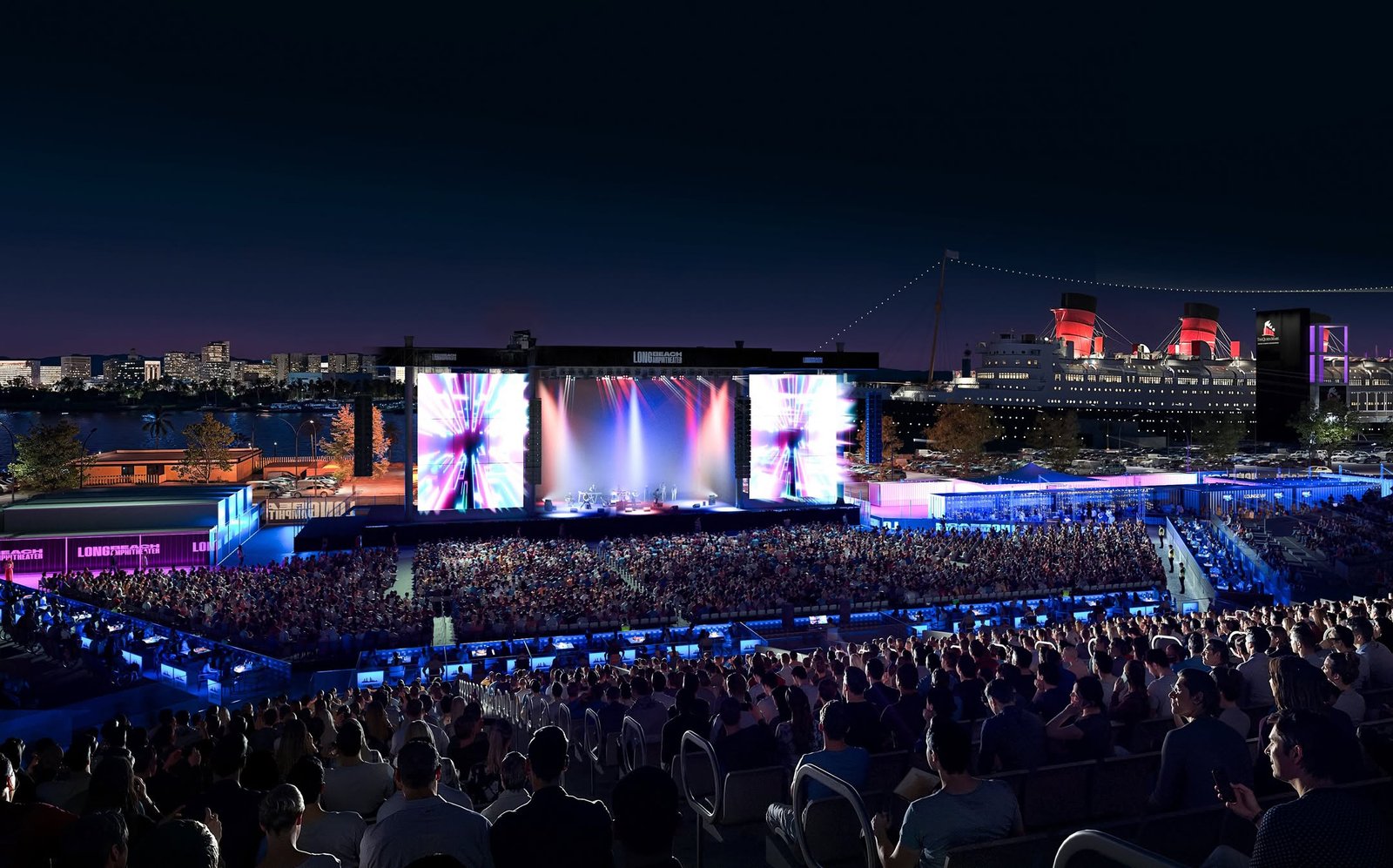
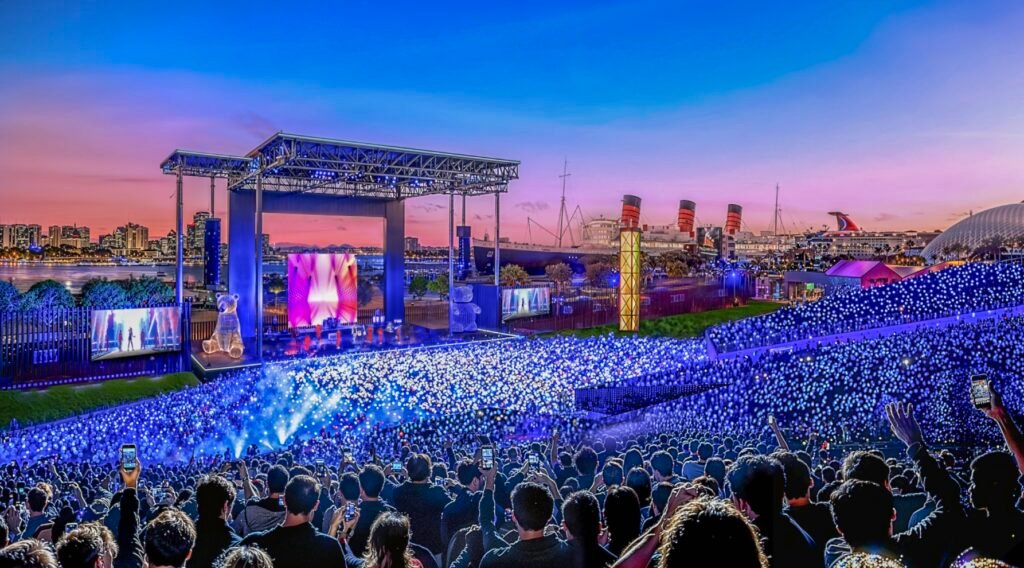
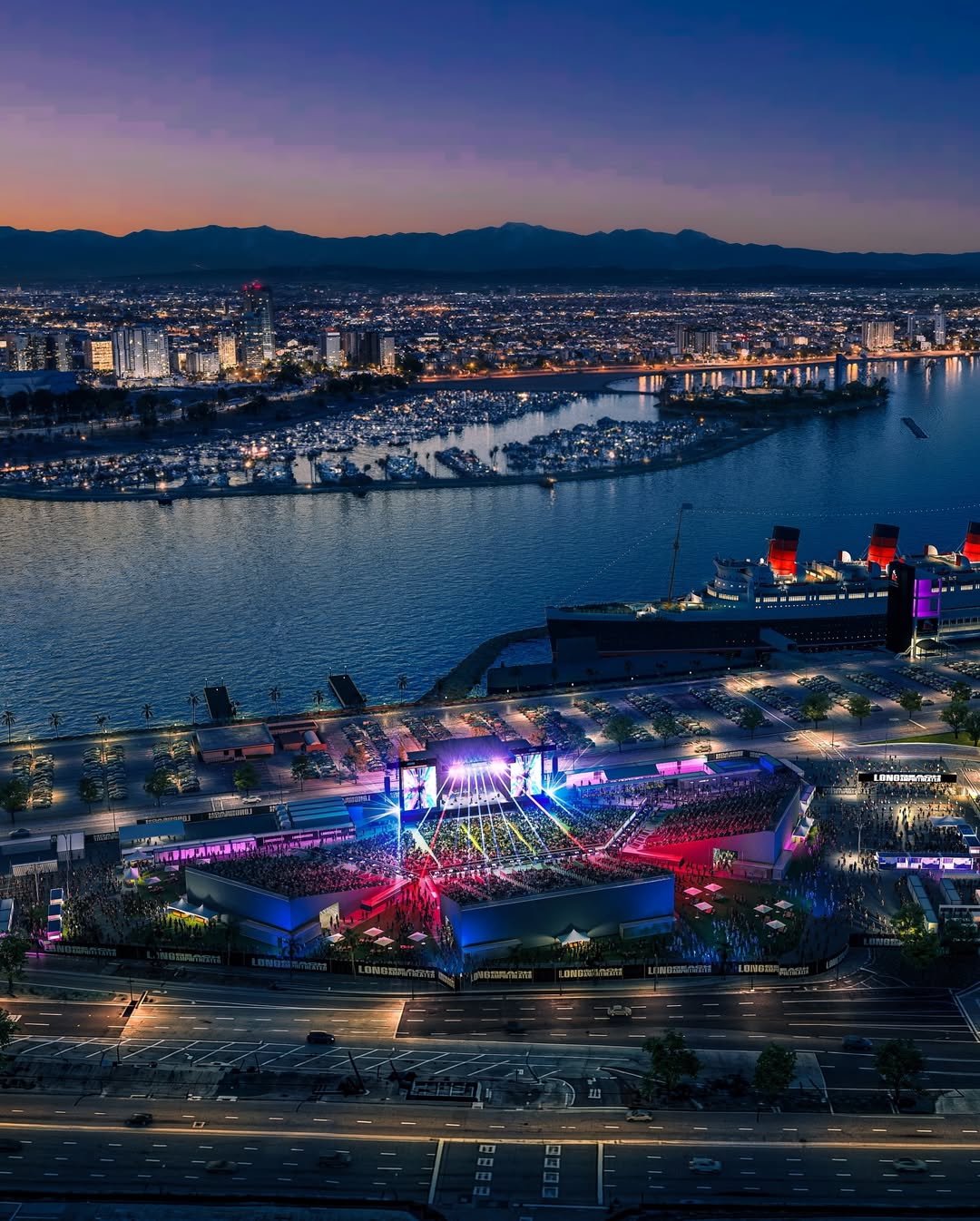
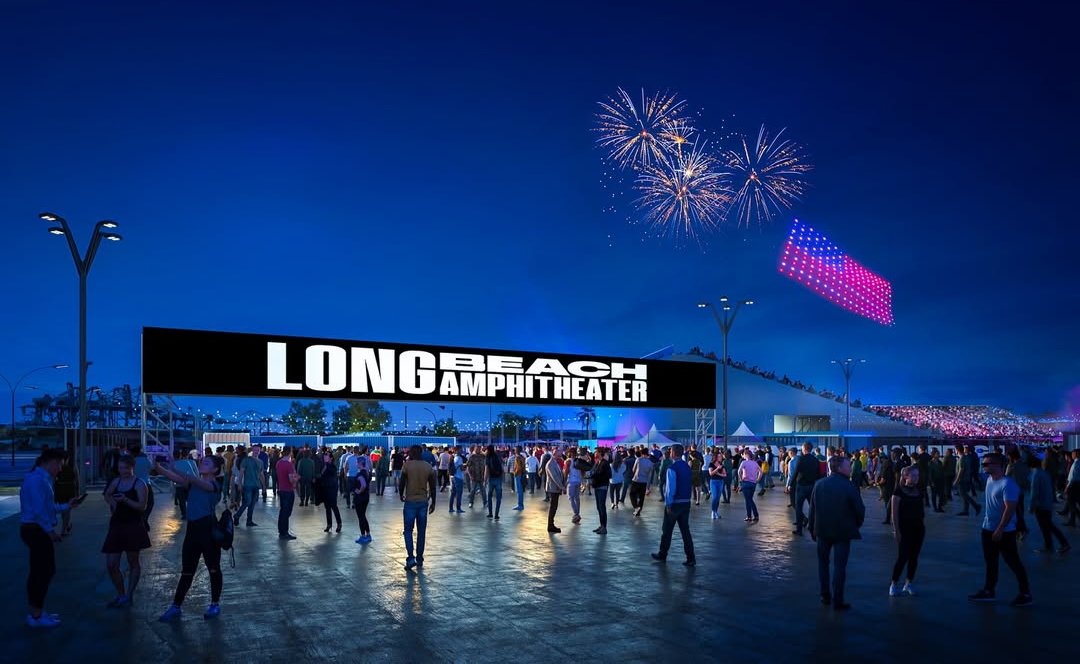
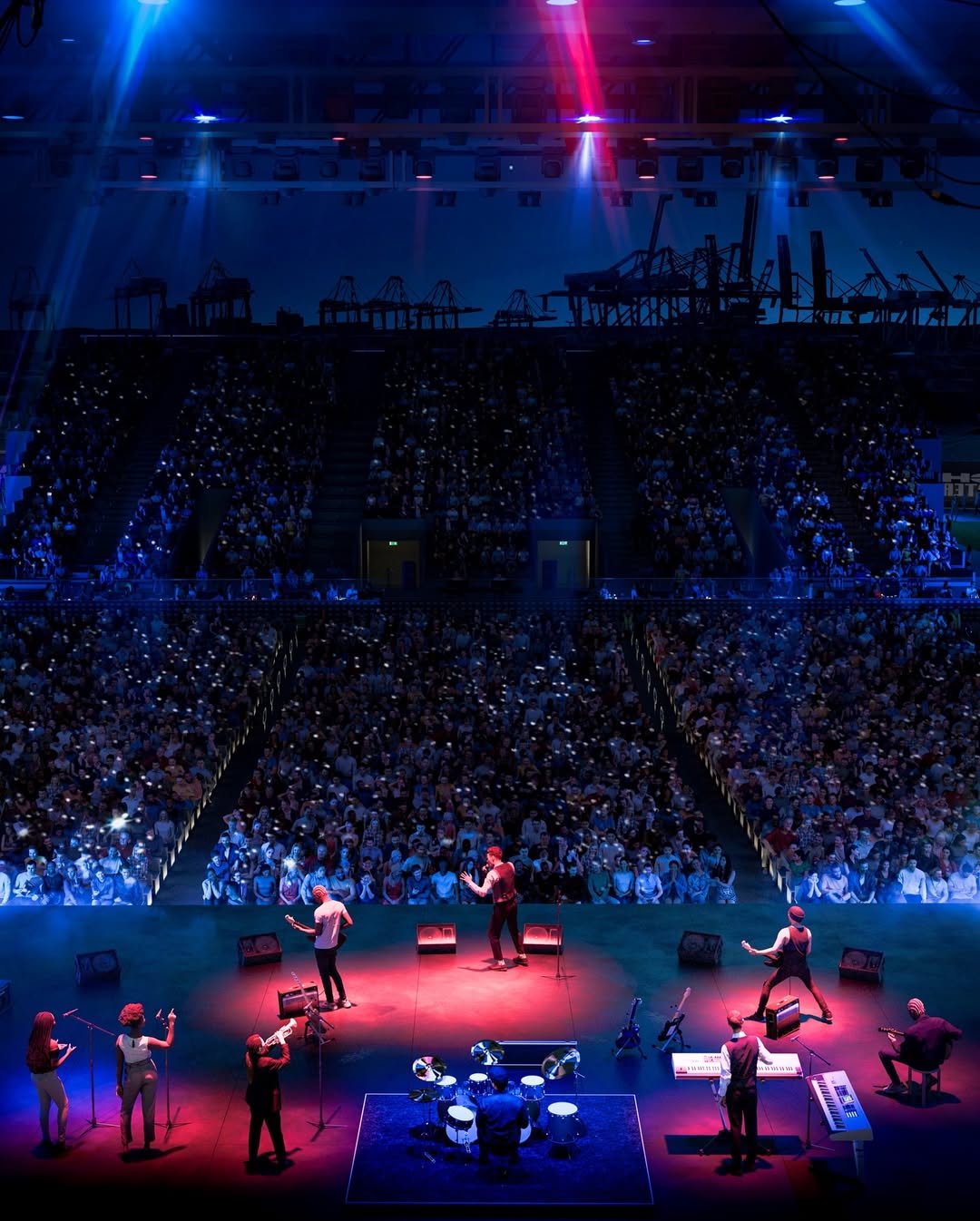
After the City Council allocated an additional $7.3M in funding last week, the Long Beach Amphitheater will officially break ground on Wednesday, Jan. 13—and with it, create the largest live entertainment venue in the city. It will also welcome its inaugural show come June 6 and it’s not just concerts from recording artists. Come spring, it will serve as home to the Long Beach Symphony and, additionally, serve as a film screening venue a la Hollywood Bowl.
Mayor Rex Richardson, in his State of the City address on Jan. 13, announced the $21.3M space is projected to host 25 shows in its inaugural season—lower than usual due to construction—followed by more than 40 annual events by 2037.
From paper to public-private-partnership to pavement: $11M in sponsorships secures construction
$11 million in sponsorships have been secured to date, according to the mayor, ensuring that more than half of the construction costs are covered through public-private partnerships.
Additionally, the Long Beach City Council just approved $7.3M in funding to complete the long-planned waterfront amphitheater. The funds would cover higher-than-anticipated site improvements, expanded pre-opening costs, and upgraded furniture, fixtures, and equipment needed to open the venue at a level competitive with modern concert destinations.
The money would come from the Tidelands Area Fund, with the city expecting to recoup the full investment—plus a surplus—through the venue’s future operating profits. In addition, private sponsorships—naming rights, support for the VIP area and bars…—are actively being sought by the City, not its operators, per the contract released back in April with operator Legends. This is money not forecast in the venue’s public investment, making the amphitheater an even stronger value proposition in terms of ROI.
The Long Beach Amphitheater is officially becoming a reality, breaking ground
Breaking ground on Jan. 14, the project has been moving steadily through approvals and procurement over the past two years.
In April 2025, City Council selected ASM Global to operate the amphitheater; that company later merged with Legends to form Legends Global, now the venue’s official operator. And they made their first show announcement (though it will not be the inaugural show) with Mötley Crüe. Since then, the city has approved major purchases. That includes modular grandstands. Premium seating. And a purpose-built stage, all the while finalizing site plans and operational needs alongside Legends’ leadership team.
By late 2025, the project had cleared both the Planning Commission and the Board of Harbor Commissioners. In turn, that set the stage—literally—for construction to begin this month.
Initial work will focus on unglamorous but essential infrastructure: Resurfacing asphalt. Improving drainage. Upgrading sidewalks for accessibility. And modernizing electrical systems. Only after that groundwork is complete will the amphitheater’s visible elements—seating, stage, and production infrastructure—come together. The opening is now scheduled for summer 2026, rather than spring, a shift that also contributed to higher pre-opening costs.
Why the cost for the amphitheater went up
According to city staff, the additional $7.3M breaks down into four main buckets: Increased construction costs. Expanded and upgraded furniture, fixtures, and equipment—commonly called FF&E in the industry. Extended pre-opening operations. And, lastly, contingency funds. Some of the earlier budget was also used for emergency maintenance and safety upgrades across the broader waterfront leasehold—work that would have been required regardless of whether the amphitheater was built.
In other words, not all of the cost increase is about bells and whistles. But some of it is intentional.
City staff and Legends Global argue that upgraded premium seating, VIP spaces, and guest-facing amenities are essential if the venue is going to attract top-tier artists, promoters, and sponsorship dollars. The revised plan leans harder into premium experiences—not as luxury for luxury’s sake, but as a revenue strategy.
The financial bet, per city staff
Despite the higher upfront cost, the city’s revised financial projections remain optimistic.
Legends Global’s updated five-year pro forma projects that the Long Beach Amphitheater will generate nearly $12M in net operating profit by year five, even accounting for a shortened first season. Over a ten-year period, the venue is expected to generate approximately $28.7M in profit, leaving the city with an estimated $7.4M net gain after all development costs are repaid.
Annual net profits after the inaugural year are projected to land between $2.4M and $3M, with full repayment of the Tidelands Fund expected within eight years of opening.
‘More than a concert venue:’ How city leaders are framing the importance of the Long Beach Amphitheater
What the spreadsheets don’t fully capture, city staff notes, are the ripple effects. A functioning waterfront amphitheater is expected to drive many things: restaurant traffic. Hotel stays. Sales tax revenue. And, of course, the transient occupancy tax, all of which benefits flow into the city’s General Fund rather than back into the Tidelands account. (The latter’s funds can be used solely on projects on the waterfront while the former can be used citywide.) It also creates event-based jobs. Vendor opportunities. And another reason for residents and visitors to spend time—and money—on Long Beach’s waterfront.
“The additional investment positions the amphitheater to attract higher-profile performances, generate stronger returns through ticket sales and private sponsorships, and deliver broader economic benefits—from visitors dining in our neighborhoods to staying in our hotels,” Richardson added. “We’re looking ahead to a soft opening this spring and a full grand opening this summer, with more details to come at my annual State of the City address.”
This project, staff argues, fits squarely into the city’s broader push to diversify revenue through tourism, hospitality, music, and cultural events.
Whether the amphitheater ultimately delivers on that promise will take years to measure. But for now, the city is making a clear bet: spend more upfront, build it right, and let Long Beach’s appetite for live music—and waterfront experiences—do the rest.



It’s nice to see the city move fast on something. Usually big ideas have big timelines. Heck, even small ideas have exhaustingly long timelines. How long have we been waiting for a bike lane on Pacific Ave? Long enough that the grant funding is not enough or pulled back entirely. So, I’m happy to see that the city can actually do big things, and quickly. I just hope they can use the revenue to do more big things and quickly.
Considering that the City continues to raise taxes due to a lack of funding, where are they getting the money to build this?
It sounds like a great idea but $300k to run it? That’s not nearly enough to operate a venue of that size. What am I missing?
[…] Story continues […]
Not mentioned here was the once thriving live music scene downtown in the late 80s and 90s with clubs like System M, Blue Cafe, Birdland West and Fenders Ballroom. And on the Eastside with Bogarts. LB locals as well need to support the live music community.
I will probably be a traffic nightmare. How do they propose on getting traffic in and out of there and parking as well