

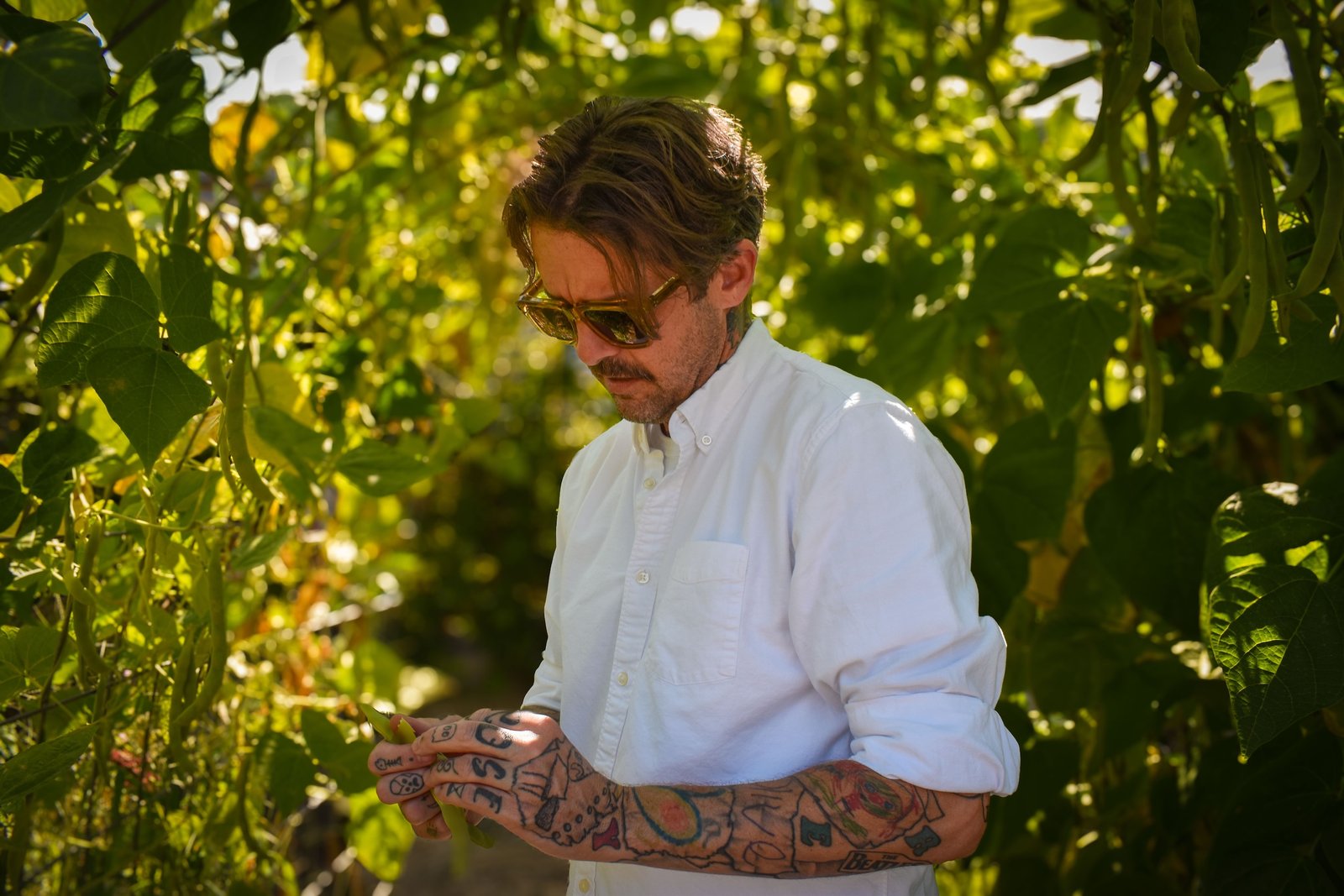
“Every restaurant can achieve this—I promise,” Chef Philip Pretty—who, with his sister, Lauren Michaelis, led Heritage to score Michelin gold for Long Beach with their Full Belly food group—said as he walks around Heritage’s tiny but mighty kitchen and storage.
There are no walk-in refrigerators; just reach-ins, which means he is not buying and storing mass bulk food items. There are no hardcore cleansers or detergents for cleaning in the dish pit; just environmentally safe ones. And this is the entire ethos of Full Belly: zero waste and a negative carbon footprint. The pinnacle of sustainability. And when Chef Phil or Lauren talk about zero waste, they literally mean just that. Absolute zero.
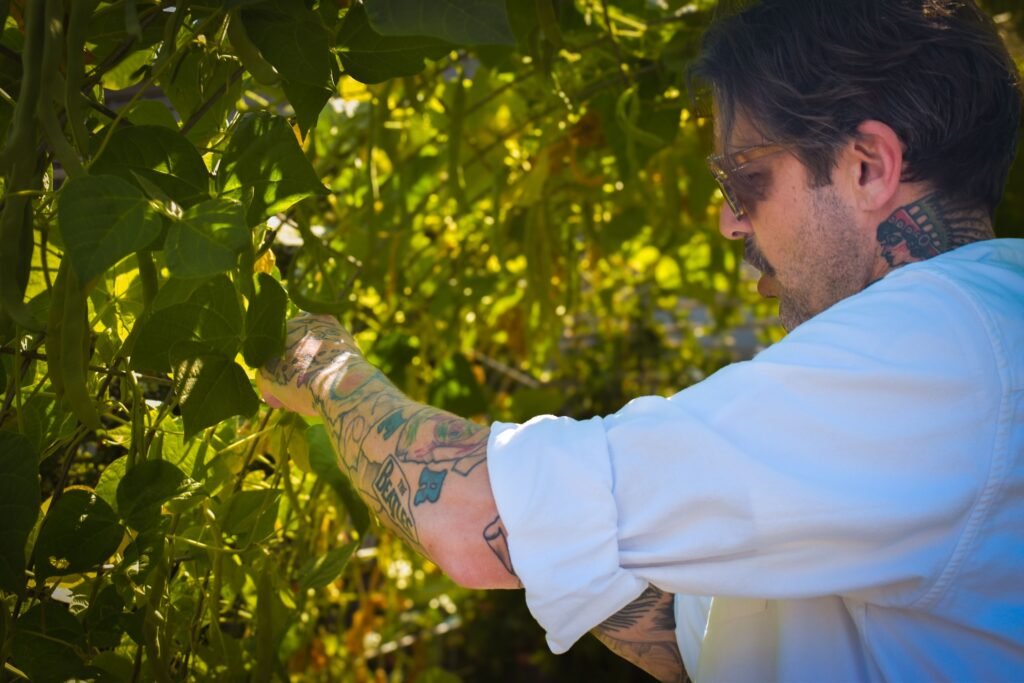
How Heritage Farm became the sustainability foundation for the Full Belly group’s ethos.
Walking through the farm earlier this summer, it’s immediately clear that zero waste isn’t just a talking point here—it’s the foundation of everything.
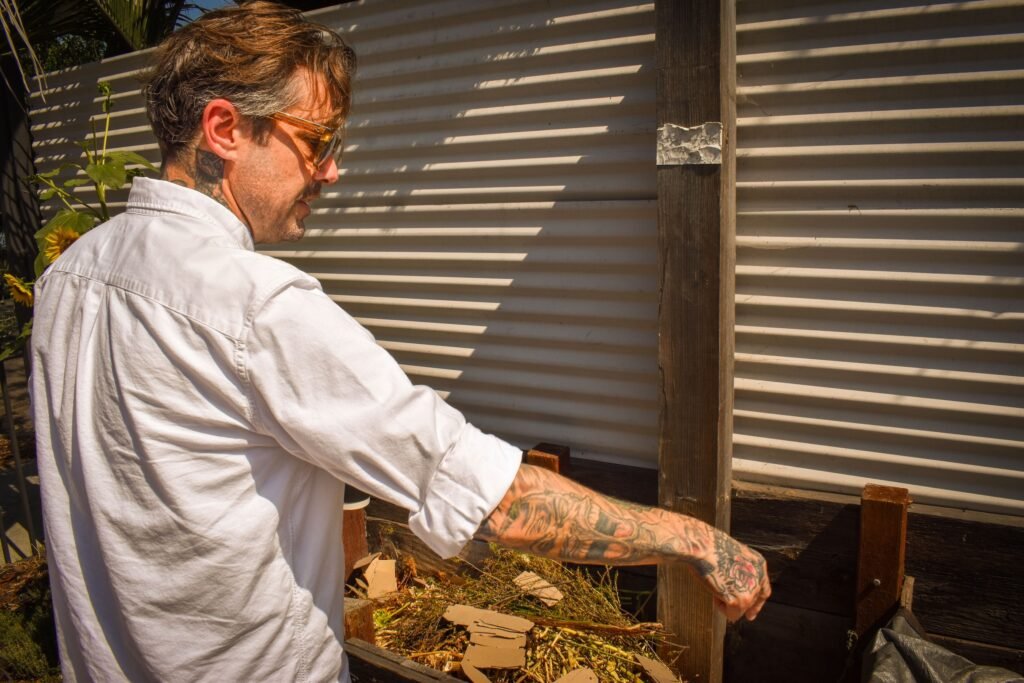
“This last year, we worked on this zero-waste program to ensure that everything we endeavor in—Heritage, Olive & Rose, FAM Fest…—follows these guidelines,” Chef Phil said, walking over to a giant gardening bed filled with decomposing scraps. “Everything is temperature-controlled. Everything [as in the food we have post-cooking and serving] is broken down and turned into compost.”
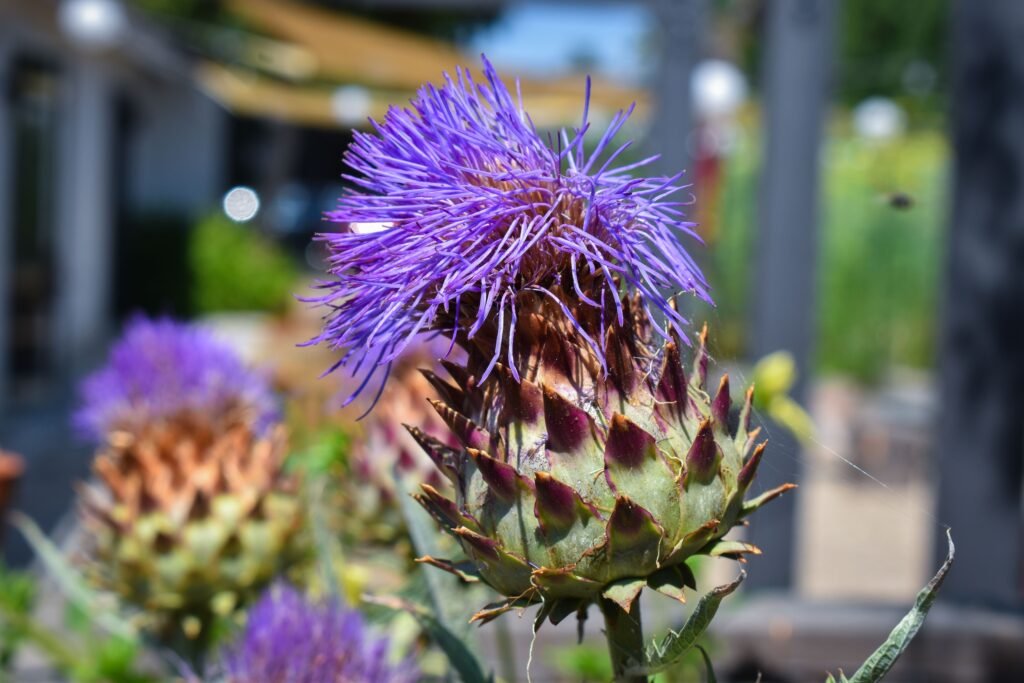
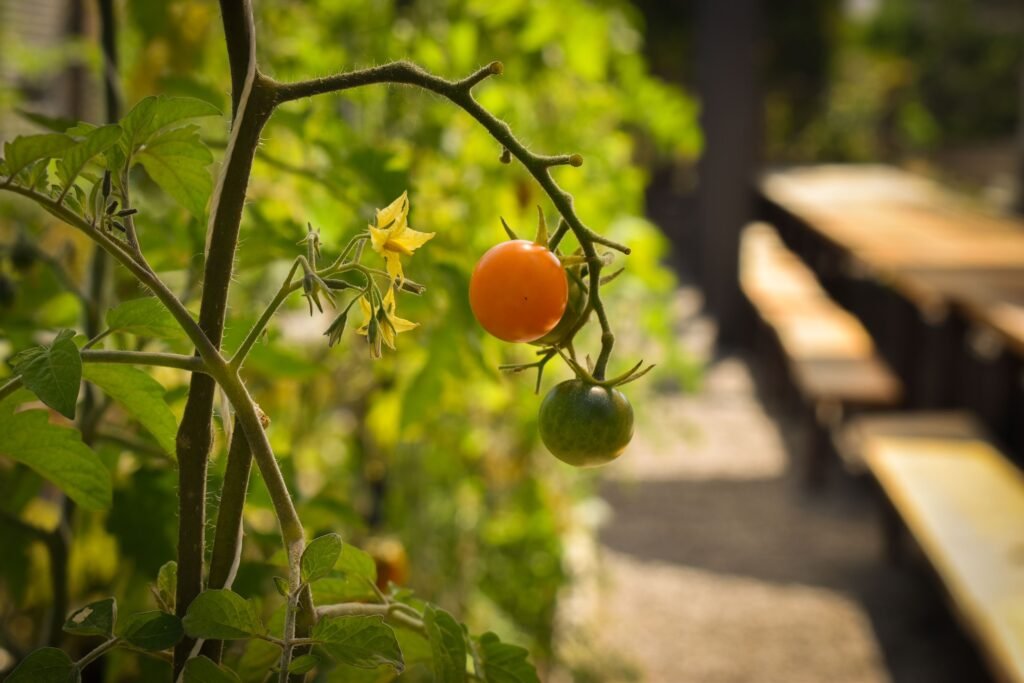
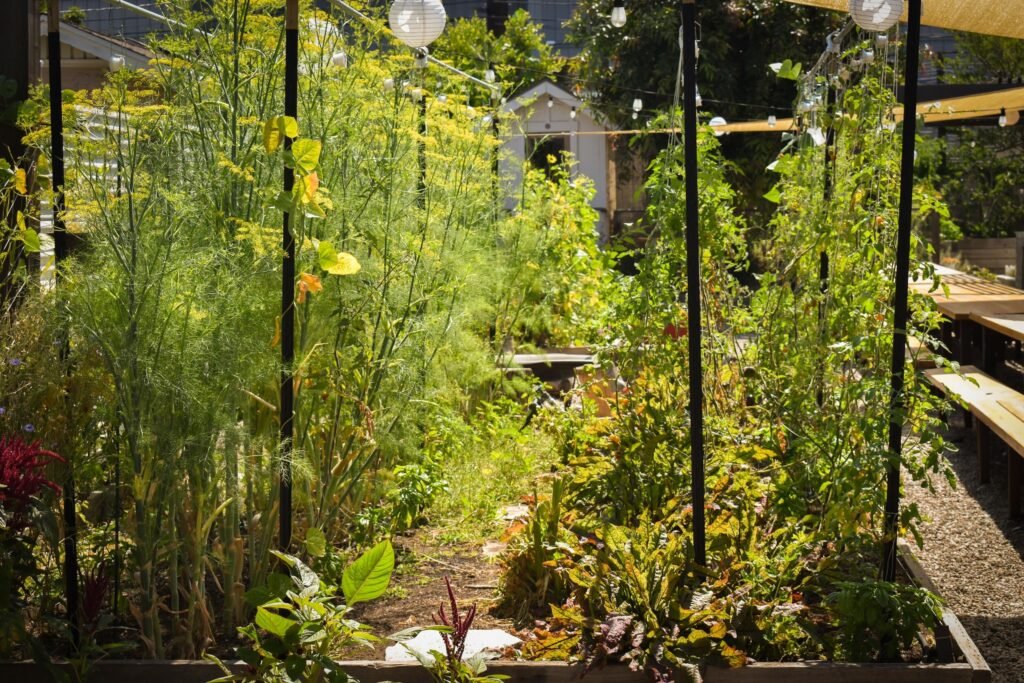
Enriched with the chicken manure in the farm’s coop, it is then held for nearly a month before it is then returned back to the soil of the farm for the continuation of growing vegetables, fruits, and herbs. They were early adopters of this practice, part of the city’s composting pilot program, and helped push it into a citywide effort.
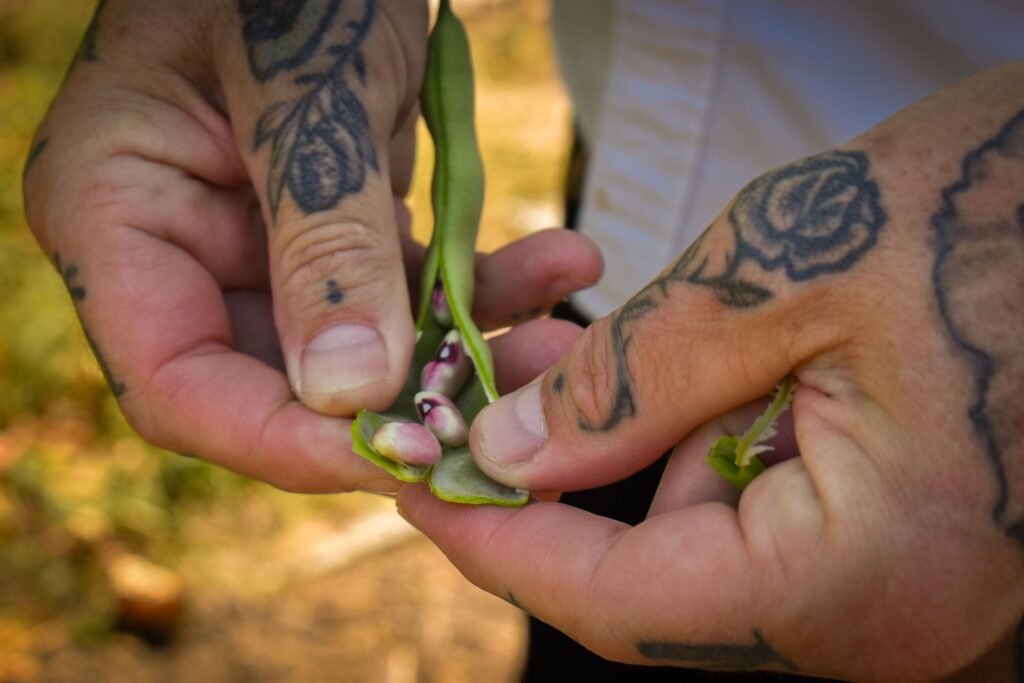
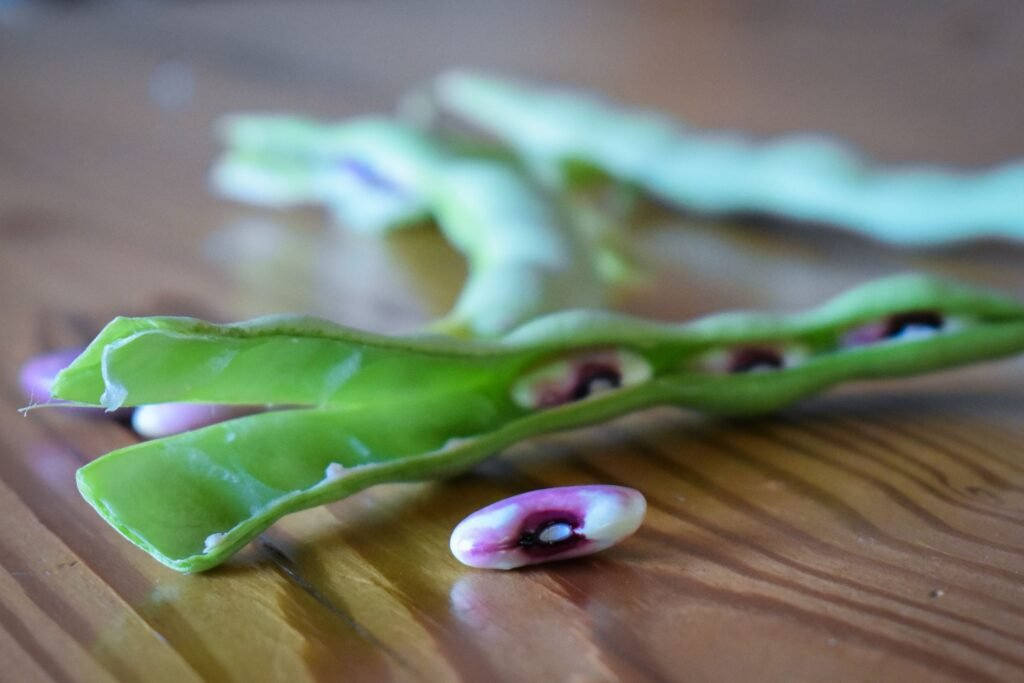
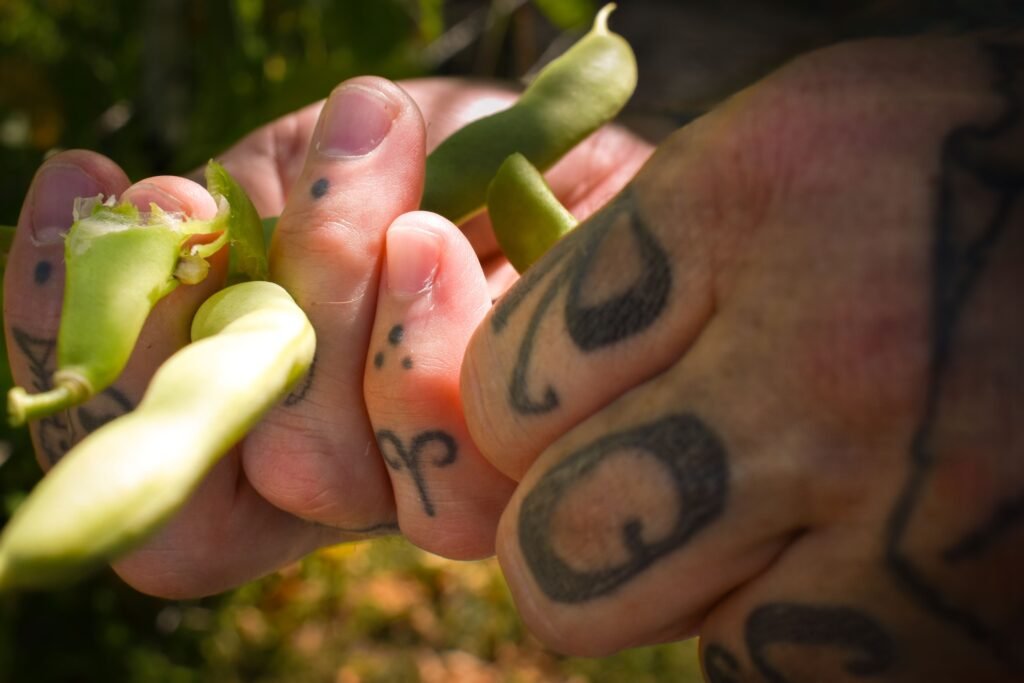
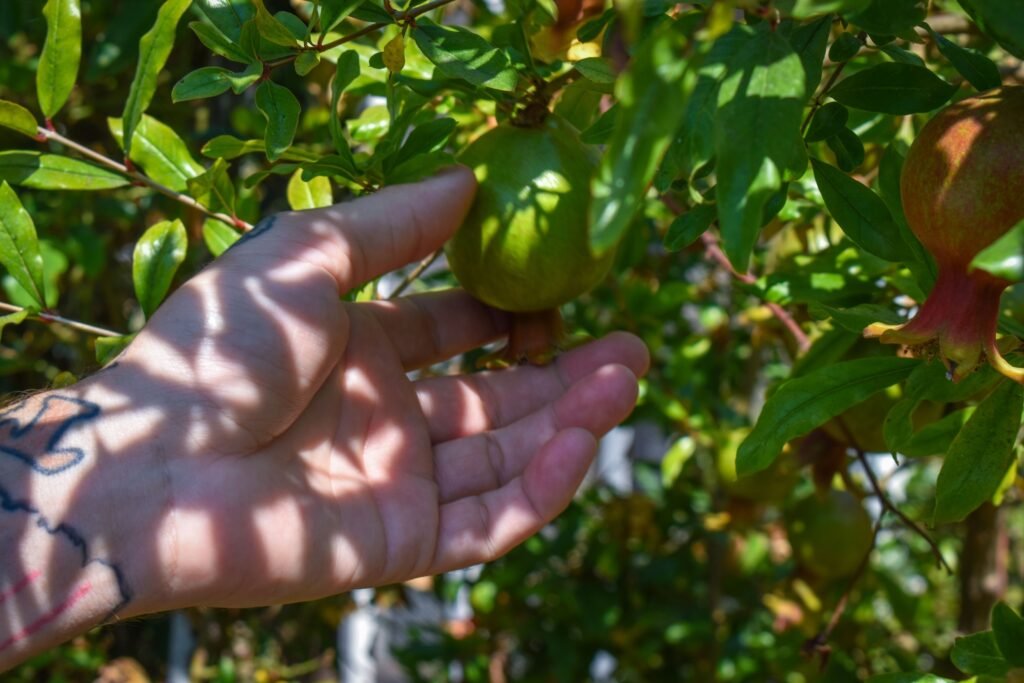
Now, everything from basil and fennel to the much-loved 1,500-year-old cave beans and passionfruit to rambutan and crab apples… They all thrive in beds or grounds built on their own recycled waste at Heritage Farm. Plans for the garden include new seating tucked into the greenery, where guests will start their evening with a drink and snacks before moving indoors, making the farm not just functional but part of the experience.
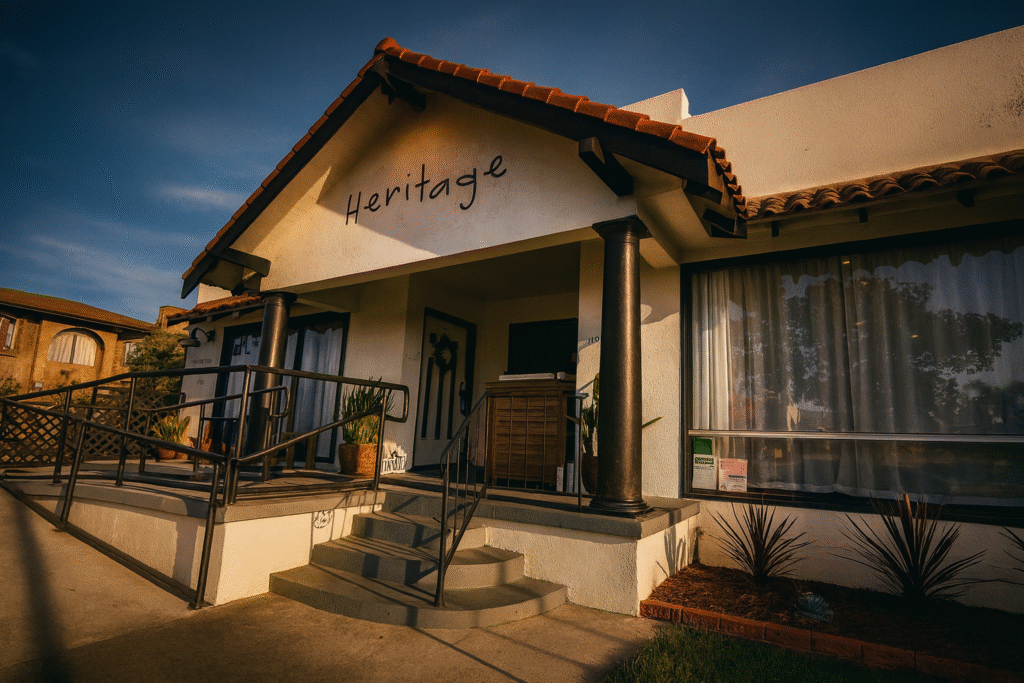
Chef Phil and Lauren share an astute, deeply researched love for the sustainable.
That sense of purpose comes from a deeply personal turning point. Early in his career, while cooking at Sona alongside lauded Chef Steve Samson, Chef Phil was struck by how much of the prized asparagus was being thrown away. Samson’s blunt honesty—that the entire restaurant was wasteful—pushed him to experiment with using every scrap. What began as a dish made from peels and stems has become a philosophy that’s guided his cooking ever since.
At Heritage and its sister restaurants, zero waste isn’t optional; it’s embedded. Ducks are broken down into confit, fat, stock, and breast meat. Onions become roasted centers, sauces, and even dust made from charred peels. Every part of an ingredient has a purpose.
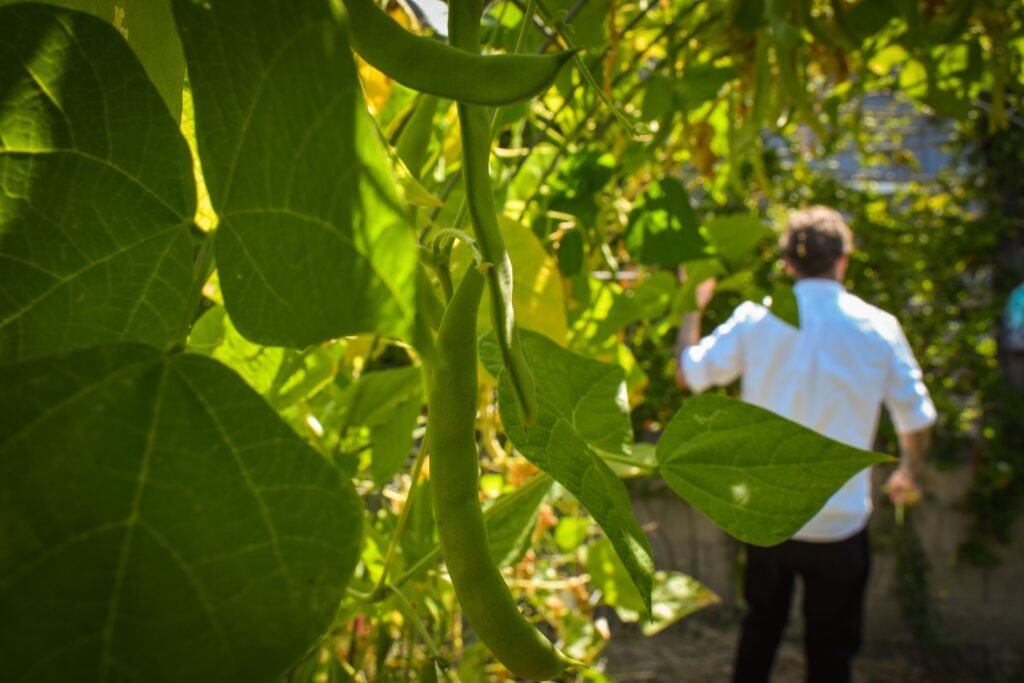
The system extends beyond the kitchen. By cutting out middlemen and relying on his brother-in-law to source directly from farmers markets, the restaurants eliminated mountains of packaging waste and recycling bins full of boxes. It’s also cheaper and fresher, with farmers setting aside produce specifically for them rather than pulling from the market tables.
To help others grasp the weight of waste, Chef Phil came up with what he calls the “bowl project.” Keep all scraps in a single bowl during service. By the end of the night, it’s overflowing. And this is a visual reminder of what’s normally tossed. From there, creativity takes over: scraps become sauces, stews, and glazes. It’s simple, but powerful. And the results show: Heritage was the only restaurant in California awarded a Michelin Green Star the year they received it, one of just 192 worldwide. By eliminating waste, keeping shelves lean, and sourcing fresh each day, they’ve managed to
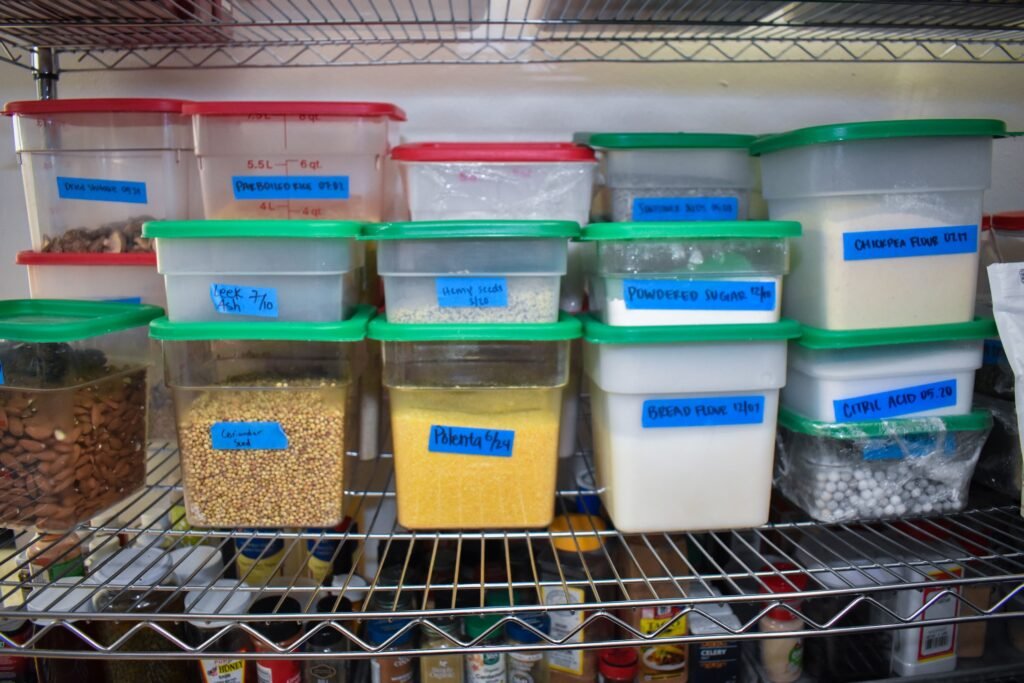
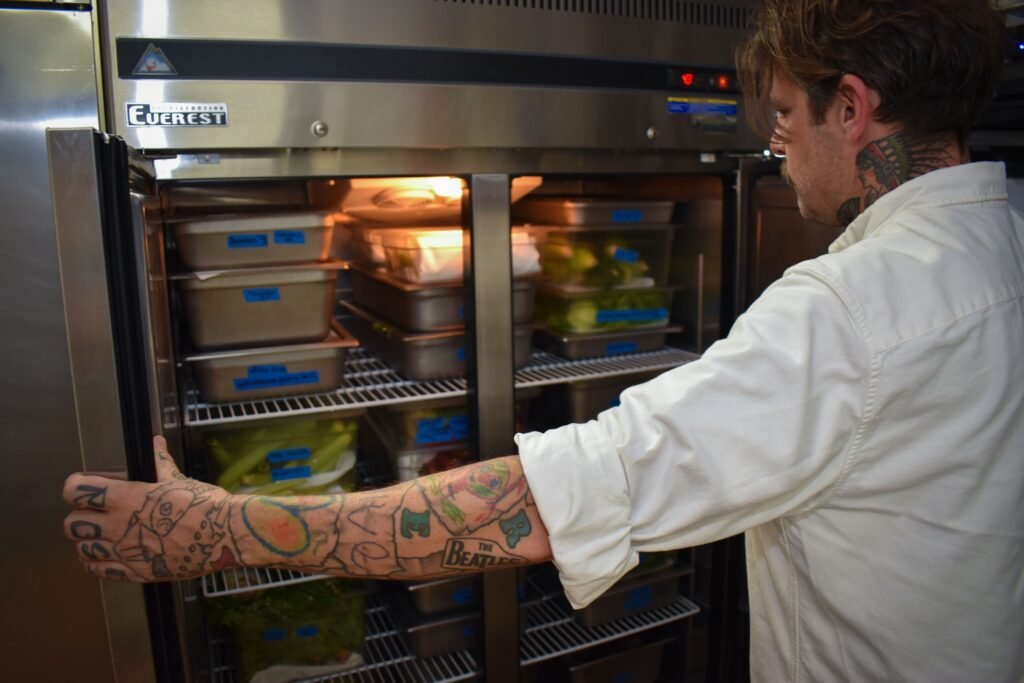
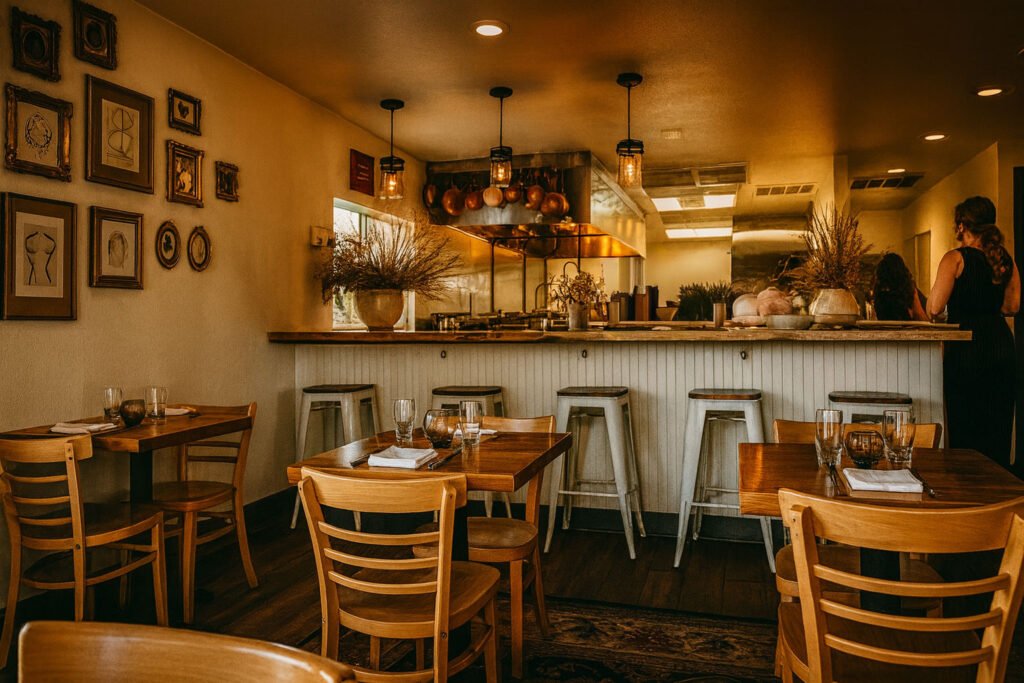
Green and B Corp Certified: Lauren’s goal for the ultimate in sustainability practices.
Staff are trained from day one in sustainability practices—thanks largely to Lauren, who pushed for the restaurant’s green certification early on, spearheading their eventual Michelin Green Star recognition. This means recyclable bags. Biodegradable to-go containers. Soft cleansers. That culture is so ingrained that cooks who leave take it with them, seeding the philosophy across the industry.
Proudly holding up a bottle of Simple Green, the Sunset Beach-based cleansing agent producer, Lauren happily exudes, “I just love this company. Everything they stand for, everything they do… But the B Corp Certification is my biggest focus right now… We would be one of the few restaurants with the certification and I hope it shines a light on one thing. And that is that doing this isn’t hard; it just takes reorienting your business behavior.”
B Corp Certification is a rigorous, globally recognized designation awarded to companies that meet the highest standards of social and environmental performance, accountability, and transparency. Administered by the nonprofit B Lab, the certification evaluates a company’s entire impact—from worker treatment and community engagement to environmental footprint, governance practices, and supply-chain ethics—using a comprehensive points-based assessment.
Yes, there is a worldwide, deeply concerning issue with waste—but focusing on what you can do here and now is the ultimate contribution. Full Belly exemplifies that.
I asked Lauren one particular question, after explaining the overwhelming weight one feels when discovering what have done and continue to do to our planet: “How do you fight feeling defeated, as if everything you’re doing is a pointless drop in a bucket?”
“One person can’t change the world,” Lauren said bluntly. “Our team? Us? We can’t fix the scale of wrongdoing worldwide. But what we can do is inspire. If someone who works here learns our practices, our ethics, and they take that somewhere else, that is a win for us.”
For both Chef Phil and Lauren, the legacy isn’t the accolades. It’s teaching a generation of cooks and the communities they serve to respect their farmers. To use every part of their product. And to remember that sustainability isn’t abstract. It’s right there in the compost bin, in the daily orders at the farmers market, in the staff meal made from leftovers.
And if other chefs want to learn, he says, the door is open: “We’re not gatekeepers. Anyone can ask me anything. This is who we are. It’s important—and it’s possible.”