
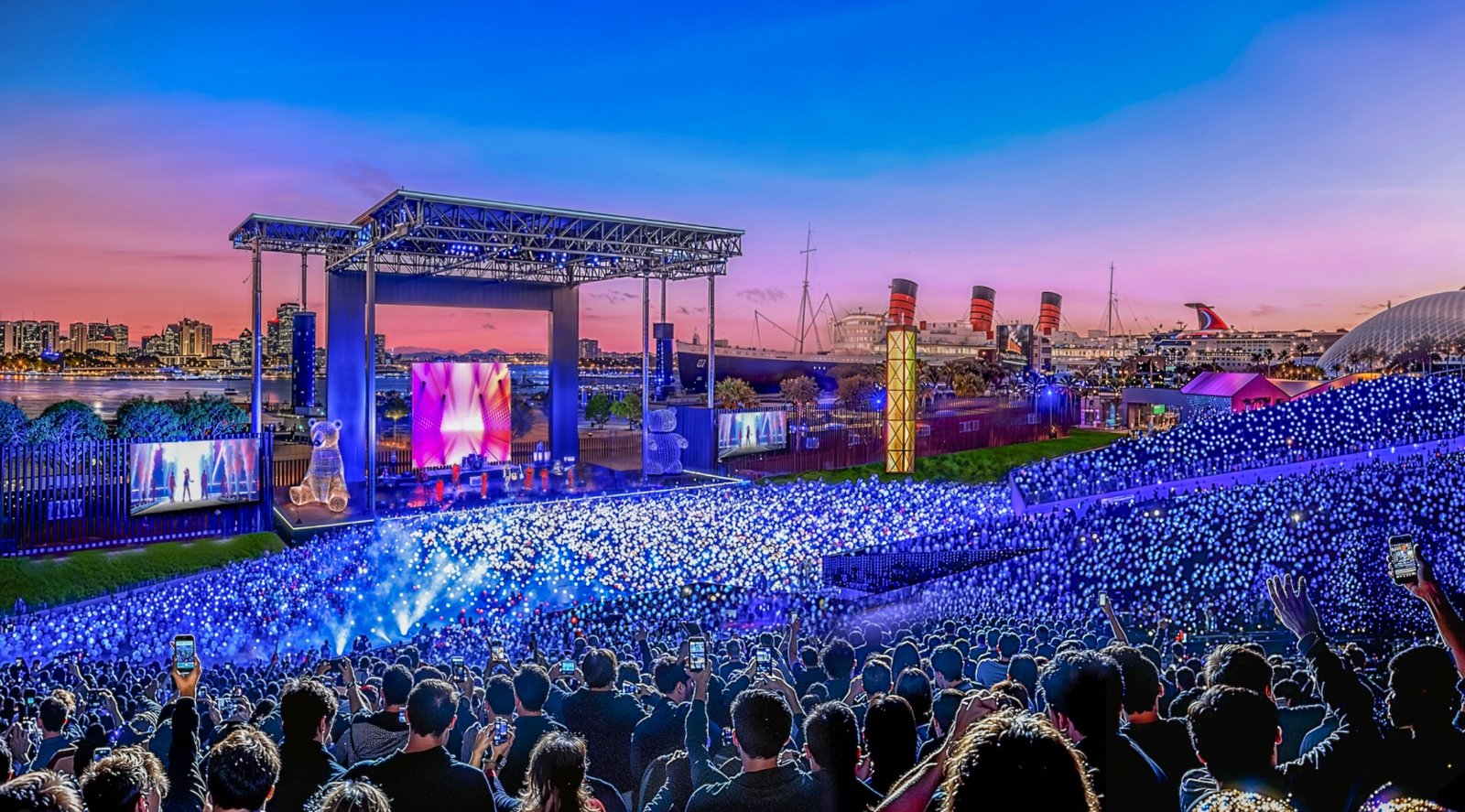
The Long Beach Amphitheater is inching closer to reality—and, like most large civic projects, it’s bringing a bigger price tag along with it.
At the upcoming City Council meeting tomorrow, city staff is recommending an additional $7.3M in funding to complete the long-planned waterfront amphitheater, as first reported by the Press-Telegram. It pushes the total project cost to $21.3M. The funds would cover higher-than-anticipated site improvements, expanded pre-opening costs, and upgraded furniture, fixtures, and equipment needed to open the venue at a level competitive with modern concert destinations.
The money would come from the Tidelands Area Fund, with the city expecting to recoup the full investment—plus a surplus—through the venue’s future operating profits. In addition, private sponsorships—naming rights, support for the VIP area and bars…—are actively being sought by the City, not its operators, per the contract released back in April with operator Legends. This is money not forecast in the venue’s public investment, making the amphitheater an even stronger value proposition in terms of ROI.
“Two years ago, the Long Beach Amphitheater was an idea. Today, we’re moving steadily toward opening day and preparing a venue that will serve the community for years to come,” said Mayor Rex Richardson. “As the project took shape and we saw both the revenue potential and the level of interest from artists and partners, it became clear that investing in a higher-quality venue was the responsible choice.”

Why the cost for the amphitheater went up
According to city staff, the additional $7.3M breaks down into four main buckets: Increased construction costs. Expanded and upgraded furniture, fixtures, and equipment—commonly called FF&E in the industry. Extended pre-opening operations. And, lastly, contingency funds. Some of the earlier budget was also used for emergency maintenance and safety upgrades across the broader waterfront leasehold—work that would have been required regardless of whether the amphitheater was built.
In other words, not all of the cost increase is about bells and whistles. But some of it is intentional.
City staff and Legends Global argue that upgraded premium seating, VIP spaces, and guest-facing amenities are essential if the venue is going to attract top-tier artists, promoters, and sponsorship dollars. The revised plan leans harder into premium experiences—not as luxury for luxury’s sake, but as a revenue strategy.
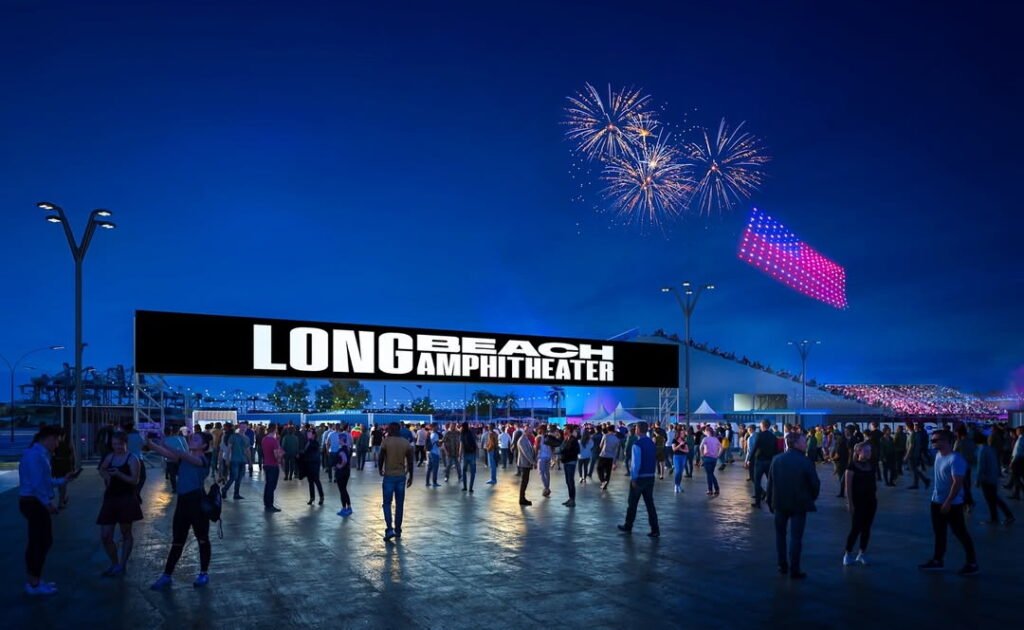
The financial bet, per city staff
Despite the higher upfront cost, the city’s revised financial projections remain optimistic.
Legends Global’s updated five-year pro forma projects that the Long Beach Amphitheater will generate nearly $12M in net operating profit by year five, even accounting for a shortened first season. Over a ten-year period, the venue is expected to generate approximately $28.7M in profit, leaving the city with an estimated $7.4M net gain after all development costs are repaid.
Annual net profits after the inaugural year are projected to land between $2.4M and $3M, with full repayment of the Tidelands Fund expected within eight years of opening.

‘More than a concert venue:’ How city leaders are framing the importance of the Long Beach Amphitheater
What the spreadsheets don’t fully capture, city staff notes, are the ripple effects. A functioning waterfront amphitheater is expected to drive many things: restaurant traffic. Hotel stays. Sales tax revenue. And, of course, the transient occupancy tax, all of which benefits flow into the city’s General Fund rather than back into the Tidelands account. (The latter’s funds can be used solely on projects on the waterfront while the former can be used citywide.) It also creates event-based jobs. Vendor opportunities. And another reason for residents and visitors to spend time—and money—on Long Beach’s waterfront.
“The additional investment positions the amphitheater to attract higher-profile performances, generate stronger returns through ticket sales and private sponsorships, and deliver broader economic benefits—from visitors dining in our neighborhoods to staying in our hotels,” Richardson added. “We’re looking ahead to a soft opening this spring and a full grand opening this summer, with more details to come at my annual State of the City address.”
This project, staff argues, fits squarely into the city’s broader push to diversify revenue through tourism, hospitality, music, and cultural events.
Whether the amphitheater ultimately delivers on that promise will take years to measure. But for now, the city is making a clear bet: spend more upfront, build it right, and let Long Beach’s appetite for live music—and waterfront experiences—do the rest.



There’s no way in the world the city recoups this money. Those pie-in-the-sky revenue estimates have zero basis in reality. I’m shocked that you’re just swallowing these bogus statements at face value and not even trying to dig into their dubious justifications.
This will never make money. “City staff” are not qualified or experienced in event management. How is the city expecting to build a first-class venue in 6 months when every simple street repair takes multiple weeks? They have been paving a small parking lot in the park near me and it’s taken over 4 months!