
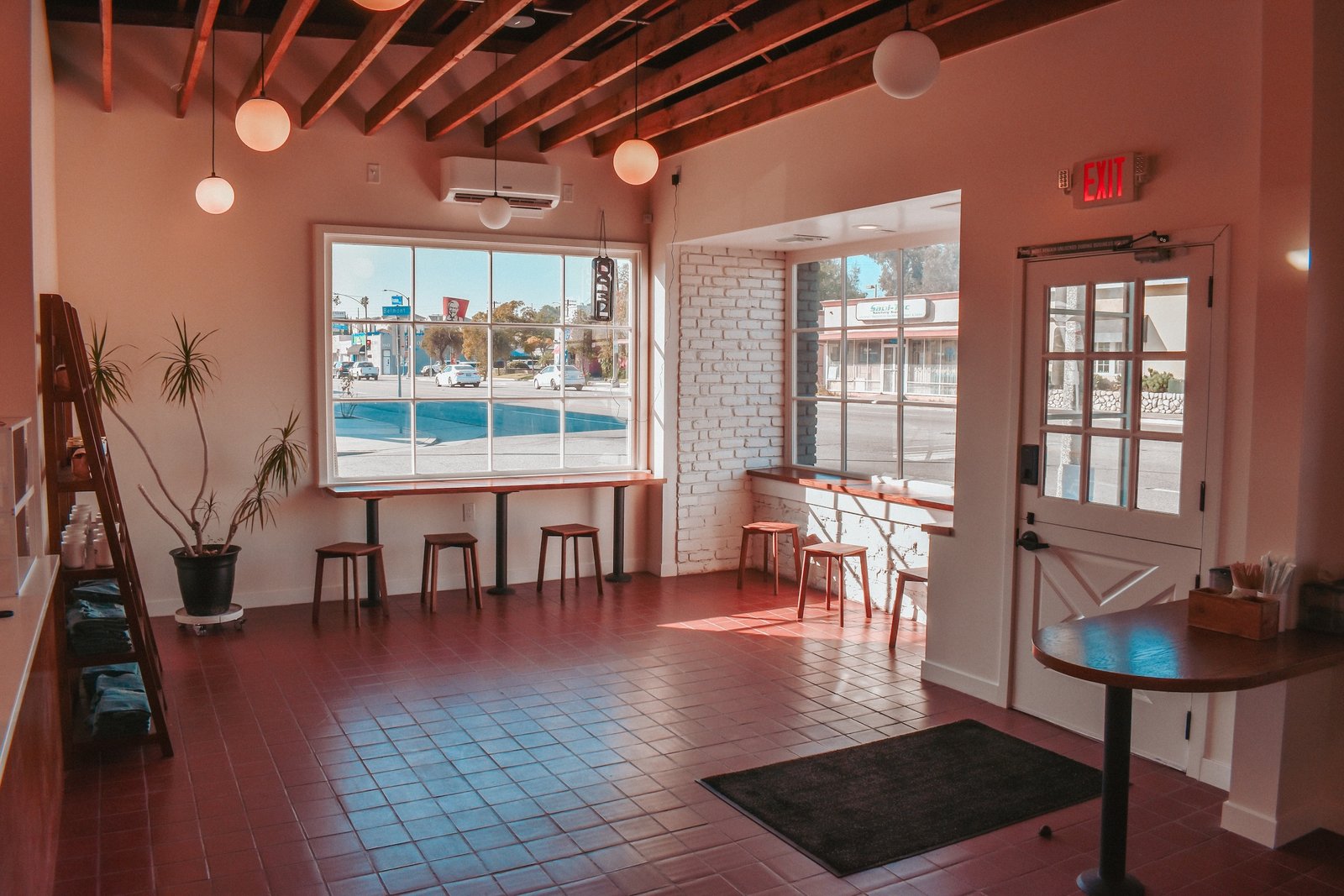
Cyclops Coffee, owner Steven Than’s original shop after overseeing Steelhead for years, has officially moved beyond its flagship location on Clark Avenue.
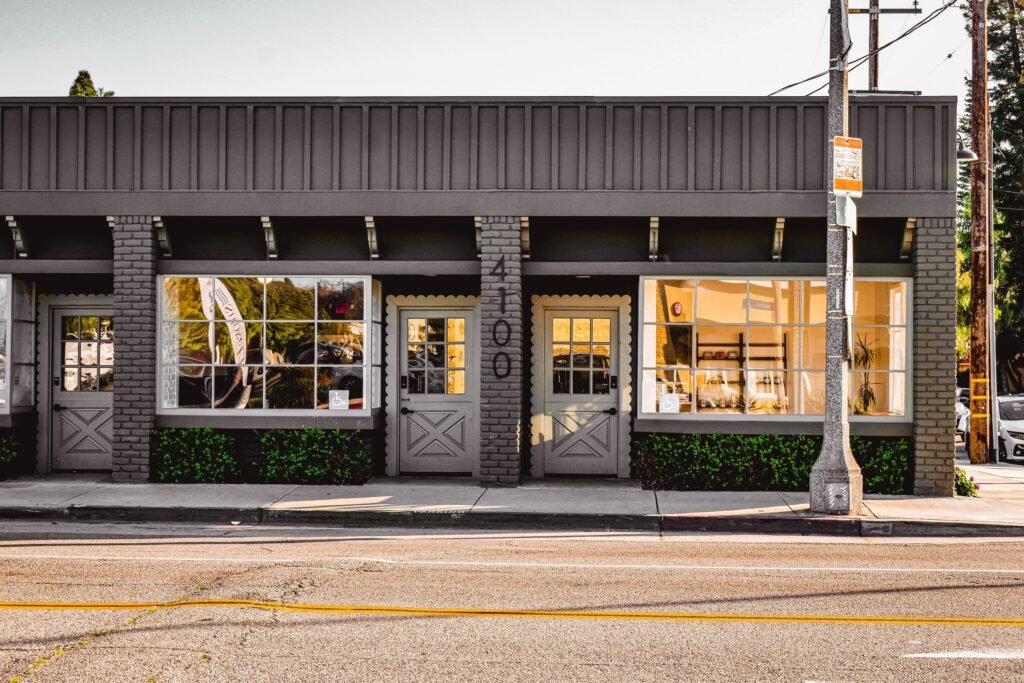
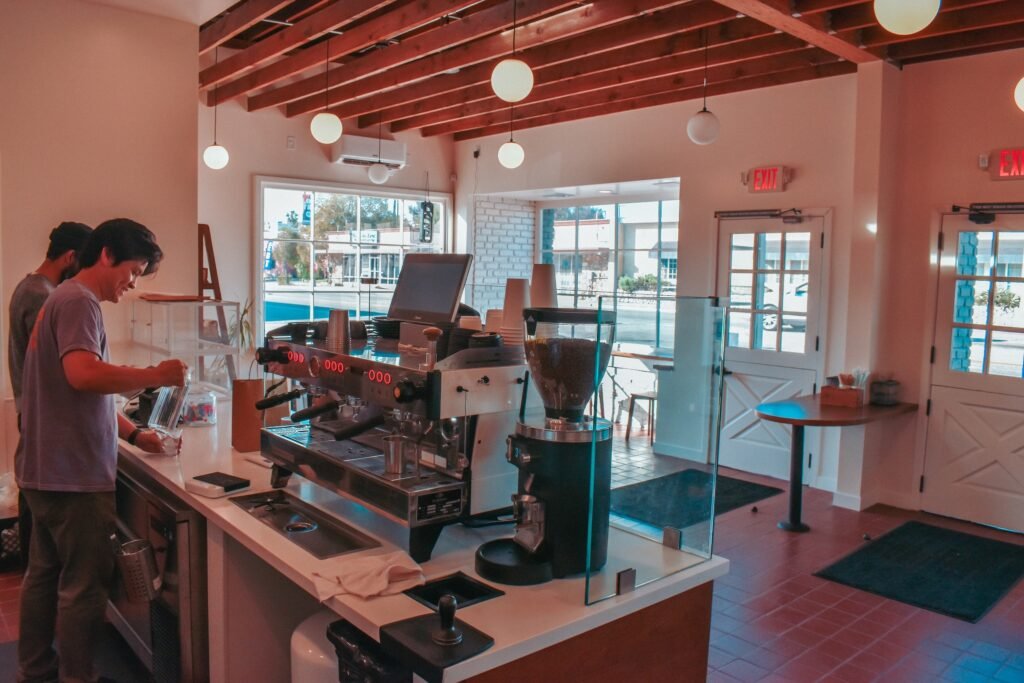
Taking over a dream space at the southeast corner of Anaheim Street and Belmont Avenue—the space is adorned with brick, open wood ceilings, and plenty of windows—it marks a definitive notch in Zaferia’s belt as a coffee haven. You have Good Time to the west of the Redondo Curtain, Hey Brother Baker churning out some stellar, simple brews, and, farthest on the east end, the full-service space that is Cyclops, the Second Chapter.
That chapter is one filled with equal parts full-circle and forward-looking. It’s definitively rooted in a lifetime of Long Beach memory and Chinese- and Cambodian-American community connection. And some genuinely earned hustle points after years of on-the-ground coffee leadership under Steelhead Coffee’s John Aguirre.
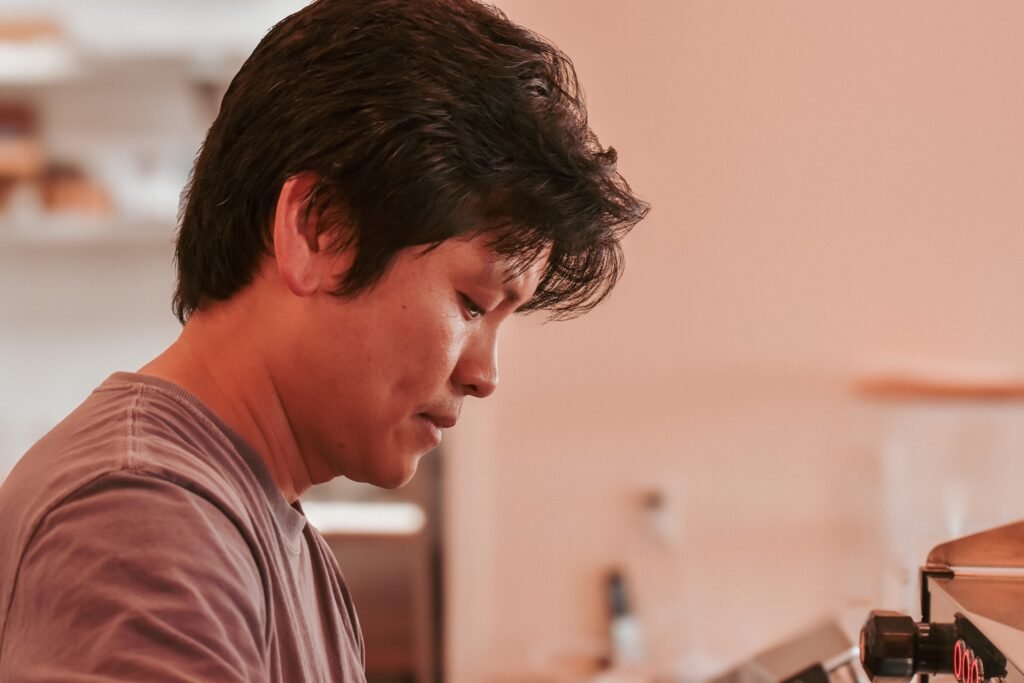
Steven’s adventure in caffeine stemmed from a very Millennial life-crisis question: What am I doing with my life?
Steven didn’t come up through coffee the traditional way. Like many Millennials, he came up through design—graphic, to be specific. Hustle—he was a constant presence in his Cambodian parents’ businesses, if not at many times outright running them. And, of course, family.
Long before Steelhead built its name as a Long Beach coffee staple, he was the guy sketching out rhinos for the brand’s first logo: “I actually helped John design his first logo,” he said, recalling how a request for a rhino turned into a friendship and eventually a career shift. Steven was working as a production artist at Auction.com, later building large-scale convention booths in Las Vegas. We’re talking full-scale, capitalism-at-its-conventioneer-peak type build-outs. 16-foot ladders. Union crews. And long days that eventually forced a question while atop that very ladder
“I was on a ladder in Vegas one day, some 15 feet in the air, looking across all the lights and construction and… I was thinking, ‘What am I doing? My baby’s at home,’” Steven said. “My kid was one-year-old at the time. I need to get down and go back into a cubicle job and be safe.”
Instead, he called John—and got redirected into something bigger than a cubicle.
From design to service: Steelhead’s training ground birthed Cyclops Coffee.
John told him what many people in the hospitality industry tell friends: Come home and try this instead. Just try it—in this case: coffee. Steven started at Steelhead’s Torrance shop, where he learned the craft—and, more importantly, the care. When he moved into Steelhead’s Broadway shop—a tiny but dreamy space that has the charm of a made-for-TV movie—Steven found himself leading one of Long Beach’s most beloved, aesthetically iconic cafes. And he did so without pretending he did it alone.
“I come over to manage Broadway when Josh left,” Steven said. “Loved the team—like, the team carried me. I am not gonna lie… And that space really honed my love of customer service, of hospitality, of creating quality coffee. It was, especially during the pandemic, my second home.”
Broadway, he added, wasn’t just a coffee shop, but a neighborhood engine of sorts. And the pandemic proved it. Steelhead stayed open through COVID, evolving in real time to meet the community’s needs. That could have meant meeting safety protocols. Or providing essential supplies. Or simply “a place that still felt human,” in Steven’s words.
That ethos—service as community infrastructure—became a blueprint he would later bring into Cyclops. The idea that a coffee shop isn’t just a counter. It’s a place to belong.
Cyclops was born out of collaboration and partnership.
When Cyclops Coffee opened its first shop on Clark, it immediately felt like it belonged: a neighborhood anchor with enough personality to be memorable, but enough intention to become routine. It has become a staple for an area that, up until Cyclops, lacked local, third-wave coffee. And that explains its constant array of students, work-from-home employees, and neighbors meeting up at the space. There, you won’t find an electric outlet not in use, at least when CSULB is in session.
And it was a space that was initially offered to John by the landlord, who sought a quality coffee shop for the neighborhood. However, John was balancing multiple Steelhead locations—he had just shuttered his Torrance location while, unbeknownst to him at the time,he would score by asking over the former Agua y Viento space just a year later—and wanted to, bluntly put, see what Steven could do on his own.
Zaferia, memory, and the Asian Long Beach that raised him…
Steven’s connection to this part of Long Beach isn’t abstract. It’s deeply personal, stitched into his own Chinese-American heritage, the neighborhood’s Cambodian history, and the small-business ecosystem that helped define it. He’s lived nearby for decades, and his family’s entrepreneurial footprint runs through the area, including a supermarket space many locals will recognize.
“My parents used to own a market called Kim Heng,” Steven said. “I remember when Riverside Market opened, we were terrified what it would do for our business, but time proved to be just fine. My parents were just, bluntly put, hard workers. Owning businesses, evolving—I learned that from my parents.”
Steven’s growth in and around the neighborhood defined his future entrepreneurship. Witnessing his mom’s other business, a former sewing factory down the street—for which he was paid in McDonald’s hamburgers as a kid for tagging garments—and watching the corridor evolve through waves of businesses and cultural shifts instilled a sense of exploration within him. It’s also why this second Cyclops feels less like “expansion” and more like a return.
“I actually live down that street,” he said, pointing to a nearby road. “I’ve been there for 30 years. This is my neighborhood.”
And it’s why Cyclops in Zaferia isn’t trying to import a vibe—it’s trying to honor the one that’s already there, in a part of Long Beach where Cambodian culture isn’t a footnote; it’s foundational.
Why here—and why a second Cyclops makes sense.
The second Cyclops landed in a building Steven had long been eyeing. One he described as the kind of space that feels instantly right for coffee. The opportunity arrived quickly: the team behind the building reached out through John, and Steven—barely three months into opening the first Cyclops—suddenly had the chance to do it again.
“We were only open for like three months at that time,” he said of the early outreach. “The thing was: I already knew this would be a dope spot for a coffee shop because I’ve been here for so long.”
The new space has a past, too: Steven noted it used to be a bird shop—Rainbow Bird—and was split into two units. At first, he considered taking just one side, but the layout pushed him toward something bigger: a shop that could eventually support seating, flow, and (potentially) a patio plan down the line.
The name, the logo, and the joy of not taking yourself too seriously.
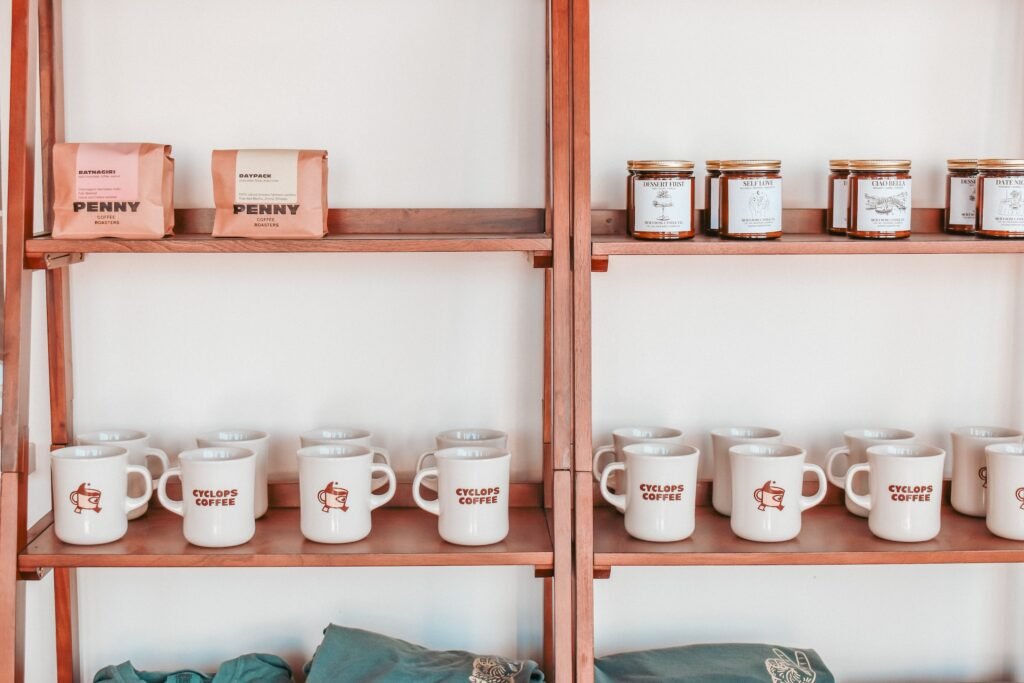
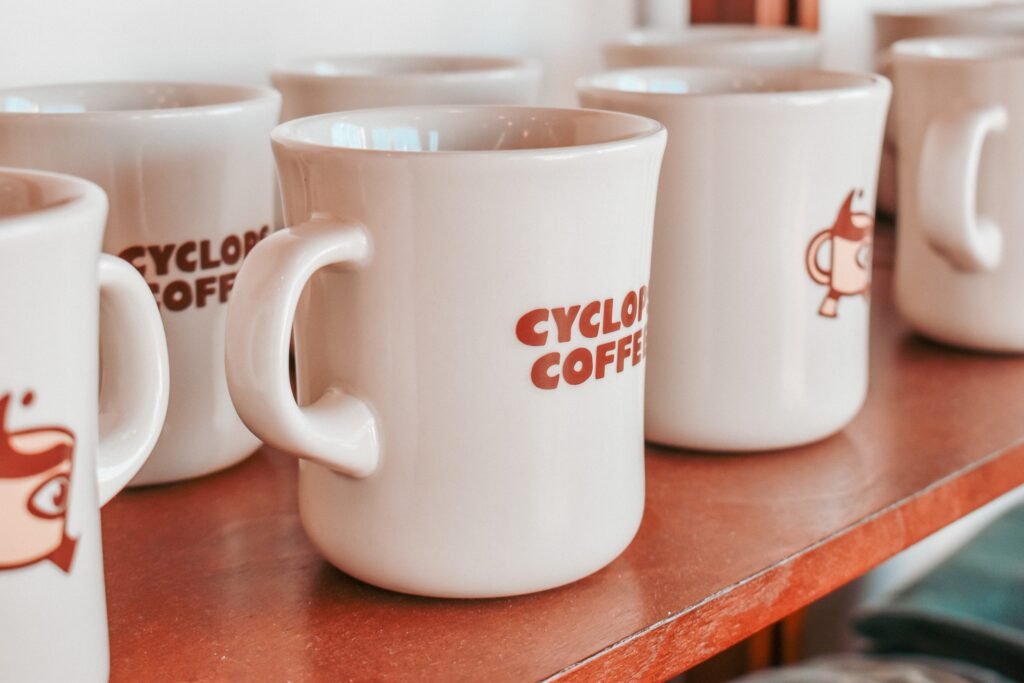
Cyclops might sound like a brand brainstorm, but it’s more like a family in-joke that became a business. Steven wanted a name that was Googleable, memorable, and fun—something that didn’t feel overly precious nor pretentious. The meaning evolved into a set of dad-joke philosophies: “Eye on the prize.” “Keep your eye on it.” “Bad puns are how eye roll.” In his words, the more cringe, the better—and the “Cyclops” name opened to that.
Oh, and the final logo? Came from home, literally drawn into existence while he made pancakes for his kid.
“One day… I drew a cup with like one stroke,” Steven said. “I was like, ‘Wesley, what do you think of this?’ He was like, ‘Can you put an eyeball on it? And put some feet on it?’ I was like, ‘This might be it.’”
In a city where coffee can sometimes drift into self-seriousness, Cyclops is a reminder that you can care deeply about craft and still have fun doing it. And with Zaferia now officially in the Cyclops orbit, the broader takeaway is simple. This isn’t just a second location—it’s another chapter in a Long Beach story, told by someone who’s been living inside the neighborhood’s very evolution for decades.
Cyclops Coffee has two locations: one at 1732 Clark Ave. and its newest at 4100 E. Anaheim St.